Spotlight on the future: insights from ESMT attendees at the Munich Young Forum
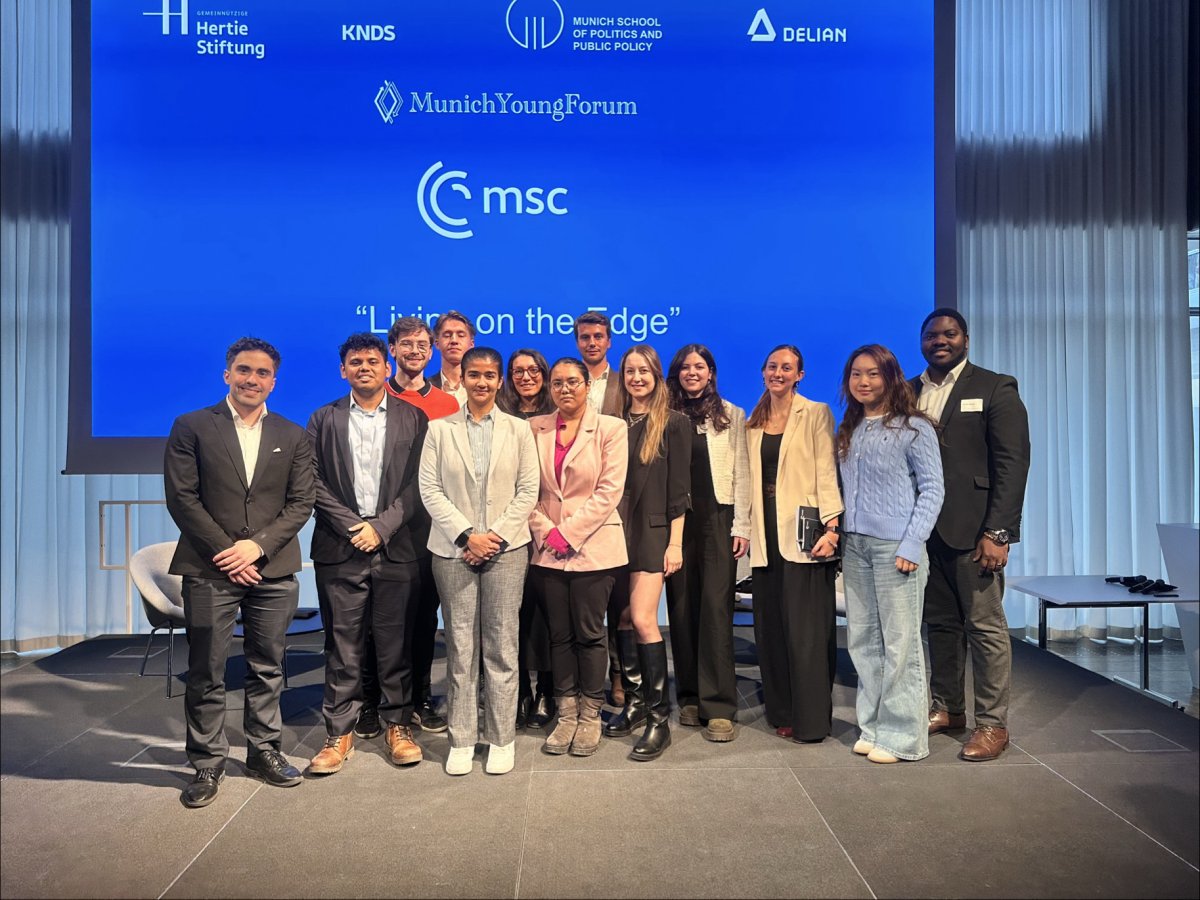
In February, a group of ESMT students were chosen to travel to Munich and attend the Munich Young Forum, a side event of the Munich Security Conference 2026.
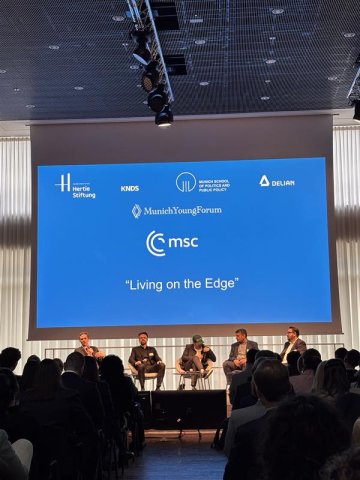
The forum brought together voices from politics, cybersecurity, defense, human rights, and technology to address some of the most pressing geopolitical and technological challenges of our time: from artificial intelligence in cybersecurity, to the future of transatlantic relations, and the resilience of liberal democracies.
Inside the Munich Young Forum
Rojda Emre (Part-time MBA, Class of 2026) and Cyrille Ehade (Global Online MBA, Class of 2027) shared their perspective on the Munich Young Forum, and what we can all take away from the discussion.
Hi Rojda and Cyrille! Please introduce yourselves
Rojda: I am Rojda, 30 years old and based in Berlin. I have extensive experience in project management in real estate, shaped through my roles as business unit lead and team lead at Drees & Sommer.
With a degree in architecture from RWTH Aachen University, I carry a passion for design, aesthetics and creating human-centered places we genuinely want to live in. My work includes large-scale industry transformations, such as SALCOS – one of Europe’s most ambitious green-steel decarbonization initiatives. Last year, I was honored to receive the “30 Under 30 Most Aspirational Talents in Real Estate” award.
Cyrille: My name is Cyrille Ehade, and I am based in Brandenburg. I have over a decade of experience in e-commerce as Category Manager. I attained a bachelor degree in economics and management and followed with a master's in financial management. These landed me a career in sales.
Having worked with various categories; seasonal and non-seasonal, technical and non-technical, my range expanded to Home and Garden equipment and appliances, measurement equipment, sports and fitness accessories, agricultural equipment, and beauty and wellness equipment. My work includes forecasting, planning, supplier negotiations, portfolio management, profit optimization, and price management.
What are you studying at ESMT? What drew you to the program?
Rojda: I’m currently pursuing my Part-Time MBA at ESMT Berlin, where I am broadening my leadership capabilities and strengthening my focus on data-driven decision-making. As I moved into management roles, I wanted to strengthen my knowledge and skills and get more diverse perspectives on leadership and management. I chose the program because it is very diverse. My cohort comes from very different perspectives and backgrounds – learning from each other is what drew me to the program.
Cyrille: I am in the Global Online MBA program at ESMT Berlin, focusing on business and strategy in an international, and innovation-driven environment. I was drawn to the program because of its strong industry connections, diverse cohort, and emphasis on practical, real-world learning.

How did you hear about the Munich Young Forum? How were you chosen to go there?
Rojda: As I am working with many industry clients, I was already aware of this big event happening yearly. When I got the chance to apply for a seat at the table via our Director of MBA programs Rebecca Loades, I got very excited. Even more so when I received the spot and was able to attend such an important event.
Cyrille: I learnt about the Munich Young Forum from an internally circulated email. I responded to the email with an expression of interest and after some consideration, I was granted a spot.
What topics did the Munich Young Forum cover?
Rojda: Many different topics were on the agenda, and they were presented via fireside chats and panel discussions. The speakers included politicians, cyber security leaders, journalists, and more. What I liked most was the topic of Space Rivalry.
Cyrille: The Munich Young Forum covered key global security and geopolitical topics linked to the Munich Security Conference. Discussions focused on challenges facing democracies and international cooperation in an increasingly uncertain world.
Main topics included:
- The impact of artificial intelligence on cybersecurity
- The future of transatlantic security, especially with a potentially reduced U.S. role
- Europe’s defense capabilities and emerging technologies
- Cyber threats, disinformation, and geopolitical fragmentation
- Human rights, migration, and the resilience of liberal democracies
Overall, the forum explored how technological change and shifting global power dynamics are reshaping international security and policy responses.

What was your biggest take away from the Munich Young Forum? Any favorite memories?
Rojda: The importance of Europe standing united side by side in the current times is increasing! The challenges we face require collective strength and collaboration.
Moreover, discussions about democracy must include all perspectives, especially those of the younger generation – as proper dialogue can only work with all parties involved!
Young voices are essential in shaping the future of our societies.
“Discussions about democracy must include all perspectives, especially those of the younger generation” – Rojda
Cyrille: My biggest takeaway from the Munich Young Forum was the strong sense that Europe is undergoing a real mindset shift toward greater unity, responsibility, and self-reliance, particularly in security and defense. Hearing directly from policymakers and military leaders made it clear that freedom and democracy require active maintenance, and that current geopolitical challenges are pushing Europe to become more proactive and resilient.
A favorite memory was listening to frontline decision-makers during the panel on Europe’s Eastern Flank in the Shadow of Russia. The urgency expressed – especially by leaders from countries closer to the conflict – made the discussions feel very real and personal rather than theoretical.
I also particularly enjoyed the AI and defense innovation panel, which highlighted how technology and bold thinking will shape Europe’s future security. Overall, I left the forum feeling hopeful and optimistic about Europe’s direction.
“Overall, I left the forum feeling hopeful and optimistic about Europe’s direction” – Cyrille
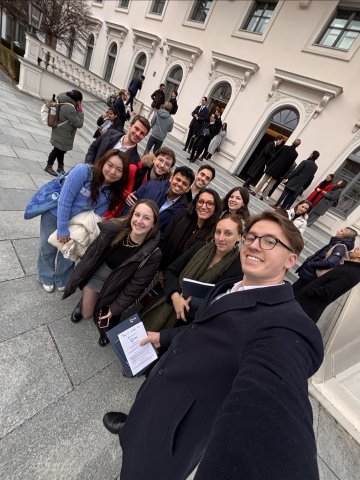

Do you have any advice for current students thinking about taking part in extra-curricular activities like the Munich Young Forum or similar events?
Rojda: ESMT offers many activities, I would say the most important advice is to network and to connect with people from the university, the peers as well as the alumni.
Most activities I attended, I could only attend because I got recommended by someone connected to or from ESMT. Like in this case by Rebecca. Being in contact with so many interesting and smart people is key to success – and it is a give and take.
I would also recommend taking part in the MentorMap Program, I participated as both mentee and mentor, and the things I have learned have been amazing!
“Being in contact with so many interesting and smart people is key to success – and it is a give and take” – Rojda
Cyrille: My advice would be to actively take part in opportunities like the Munich Young Forum, even if the topics initially seem unfamiliar or outside your immediate area of study. These events provide a rare chance to hear directly from decision-makers and practitioners, turning abstract classroom discussions into real-world perspectives.
They also help broaden your understanding of global challenges, expand your professional network, and expose you to viewpoints you would not normally encounter. Most importantly, such experiences encourage you to engage more critically with current events and understand how large geopolitical or economic developments may shape your own future.
“These events provide a rare chance to hear directly from decision-makers and practitioners, turning abstract classroom discussions into real-world perspectives” – Cyrille
Thank you Rojda and Cyrille!
You can connect with Rojda and Cyrille on LinkedIn to see more of their insights about ESMT, MBA life, and the business landscape. Connect with Rojda here, and connect with Cyrille here.


Looking for more insights on life at ESMT Berlin?
