Combining the soul of Berlin with the pace of Hong Kong in the Full-time MBA
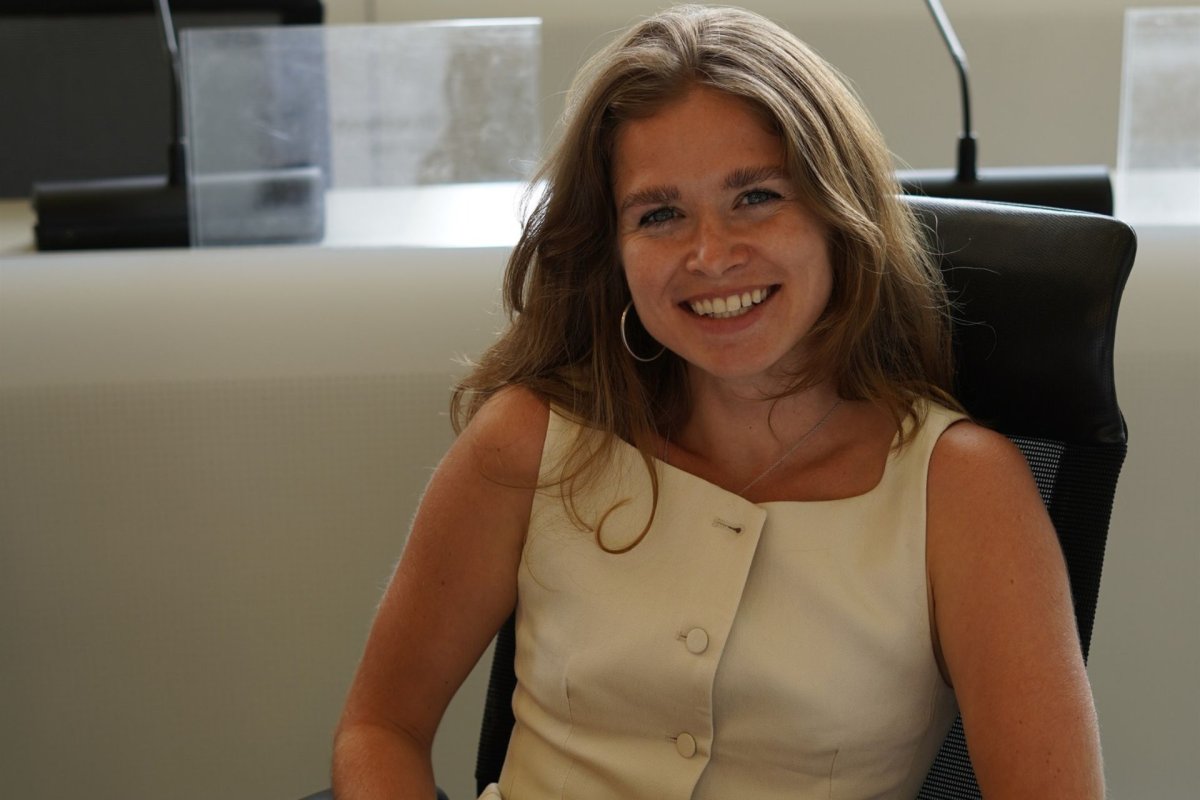
Unforgettable international experiences: Liza's story
Full-time MBA (FTMBA) student Liza Gracheva has now studied business on three continents – including two during this year alone, as her degree has taken her from ESMT Berlin to a study abroad semester at HKUST in Hong Kong.
In this blog, Liza, Class of 2027, explains what it is like to go from a boutique Berlin business school to the hustle of Hong Kong. She explains how what she has learned at ESMT is helping her thrive at HKUST, and how adding this international experience is helping her form a truly global professional network.
She also explains why the "grounded soul" of Berlin is not one you easily leave behind. From the city itself, to ESMT, to the cohort that has become a family, she shares her FTMBA highlights and explains why her experience over the last year has been unforgettable.
Hi Liza, can you please introduce yourself?
Hi there! I’m a Full-time MBA candidate with a background across business and health-tech. Before business school, I spent over four years in market development at AMBOSS, a prominent medical tech company, helping expand their presence in the US market from the New York office before relocating to headquarters in Berlin.
Having lived, studied, and worked between the US and Germany, and now spending an exchange semester at HKUST in Hong Kong, I’ve always felt most at home in fast-moving environments where people from completely different walks of life come together to solve interesting problems.
What made you choose a Full-time MBA program as your next step? Did having an undergraduate degree in business help you make the decision?
An MBA was something I always knew I wanted to pursue eventually. My Bachelor of Science in Business Administration gave me a strong foundation, and joining a fast-growing company empowered me to wear multiple hats at once, creating an incredible learning curve right out of college.
However, as I looked ahead, I realized I needed dedicated time to develop a higher-level perspective and sharpen the skills needed for high-stakes decision-making. I considered doing a specialized master’s first, but once I realized I was ready for an MBA, the full-time immersive format was the natural choice for me.
Why did you pick ESMT Berlin in particular? Were you already in Berlin before the program?
"This selectivity and boutique cohort size just clicked for me."
I was indeed already living in Berlin, and wanted to stay connected to the city’s startup ecosystem. Berlin is a hub for innovation, and I wanted a program that would prepare me for just that, strategic, high-stakes decision-making, rather than repeating traditional business theory I had already covered in my undergrad.
When I reached out to the admissions office, Robert Ryan invited me to meet for a chat on campus the very next day. Our chat felt like a personal conversation where, as much as I was evaluating the program, Rob was genuinely evaluating me to see if I was the right fit for the Full-time MBA and the forming cohort. This selectivity and boutique cohort size just clicked for me.
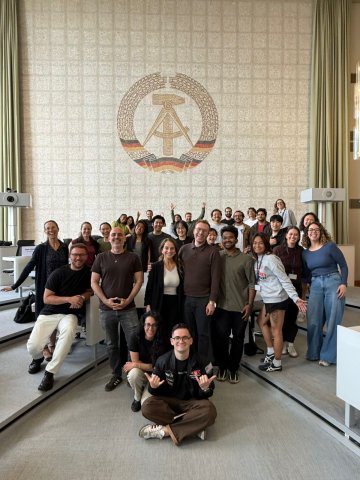

In your cohort, 54% are women and 91% have an international background. How does this shape interactions inside (or outside!) the classroom?
"It truly changed how I learn because every discussion we have is rooted in real lived experiences."
Our diversity creates a dynamic that is hard to explain until you’re in it. It truly changed how I learn because every discussion we have is rooted in real lived experiences. Because our cohort represents so many different industries, functional roles, and career stages, we are constantly having thoughtful debates.
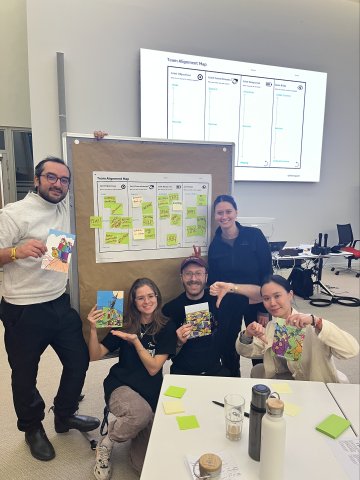
In group projects, someone with 10 years in corporate finance approaches a problem completely differently than someone from a fast-paced tech startup. You are not just memorizing frameworks from a textbook, but learning how to reconcile different perspectives to reach a practical outcome.
Outside the classroom, everyone’s openness breaks down barriers completely. In the first few months, we spent every waking hour together in Auditorium II, the campus garden, or study rooms. We bonded so deeply that when we had an extra day off, I'd genuinely experience separation anxiety. That underlying trust in- and outside of class makes tough deliverables and deadlines so much easier.
While at ESMT you have been involved in several extracurriculars like the Venture Club and Generations Talk. What are the advantages of joining these initiatives?
The first months into MBA are intense, so taking on extracurriculars forced me to be intentional about my time. Furthermore, being part of the Venture Club and Generations Talk gave me a chance to connect with the students in ESMT’s specialized master’s programs whom I wouldn't have crossed paths early on.
You do meet other students at ESMT social events, but you only truly get to know how someone thinks when you’re brainstorming keynote speakers, coordinating with alumni, or organizing an event for the broader ecosystem. It expands your network across the entire school community.


You are currently on a semester-long exchange at Hong Kong University of Science and Technology (HKUST). How did this opportunity come about?
Honestly, for me it started almost as a joke. I attended the exchange info session out of curiosity. I was totally satisfied with my time at ESMT Berlin, and I wasn't planning to go anywhere.
However, during the session, Hong Kong caught my eye because it was the opposite of anything I had experienced. I had lived in Russia, the US, and Germany, but Asia had only ever been a holiday destination. Learning more about HKUST and Hong Kong’s position as a global financial and tech hub challenged my self-image as a truly well-rounded global professional...so are we testing the waters in an entirely new market, or what? I started entertaining the idea, applied, and one beautiful August day found myself on a plane to Hong Kong.
How is life at HKUST different from life at ESMT?
The scale and rhythm of the two schools are completely different, and both have their charm. ESMT has a boutique, urban campus in central Berlin where you see your cohort every day, forming a tight-knit community.
HKUST is a massive university standing on the coastal cliffs of Clear Water Bay. The campus is lively and filled with students across all academic disciplines and levels. Because of that scale, the MBA community here deliberately builds its own smaller circles within the wider university.
Academically, the biggest shift for me between the two programs has been time management. Since most HKUST MBA electives are designed around full-time professionals, classes often run on evenings and weekends. This schedule gives me substantial daytime autonomy to structure my own study routine and lifestyle.
What has your experience in Hong Kong been like so far, and how does it differ from Berlin?
"Hong Kong is an exhilarating chapter that keeps me constantly stimulated, but Berlin has that grounded soul that I’m looking forward to returning to."
Well, first and foremost, my summer’26 is now in its fifth month, which is completely unprecedented!
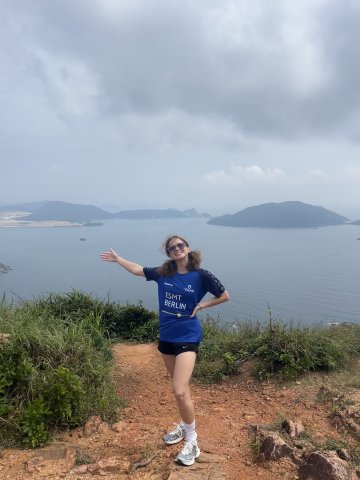
Life in Hong Kong moves at an electrifying pace. In many ways, the skyline and constant buzz take me back to Manhattan. And because my lectures are often scheduled from 7:00-10:30pm, my daily schedule flipped completely. I can explore neighborhoods, hike mountains, and spend a morning near the water, all before a night class.
At the same time, being in Hong Kong has given me a deeper appreciation for my life in Berlin. As an ambitious European capital, Berlin still offers a space to stay grounded. The urbanism and neighborhood culture there make it easy to maintain harmony alongside professional drive. Hong Kong is an exhilarating chapter that keeps me constantly stimulated, but Berlin has that grounded soul that I’m looking forward to returning to.

Does this kind of international exposure add value to your MBA? What advantages can a long-term exchange provide?
"When, in the future, I pursue projects across the Asia-Pacific region, I’ll have real context and a network from which to pick a brain."
Absolutely. A long-term exchange provides a low-risk, highly immersive way to understand an entirely different part of the world from the inside out. When, in the future, I pursue projects across the Asia-Pacific region, I’ll have real context and a network from which to pick a brain.
Conveniently, this exposure builds on the foundation I gained at ESMT. In the “Building Resilient, Scalable, and Responsive Supply Chains” course at HKUST I rely on the operations principles from Professor Tamer Boyaci and the core strategic frameworks from Assistant Professor Jamie Seoyeon Song’s class to analyze diverse business cases across the Asian market.
What makes studying these regional cases so powerful for me is the sheer proximity. DJI was actually founded by an HKUST alumnus and is headquartered in Shenzhen, an 18-minute high-speed train ride from Hong Kong. Each time I visit the 'Silicon Valley of China,’ I’m fascinated that I can immerse myself in the epicenter of this ecosystem while studying how a hardware-first company overcame intense geopolitical headwinds to capture the global commercial drone market, including a dominant share in the US. Being right here to dissect these strategies firsthand offers me a level of insight that no textbook or remote lecture could.
Including your undergraduate degree, you have now experienced business-school life on three continents. How does the culture differ between the three?
Each continent matched a distinct chapter of my development. My undergrad in New York was about me discovering the language of business and getting that first baseline exposure.
Studying in Berlin now is highly practical and intentional for me. From day one, I was immersed in intensive group work where I didn’t get to pick my teammates, just like in professional life. You don’t choose your team, you learn how to communicate through disagreements to align – and execute. Being older and having worked for several years in Germany made the lessons at ESMT resonate on a reflective level.
In Hong Kong, many of my classmates are local professionals balancing high-powered jobs in finance, technology, or entrepreneurship with their studies. The discussions bring real-time market realities directly into the room.
Do you have advice for future students thinking about an exchange program?
Trust your curiosity!
I realize now that a long-term exchange is really the lowest-risk way imaginable to live inside another world. Moving to a new country is hard, I’ve done it multiple times, and sorting out visas, housing, and social circles from scratch is a mission on its own.
On an exchange, this one in particular, you’ve got the ESMT International Office Team and its shining star Verena Ackels working tirelessly to support you along the way. And Emily, Alice and Kay from HKUST Global Programs who you haven't even met yet to back you up. So don't be afraid to bet on yourself!
How about the Full-time MBA – what would you say to your pre-MBA self?
"You have no idea how it's going to transform your life until you feel it in your chest a couple of weeks into the program."
To my pre-MBA self:
You don't need to force anything if your gut and intention aren’t in it, but if you've got that undeniable urge to grow, things will work out. You have no idea how it's going to transform your life until you feel it in your chest a couple of weeks into the program.



What is your favorite memory from the Full-time MBA or from ESMT so far?
It’s almost impossible to pick just one, because my whole journey is built on big and small – but all important – moments.
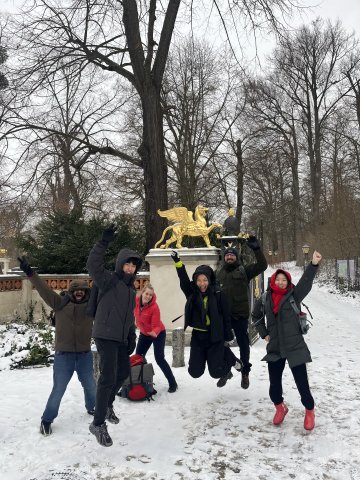
My earliest favorite memory was during our outdoor orientation day in the dead of winter. It was freezing cold and snowing, and even coming from cold climates, I was shivering. Yet none of my teammates were complaining. Everyone was charged and enthusiastic, and that was the moment I thought, I really lucked out with my cohort.
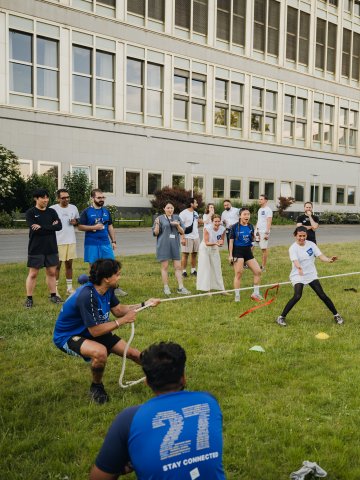
Beyond that, it’s the spontaneous after-class pizzas and Aperol spritz, working with your group until the security staff reminds you it's time to go home, the goofy faces we’d make at each other before the clock starts running on an exam, and all of the school-organized events... ESMT Olympics will long live in my heart.
This community, from peers and professors to the campus staff who greet you every morning and know when you’re having a tougher day, makes the entire experience unforgettable.
Thank you, Liza!
If you would like to follow Liza's journey in Hong Kong, and hear more of her insights and reflections on MBA life in Berlin, you can connect with her on LinkedIn.


See more student stories from ESMT Berlin
