Becoming who you want to be in ESMT Berlin's Full-time MBA
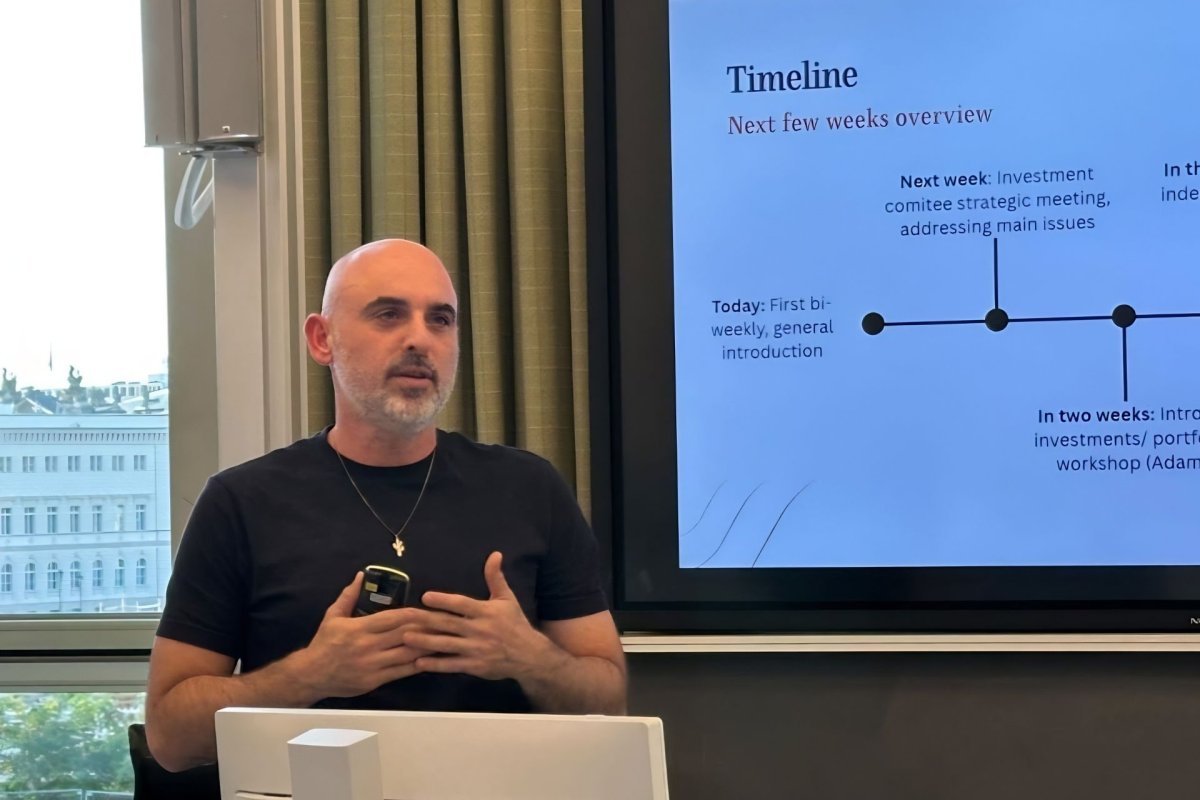
The strength of a supportive cohort: Adam's story
For Full-time MBA (FTMBA) student Adam Bloch, the value of being a full-time, in-person business school student goes far beyond the lecture hall.
In this blog, Adam, Class of 2027, explains how ESMT's insightful faculty, together with his generous, close-knit cohort, have created an MBA experience like no other; helping him find belonging, wisdom, and a network that will remain strong long after graduation.
He also reflects on the ways he is giving back to this vibrant community, including being part of a student-run career panel, helping breathe new life into the Investment & Fintech Club, and acting as a mental health first aider for students in need of a little extra support.
Hi Adam, could you please introduce yourself?
Sure. I am a finance and consulting expert, 40 years old, originally from Tel Aviv, Israel, and I have been living in Berlin for the past 11 years.
What was behind your decision to come to ESMT Berlin, and why did you choose the Full-time MBA program in particular?
I’m a career changer – in my previous career I held managerial positions in the fine dining industry. My move to Germany was partly about this change – I did my bachelor’s here in Berlin, had the pleasure of doing some fascinating work in the mergers and acquisitions advisory of an Israeli investment bank, and then transitioned to a boutique consulting firm here in Berlin.
As my experience is therefore mixed and untraditional, I thought an MBA from a top business school would complement my profile. I chose the Full-time MBA because I had the chance to get into the program at the last minute, and I was only working on private projects, not committed to an employer.
I also like the length of the program – putting in the effort for 15-16 months and earning an MBA sounded like the perfect choice, and I am very happy with it.
What parts of the program have you enjoyed the most so far? Have any lectures or courses stuck with you?
Some of our professors have impressed me a lot, and I think I’m taking something with me into the future from almost all of them.
I do have to mention two courses (and lecturers) that stood out to me – Francis de Véricourt and his course Managerial Analysis and Decision Making were a real milestone for me in this program – every lesson impacted me deeply and shaped my thought processes; and Negotiating Leadership Challenges by the wonderful Julia Langdon, where we got to learn, test and adapt our negotiation skills in different settings.


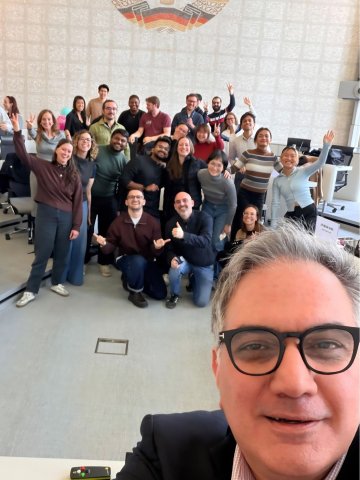

In your cohort, 91% have an international background. How does being exposed to these global viewpoints shape your MBA experience?
"It creates a very interesting environment, where our discussions are usually meaningful, and our group work is highly collaborative."
We are indeed a very diverse cohort – from an international perspective, sure, but also in terms of age (some are as young as 27, while another student and I are over 40) and professional experience.
It creates a very interesting environment, where our discussions are usually meaningful, and our group work is highly collaborative. We also try to support each other with some of these aspects – for example, two others from our cohort and I had already worked in Germany, so we organized a career panel where we shared our experiences with the rest of the cohort.
What was this career panel initiative like?
"It proves one of my main lessons from the program so far – the best investment one can make is in his or her cohort"
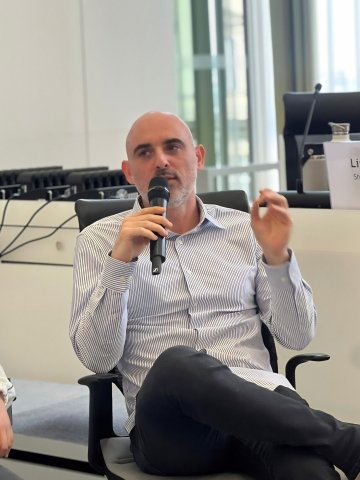
It was organized by Beatriz Sgobi, one of my Full-time MBA classmates, with support from CareerOS, our career platform. The speakers included three of us from the FTMBA: Mehmet Kiraz, who also studied in Germany and worked in a classic, large company setting; Liz Feng, who transitioned from working in China to working for a large German corporation; and myself, having worked for a boutique consulting firm.
We shared our experiences regarding working in Germany, cultural differences, work-life balance, employee rights, and similar themes. It proves one of my main lessons from the program so far – the best investment one can make is in his or her cohort – the more you support each other, the better and more pleasant the whole journey is. I think my cohort especially excels at this.

You recently took part in the Berlin Experience Week. What did this involve, and what was it like to meet MBA students from the wider ESMT community?
The Berlin Experience Week was a great opportunity, first and foremost, to meet students from the Global Online MBA (GOMBA) program, which does not happen often, as most of them live outside of Germany.
For us, the week was optional, as an elective course. We had an introduction to some of Berlin’s and Germany’s history and the local ecosystem (especially the tech/VC space) and had modules in leadership and change management. Even though I have already lived here for 11 years, it was still interesting to see how ESMT chooses to introduce Berlin to newcomers, and to meet some of the GOMBA students, who left a strong impression on me.
You are also one of the co-leads of the newly revamped Investment & Fintech Club. What does the club do and what prompted you to step up as a lead?
"The portfolio’s size is currently about €140k, one of the largest in Europe.”
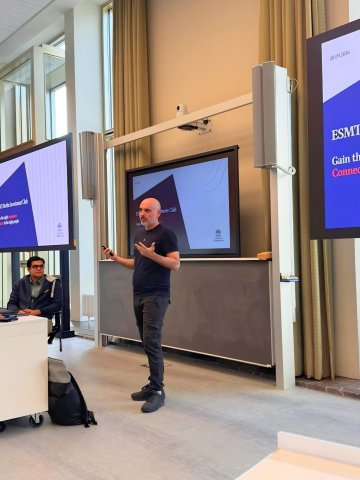
I’m happy to talk about the Investment & Fintech Club, as it has been a main focus for me since I joined three months ago. The club was indeed inactive for about a year, and we did some restructuring to make it relevant and attractive for ESMT students, alumni, and guests.
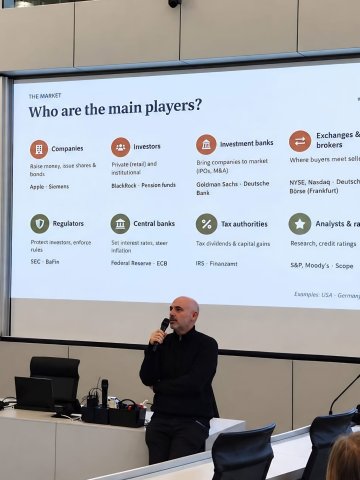
The club stands on two main pillars – the events pillar, where we invite external speakers to share their insights and experiences with us; and the portfolio pillar, where we manage a portfolio of ESMT money without any intervention from the school.
Both pillars have been very active – we already had a great event with Dr. Sebastian Schaefer, CEO of House of Finance & Tech Berlin, about financial well-being; and on the portfolio side, we are creating a new structure that tries to include as many club members as possible in the active management of the portfolio, including an investment committee and sector teams.
The portfolio’s size is currently about €140k, one of the largest [for a student club] in Europe. Besides these core activities, we are also working on partnership projects – for example, we are now running a joint project with the DEEP Institute and ESMT’s Tech Club, where club members support angel investors with due diligence.
I wish to mention two key players here – my co-president and partner Arshia Shams, and our VP Idil Kaya (both Master in Global Management, Class of 2027) – none of this would have happened without the effort and passion of these two.
Is it beneficial for students to join clubs or other initiatives on campus? What can these extracurriculars add to the ESMT experience?
I only joined the investment club as co-president relatively late in the program. However, the last few months have proven that the club has huge potential. I can also say that we are receiving excellent support from the school – from management to faculty, student services, and accounting. The clubs allow students to express an entrepreneurial spirit, so I definitely recommend joining.



In addition to all this, you are the student mental health first aider on campus. What does your role involve?
The mental health first aiders (MHFA) program is a new initiative at ESMT, which aims to increase the safety and health of our community. The program includes representatives from all departments – ESMT staff, management, the MBA programs, and the master’s programs.
The participants took an MHFA course by the Zentralinstitut für Seelische Gesundheit, where we learned about different mental health issues and how to provide first aid when needed.
The focus here is not on giving any treatment, just on being able to recognize when someone is not doing well and offering first aid and initial advice. I find mental health crucial, especially in stressful environments, and as ESMT is a very international school, it is a very good idea to address potential issues before they become critical. It is also a way to give back to the ESMT community, which is important to me.
What does it mean to you to be part of a university community that takes mental health support seriously?
As I mentioned, this is a topic I find very important, so it feels great that ESMT puts focus, good intentions, and resources into supporting community members in this area as well. It also shows that the school takes ownership of very individual and personal aspects of community members’ lives, which to me is meaningful and was a main reason to contribute in this way.
Do you have any tips for balancing an MBA workload with other life demands? How can a student reduce their stress and start to thrive?
"I am very lucky with the cohort I am part of. We have been supporting each other from day one, both in our studies and in our personal lives"
Good question. I personally don’t feel overloaded by the program, but that might be because I have been living in Berlin for a long time and had fewer life changes to deal with. I would mention a few tips:
First, preparation is always recommended. If a student can arrive earlier and take care of things like finding an apartment, bureaucracy, and even starting with German, it contributes to a general feeling of security and reduces stress. ESMT offers help with that, especially student services, so it is generally a good idea to reach out to them and enjoy their support.
Second, understand that the program has different phases – the first five-six months are very busy and demanding, while the summer and fall are more relaxed.
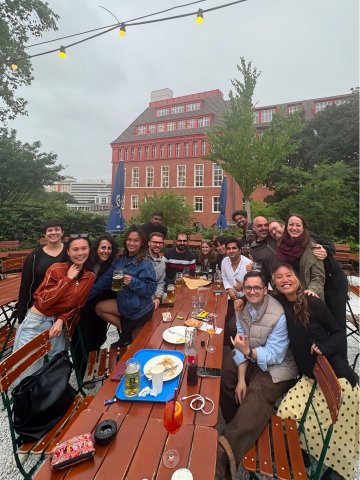
Third, rely on the cohort – I am very lucky with the cohort I am part of. We have been supporting each other from day one, both in our studies and in our personal lives, and I can’t emphasize enough how positively this has influenced the whole MBA experience.
And lastly, try to remember that there’s more to life than studies, business, and networking. I, for example, really enjoy art and culture, and Berlin has a lot to offer in both.



See more highlights from life at ESMT Berlin
