Perspectives from around the world: learning from a global MBA community
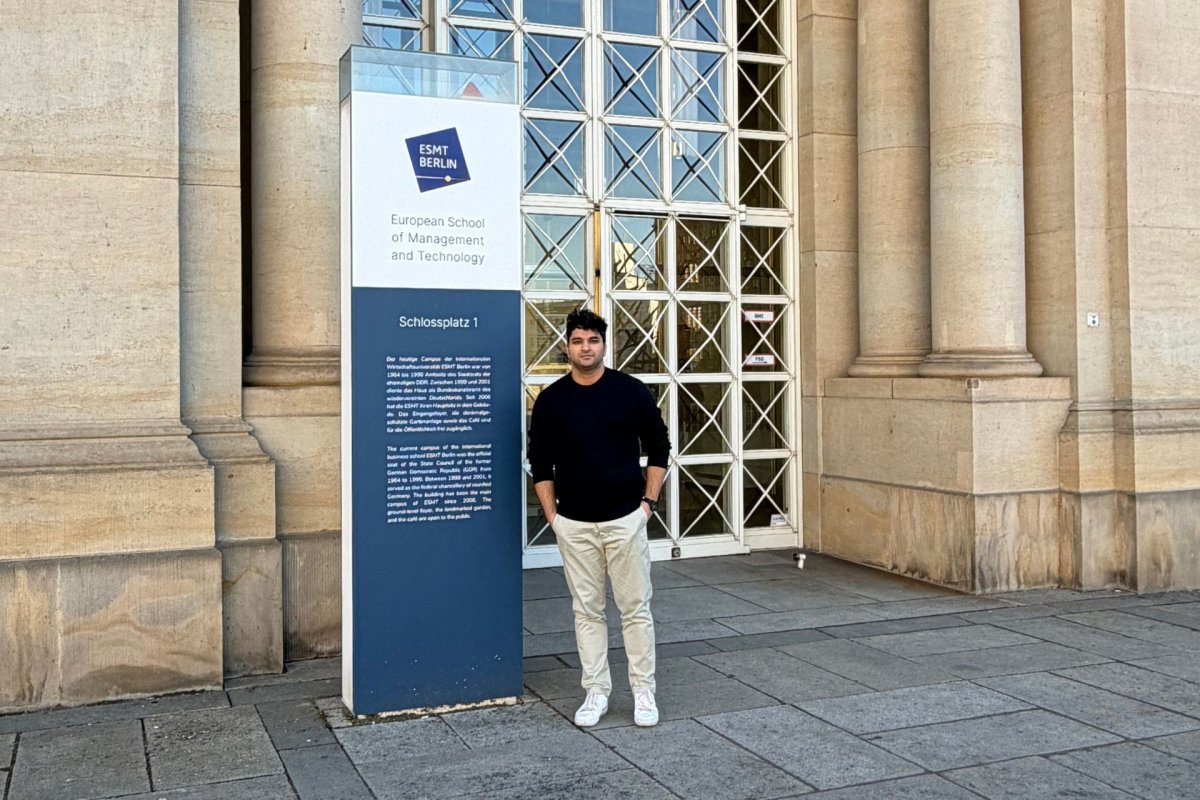
Growing professionally and personally: Rishabh's story
In this article, Rishabh, Class of 2027, explains why moving from New Delhi to Berlin for the Full-time MBA (FTMBA) has provided an opportunity for him to challenge his thinking and drive continuous growth through a “business as unusual” approach.
He also reflects on how his highly international FTMBA cohort is an integral part of this growth; from offering diverse perspectives that enhance classroom learning, to being a source of community for newcomers to Germany.
And he explains how the practical components of the FTMBA are giving him a chance to draw on these diverse perspectives in real-life scenarios – including during the Sustainability in Practice project that saw his team work with Vorwerk to make the corporation's sustainability benefits more visible.
Hi Rishabh, please introduce yourself
Hi, I’m Rishabh, a Full-time MBA candidate at ESMT Berlin. I come from New Delhi, India, and before joining ESMT, I spent around five years working in digital marketing and growth across industries including travel, consumer brands, and advertising. My work has largely focused on performance marketing: using data and technology to help businesses grow.
Outside of academics and work, I enjoy travelling, exploring new places, and meeting people from different backgrounds. Moving from New Delhi to Berlin has been a great experience so far, both personally and professionally, and ESMT has given me the opportunity to learn from a truly international community.
What influenced your decision to come to ESMT Berlin, and why did you choose to join the Full-time MBA program?
"I saw the MBA as more than just a qualification. I wanted it to be a platform to challenge my existing way of thinking."
After around five years of working in digital marketing and growth, I reached a point where I wanted to look beyond my functional expertise and develop a broader understanding of business. I wanted to strengthen my skills in areas such as strategy, leadership, innovation, and entrepreneurship, and that was the main motivation behind pursuing an MBA.
I chose ESMT because of its strong focus on technology, innovation, and entrepreneurship, combined with its international environment. I was particularly excited about the opportunity to study in Berlin, a city known for its diverse startup ecosystem and entrepreneurial culture. I also liked that ESMT’s Full-time MBA offered the opportunity to learn alongside people from different professional and cultural backgrounds, which I believe is an important part of developing a broader business perspective.
Ultimately, I saw the MBA as more than just a qualification. I wanted it to be a platform to challenge my existing way of thinking, learn from people with very different experiences, and explore how I could combine my background in growth and marketing with strategy, innovation, and responsible business. ESMT felt like the right environment for that transition.
You are part of a global cohort: 91% have an international background. How does this shape your classroom experience?
"I particularly enjoy this during group projects and case discussions, where we learn as much from each other as we do from the course material."
Being part of such a diverse cohort has probably been one of the most valuable aspects of my experience at ESMT. With people coming from different countries, cultures, industries, and professional backgrounds, there is rarely just one way of looking at a problem. Even when we are discussing the same business case, different classmates often bring completely different perspectives based on their experiences and the markets they have worked in.
I particularly enjoy this during group projects and case discussions, where we learn as much from each other as we do from the course material. It has also made me more aware of how culture can influence communication, leadership, decision-making, and the way businesses operate.
Coming from India and now studying in Germany with classmates from around the world has also made the MBA feel like a truly global experience. Beyond the classroom, it has helped me build friendships with people I might never have met otherwise and learn about different cultures and ways of thinking. I think that exposure is preparing me not just to work in an international environment, but to approach problems with a much more open mind.


What is it like studying at ESMT?
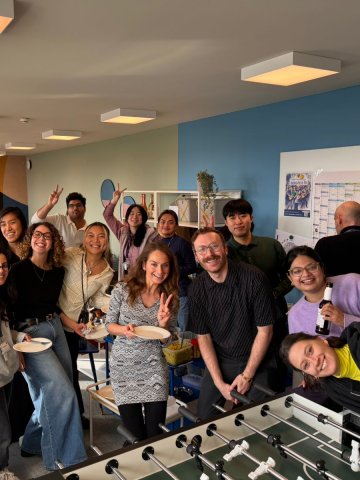
Studying at ESMT has been academically challenging, fast paced, and highly collaborative. The first semester was particularly intensive, with a demanding course load and strict deadlines, but it was also a great learning experience. What I enjoy most is that learning doesn’t stop when the lecture ends. Case discussions, group projects, and simulations give us opportunities to apply what we learn, while hearing different perspectives from classmates with diverse professional and cultural backgrounds adds another dimension to the experience.
Another important part of the ESMT experience has been networking opportunities. The school regularly organizes events where we get to interact with alumni, industry leaders, entrepreneurs, and professionals from different sectors. These events have helped me expand my network, understand different career paths, and gain perspectives that you wouldn’t necessarily get inside a classroom.
What is your favorite place on campus?
My favorite place on campus is the garden area. Especially during the summer, it becomes a natural gathering spot for us. We often have lunch together, play games, or simply sit and catch up between lectures. Sometimes, we even take our case studies or assignments outside and discuss them there.
I often find myself sitting there with a coffee and talking with classmates. It’s a nice change from being inside the classroom and giving us a chance to enjoy the campus, get some fresh air, and connect with each other in a more relaxed setting.

Did you move from India to Berlin for the FTMBA? What should Indian students consider when looking at university options in Europe?
Yes, I moved from New Delhi, India, to Berlin to pursue my Full-time MBA at ESMT. Moving to a new country for an MBA is a big decision, and there are several things I would encourage Indian students to consider when looking at universities in Europe.
First, look beyond rankings and consider whether the program actually aligns with your career goals. Different European business schools have different strengths, teaching styles, and industry connections, so it’s important to understand what you want to get out of the MBA before choosing a school.
Second, consider the location. An MBA is not just about what happens inside the classroom; the city you study in can have a significant impact on your overall experience and career opportunities. I chose Berlin partly because of its international environment, startup ecosystem, and the opportunity to experience working and living in Europe.
I would also encourage students to look closely at the diversity of the cohort, opportunities to interact with companies and industry leaders, career support, and the strength of the alumni network. These can be just as important as the academic curriculum when you are making a career transition.
Finally, be prepared for the personal side of the move. Studying abroad means adapting to a new culture, becoming more independent, and learning to work with people from very different backgrounds. For me, that has been one of the most rewarding parts of the experience. I would encourage Indian students to look at the MBA not just as a degree, but as an opportunity to build a global perspective and challenge themselves outside their comfort zone.
You chose Sustainability in Practice for your summer project. Can you tell us a bit about what that involves?
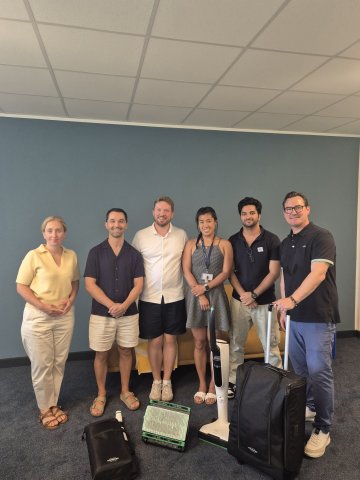
Sustainability in Practice (SIP) is a hands-on project where we work with a real organization on a current business challenge. For our project, we worked with the Vorwerk Group, focusing on its Thermomix and Kobold product lines. Our objective was to understand how sustainability could be better integrated into the product demonstration experience to create customer value, strengthen purchasing motivation, and support Vorwerk’s sustainability strategy.
One of the most interesting findings was that the opportunity wasn't necessarily about making the products more sustainable, but about making the sustainability benefits they already offer more visible to customers. Through our research, we found that customers tend to value tangible aspects such as durability, repairability, and efficiency more than generic terms like “sustainable” or “eco-friendly.” We also found that Vorwerk's advisor network, which plays a key role in the company's sales model, could be better equipped to communicate these benefits during demonstrations.
As part of the project, we visited Vorwerk’s headquarters in Wuppertal, attended Thermomix and Kobold demonstrations, conducted consumer research and surveys, and analyzed how competitors communicate sustainability. I personally focused on competitor analysis, research, and developing recommendations. We also worked closely with Vorwerk’s sustainability team throughout the project.
Our final recommendations focused on making sustainability more tangible during demonstrations – for example, using simple product demonstrations to show durability, repairability, efficiency, and reduced food waste, supported by clear evidence and training for advisors. What I found particularly valuable was seeing how sustainability can move beyond being a corporate responsibility topic and become part of the customer value proposition and, ultimately, a potential growth driver.
Which students were on your team? Did you work with any mentors or supporters?
Our team consisted of four MBA students: Scott Davis, Diana Tang, Radomir Predojevic, and me. One of the strengths of our team was the diversity of our professional backgrounds. Scott brought experience in sales and marketing; Diana brought a background in finance, strategy, and project management; while Radomir’s background in medicine and research brought a very different perspective to the project. I contributed my experience in marketing, research, and consumer-focused strategy.
Having such different perspectives was particularly valuable because sustainability is a topic that cuts across many areas of business. We could look at the same challenge from commercial, financial, research, and customer perspectives, which helped us develop a more holistic set of recommendations.
We were fortunate to have the guidance of Joanna Radeke, Director of the ESMT Institute for Sustainable Transformation and Director of Sustainability at ESMT Berlin. On the Vorwerk side, we worked closely with Nhung Kieu, Head of Group Sustainability, who helped us understand the company’s sustainability priorities and provided valuable insights throughout the project. We also had the opportunity to interact with Vorwerk’s demonstration partners, which helped us better understand the customer-facing side of the challenge.
Overall, it was a great example of how bringing together people with different backgrounds can make a team stronger, particularly when working on a complex and multidisciplinary topic like sustainability.


Do you think sustainability is an important part of the future of business?
"I used to see it primarily through the lens of environmental responsibility, but the project showed me that it can also be closely connected to customer value, innovation, and business growth."
Absolutely, I think sustainability will become an increasingly important part of how businesses create and communicate value. But my experience with the SIP project also changed the way I look at sustainability. I used to see it primarily through the lens of environmental responsibility, but the project showed me that it can also be closely connected to customer value, innovation, and business growth.
Customers are increasingly looking for products that are durable, efficient, repairable, and create less waste. For businesses, this creates an opportunity to turn genuine sustainability strengths into a competitive advantage. At the same time, companies need to be careful about making broad sustainability claims without evidence. The future, in my view, will be less about simply saying that a product is “sustainable” and more about being able to demonstrate exactly how and why it is better.
Ultimately, I believe sustainability will become less of a separate business initiative and more integrated into how companies design products, operate, communicate with customers, and think about long-term growth. For me, that is what makes it particularly interesting – not just as a responsibility, but as an opportunity to build better and more resilient businesses.
At the halfway point of the FTMBA, what classes, workshops, or seminars have had the biggest effect on you? What will have the biggest career impact?
As I approach the halfway point of the Full-time MBA, some of the courses that have had the biggest impact on me have been Managerial Decision Making, Management Accounting and Finance, and the courses focused on Organizational Behavior, Resilience, and Negotiations. Each of them has challenged me in a different way and given me a broader perspective on how businesses and people operate.
What I particularly value is that the Full-time MBA goes beyond technical or “hard” skills. Courses like Managerial Decision Making have made me think more critically about how to approach complex problems and make decisions when there isn't always a clear answer. The courses on resilience and negotiations have been equally valuable because they focus on the human and behavioral side of leadership – how we communicate, handle uncertainty, manage different perspectives, and influence others.
Looking ahead, I think these general management and leadership skills will have the biggest impact on my career. My professional background has given me a strong foundation in marketing and data-driven decision-making, so the opportunity to develop broader business judgment and leadership capabilities is particularly valuable to me. I believe these are skills that will remain relevant regardless of the industry, role, or career path I choose in the future.
Outside of the classroom, have you been a part of any clubs or events? Do you get to socialize with your cohort?
"Our MBA cohort is also very social. We celebrate each other’s birthdays, meet up at cafés and bars, organize sporting activities, and go cycling or explore Berlin together."
Definitely. One of the things I’ve really enjoyed about the ESMT experience is that the connections with my cohort extend well beyond the classroom. I’m part of the ESMT Consulting Club, which has given me opportunities to explore consulting more closely and connect with other students who are interested in the field.
Our MBA cohort is also very social. We celebrate each other’s birthdays, meet up at cafés and bars, organize sporting activities, and go cycling or explore Berlin together. We even have a separate WhatsApp group where people share events or activities they’re interested in, and others can join if they want to. It makes organizing plans quite spontaneous and has helped us build a strong sense of community.
For me, that balance between the intensity of the MBA and having a social life in Berlin has been an important part of the experience. Some of my best memories so far have actually come from the informal moments with classmates – whether it’s grabbing a drink after a long day, playing sports, or travelling together.
The ESMT tagline is "business as unusual." In your opinion, how is this reflected across the school?
"When you have people from different countries, cultures, and professional backgrounds working together, there is rarely a single “usual” way of looking at a problem."
For me, “business as unusual” is reflected in the way ESMT encourages us to look beyond the conventional way of approaching business problems. It’s not just about learning frameworks or theories, but about questioning assumptions, bringing different perspectives together, and thinking about how we can create meaningful impact.
I’ve experienced this particularly through the practical nature of the MBA. Our Sustainability in Practice project with Vorwerk was a great example – we were working on a real business challenge with a real organization and had to translate our research into recommendations that could actually create business value. Similarly, courses around decision-making, resilience, and negotiations have pushed me to think beyond technical knowledge and develop the behavioral and leadership skills needed to navigate real-world situations.
The international cohort is another big part of it. When you have people from different countries, cultures, and professional backgrounds working together, there is rarely a single “usual” way of looking at a problem. And being in Berlin, with its entrepreneurial and constantly evolving environment, reinforces that mindset.
So, to me, “Business as unusual” is ultimately about being willing to challenge the status quo, stay curious, and approach business with a different perspective. That mindset has probably been one of the most valuable things I’ve taken away from my time at ESMT so far.
What is your best overall memory from the FTMBA so far?
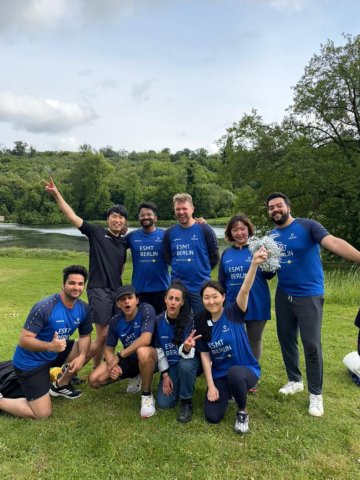
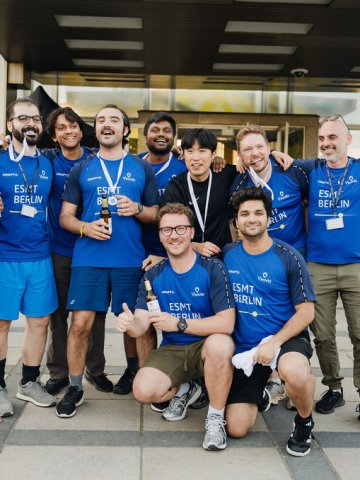
My best overall memory from the FTMBA so far would definitely be MBAT at HEC Paris. It was a completely different experience from our day-to-day MBA life – we stepped away from classrooms and case studies and spent three days competing, socializing, and representing ESMT alongside MBA students from business schools across Europe. MBAT brings together more than 1,500 MBA students for sports, competitions, networking, and social events.
What made it particularly special for me was experiencing it together with my cohort. We were competing in different events, but everyone was constantly supporting and cheering for each other. There was a real sense of team spirit, and the experience brought us even closer as a class.
Beyond the competition, it was also an amazing opportunity to meet MBA students from different schools and countries, make new connections, and simply have fun together. Looking back, it captures a lot of what I’ve enjoyed about the MBA so far – the learning, the international exposure, the friendships, and the experiences outside the classroom.


What is your advice for future international students thinking about Germany and ESMT for their MBA?
"For me, the international cohort, networking opportunities, practical projects, and experiences like the MBAT have been just as important as the academic learning."
My biggest advice would be to come to Germany and ESMT with an open mind and a clear idea of what you want from the MBA, but don’t be too rigid about the journey. Coming from New Delhi, moving to Berlin was a big personal and professional step for me, and I’ve realized that some of the most valuable experiences have come from things I didn’t necessarily plan for.
When choosing a university, I would encourage prospective students to look beyond rankings and consider the overall fit: the curriculum, career opportunities, diversity of the cohort, alumni network, and the kind of learning environment the school offers. At ESMT, for example, the Full-time MBA is highly international, with 91% of the cohort coming from outside Germany, which creates a very different classroom experience and exposes you to perspectives from around the world.
I would also strongly recommend considering the country and city as part of the decision. Berlin offers a very international environment and access to Germany’s business, startup, and innovation ecosystem. If you are considering building a career in Germany after your MBA, I would also recommend starting to learn German early. While the MBA is taught entirely in English, German can make a significant difference to your professional and everyday experience, particularly if you plan to work outside Berlin.
Finally, make the most of the people around you. The MBA is not just about attending classes and getting a degree. Participate in events, build relationships with your classmates, speak to alumni and industry professionals, and explore opportunities outside the classroom.
For me, the international cohort, networking opportunities, practical projects, and experiences like the MBAT have been just as important as the academic learning.
If you are looking for an MBA experience that combines academic learning with personal growth, international exposure, and the opportunity to challenge yourself in a new environment, I would definitely encourage you to consider Germany and ESMT.
Thank you, Rishabh!
Inspired by this story and want to hear more? You can get more of Rishabh's insights into MBA life in Germany by following him on LinkedIn


See what life at ESMT really looks like
