Full-time MBA alumni careers: “what I am working on could affect 20 million customers”
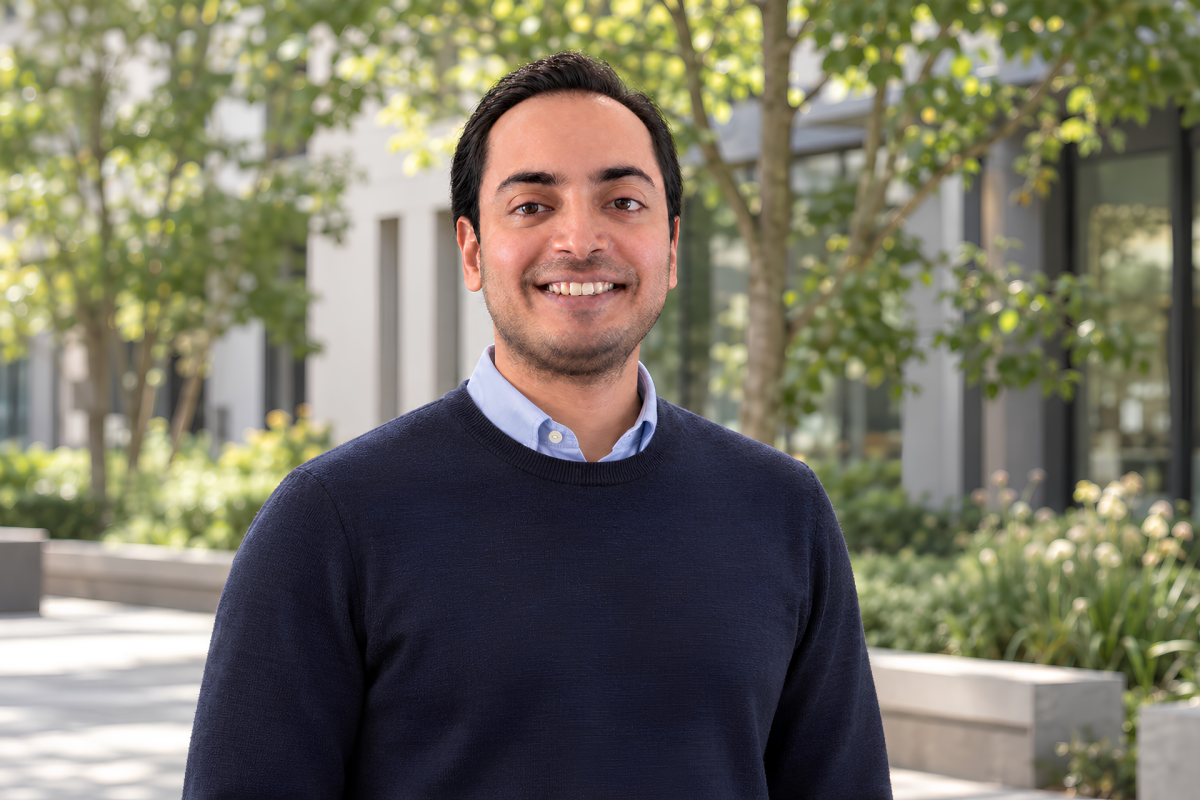
The MBA changed the way I thought about what a career should look like: Animesh’s story
For Full-time MBA (FTMBA) alum Animesh Srivastav, the decision to move to Berlin for his MBA in 2019 was the first step of a journey that has taken him all around the world and helped him build both a life in Munich and a diverse, rewarding career with Amazon.
In this blog, Animesh explains the different functions and industries he has explored with Amazon, and how the Full-time MBA mindset continues to help him in his current role in Product Content and AI.
Animesh also shares how his professional path has revealed a passion for mentorship and career coaching: a mission he draws on to share his pro tips for prospective and current MBA students who are thinking about their own post-MBA career trajectories.
And he offers thoughtful insights – both for those interested in the intersection of AI and management, and for those wondering how to make the most of their time at ESMT Berlin.
Hi Animesh, could you please introduce yourself?
I’m Animesh, currently based in Munich, Germany and working in the product team of Amazon Fashion Europe. I was born in Bihar, India; grew up in Mumbai, India and did my bachelor’s in business management. I started my career in India itself, where I worked for over seven years across Business Development & Strategy in financial services and real estate. I then decided that I wanted broader international exposure and wanted to build my career outside India which eventually brought me to Germany and to the Full-time MBA at ESMT in 2019.
Since graduating, I’ve worked for the last six and a half years at Amazon across business development, product and program management, within the Brand Protection and Fashion teams. Alongside my main career, I’ve become increasingly involved in mentoring and career coaching, which is something I care deeply about. Outside work, I’m a big Arsenal supporter, I read a lot, and I share my home with two cats who probably have a stronger claim to the apartment than I do.
You graduated in 2019 and have spent much of your post-MBA career with Amazon. What is it like to work for such a globally significant company?
“For someone who originally did an MBA partly because I wanted international exposure, Amazon has continued that journey in a remarkable way”
The first thing that hit me was the scale. I remember sitting in a routine meeting discussing a product or customer problem and then realizing that what I am working on could eventually affect 20 million customers. That still feels incredible to me.
Amazon also has a very strong writing culture. Important ideas are often worked through in documents rather than presentations, which forces you to think clearly: What problem are we solving? What evidence do we have? What are we proposing, and why? Over time, that made me think holistically through everything.
Another thing I’ve valued enormously is the people. I’ve worked with some exceptionally smart people, and there is so much to learn every day. Recently, for example, I was talking to a colleague about AI. We discussed what might change over the next three years and how we should prepare for it. He then said, “Think about what will change, but also think about what will not change and build around that.” AI may transform a lot of how we work, but things like the ability to collaborate, build trust, or understand customers are still going to matter.
And then there is international exposure. I've worked with colleagues across the US, India, China, and Europe, and projects can involve team members from all over the world (and time zones). I've also had opportunities to travel for work across EU, the USA, and India. So, for someone who originally did an MBA partly because I wanted international exposure, Amazon has continued that journey in a remarkable way.


What is your current role like? On a general level, are you still able to rely on any of the thought frameworks you learned in the Full-time MBA?
“I think that was one of the biggest things the MBA taught me: how to take a problem I don't fully understand, structure it, look at it from different angles and start finding solutions to it.”
I currently work in the product team of Amazon Fashion. Broadly, my role involves improving how Sellers create and list their products on Amazon, and then how that product information eventually appears to customers.
Some questions I ask and work on: How do we make it easier for a seller to provide the right information? How do we improve the quality of that product content? And ultimately, how do we help a customer make a better purchase decision? A large part of my job is therefore thinking about the longer-term strategy and then influencing different teams to deliver it. And yes, there are quite a few Amazon documents involved along the way.
The MBA helps a lot, although not because I remember all the frameworks that were taught then. ESMT was very case-study driven. We would get an unfamiliar business situation, usually with imperfect information, and had to make sense of it. I think that was one of the biggest things the MBA taught me: how to take a problem I don't fully understand, structure it, look at it from different angles and start finding solutions to it. That gave me confidence later in my career because I realized I don't need to be the world's expert on something to solve it.
There are also specific subjects that I remember. Decision-making was probably my favorite where I learnt about thinking through probabilities and numbers rather than just judgments. Strategy taught me to think much more clearly about questions like who, why, and how for a business or product launch. Organizational behavior helps when I am trying to influence teams that don't report to me.
And then there was the intercultural element. Our ESMT cohort was extremely international (50 students from 26 or so nationalities), and we also studied areas such as international communication. Today I work with teams across several countries and cultures, so that experience has been really helpful.
During your time at Amazon, you have changed your function several times. Do you think having your MBA allows you to make more strategic function changes?
Definitely. The MBA changed the way I thought about what a career should look like. At some point in the MBA, I realized there are broadly two paths. I could go extremely deep in one area and become a real functional expert, i.e. specialist. Or I could build breadth across multiple topics because, i.e. generalist. I was more interested in the second path. If I eventually wanted to become a general manager or run a business, I felt I needed to understand different functions rather than optimize only for the next promotion within one of them.
So, I started thinking about my career as a portfolio of experiences. One example was moving from business development in Amazon Brand Protection, where I was working on issues such as counterfeit prevention, into a product role in Fashion. There wasn't an obvious connection between those jobs. But that was exciting for me since I could add a new function, a new industry, and a new set of customer problems.
The MBA also helped in more ways, those I mentioned earlier. It gave me the breadth to feel comfortable entering unfamiliar areas, and it gave me the confidence that I could learn them. So today, when I think about a career move, I don't only ask, “Is this a bigger title?” I also ask, “What capability or perspective will I have two/five/ten years from now that I don't have today?”
You moved from India to Berlin for the MBA. Looking back, how did studying at ESMT help you build the foundations of a career in Germany?
“I was surrounded by people from completely different countries, industries, and backgrounds. That was exactly the global exposure I had been looking for when I left India.”
ESMT helped a lot. The classroom itself was important because suddenly I was surrounded by people from completely different countries, industries, and backgrounds. That was exactly the global exposure I had been looking for when I left India.
But ESMT also gave us access to the German business world through practical guest sessions and networking events. I remember ESMT organizing these evening networking sessions where very senior leaders from companies such as Siemens or Deutsche Bahn would come and spend time with us. It was amazing how there were only 15 or 20 students attending, and so it felt quite intimate, and we had very open conversations with people who had spent decades leading major businesses. ESMT also organized company visits, including visiting Amazon in Berlin, and companies here in Munich. It gave me a much more practical understanding of the German business landscape.
Another thing I really valued was having a career coach assigned through ESMT. At that stage I was trying to work out not only which job I wanted, but also what I am good at, what do I want to learn, and what kind of career do I want to build. Having somebody externally help me think through those questions was extremely useful and, looking back, probably also planted one of the early seeds for my own interest in coaching.
And then there is a very direct connection between ESMT and my career: Amazon itself. I was able to be recruited through ESMT's connections. When I think about it, that's quite remarkable. I wasn't an engineer and had no tech experience. I worked in financial services and real estate. Without the MBA, I don't know how I would have found my way into a large global technology company like Amazon. So, I do feel quite indebted to ESMT since it created this bridge that made that career possible.
Alongside your work, you are passionate about mentorship and career coaching. What inspired you to explore this path?
It started with mentoring people at work. I've always enjoyed listening to people and trying to help them work through their problems. But enjoying something doesn't necessarily mean you're good at it. What encouraged me was that my team members and fellow colleagues at Amazon gave me positive feedback. They would tell me that I listened patiently, that I didn't immediately impose my own answer, and that I was good at putting myself in their situation rather than simply telling them my perspective.
Then, two years ago, I thought that maybe I could go bigger on it. So, I created a profile on an external mentoring platform and started working with people outside Amazon as well. That was quite exciting because these were complete strangers coming to me with very specific goals.
And then there were good outcomes: One person I worked with wanted to get promoted within their company. We spent time understanding what was holding them back, how they were positioning their work, and their visibility. They eventually got the promotion. Another person wanted to move into finance. We worked through the transition, prepared together, and did mock interviews. They managed to make the move.
Eventually I realized that this was something I both loved doing and seemed to be good at, and so I should get some formal training and certifications. Over the last year I've therefore gone through formal ICF-accredited coaching training and have started building my own coaching practice alongside my main career.
As a career coach, do you have any words of encouragement for current Full-time MBAs who might be starting to think about their post-MBA paths?
“You don't know which action will make you find the career, but every good action moves you forward.”
The first thing: there is a lot of pressure, and it is okay to acknowledge that. People come into an MBA with very different circumstances. Some have families, some have taken loans, some have left very secure jobs, and many are trying to establish themselves in a completely new country and job market. I felt that pressure myself.
So, I wouldn't tell someone, “Don't worry, it will be easy,” because for some people it won't be. What I would say is: keep taking the next step. There is a quote often associated with Will Smith about building a wall: don't wake up thinking about building the entire wall; focus on laying the next brick as well as you can. I think job searching is very similar.
Maybe it is the next application, or the next coffee chat, or asking someone for a referral. Or maybe it is improving your CV one more time. You don't know which action will make you find the career, but every good action moves you forward. I applied to over 150 companies, modified my CV at least 50 times, had six interviews, and then converted two of them. It is a classic sales funnel and a numbers game.
Then I would recommend being quite practical about the search. Don't only apply through job portals. Talk to people and use referrals wherever you can. Make your CV very easy for the person (or AI system) reading it. Recruiters and hiring managers generally spend 7-9 seconds on a CV, so your experience and relevance to the role should become clear almost immediately. Don't make them work to understand why they should interview you.
And finally, don't put too much pressure on finding your perfect post-MBA job. Sometimes your first role is simply the door into a new market. I know people who joined a company and stayed there for years, like I did at Amazon. I know others who started in a role they weren't particularly excited about, switched after a year or two, switched again, and have gone on to build fantastic careers. The first job matters, but it doesn't define the rest of your career.
Your path included a 2019 capstone consulting project that utilized AI to scale sustainable processes. Has the corporate AI landscape changed since then?
“I think good managers increasingly need both instincts: Where can AI fundamentally change what is possible? And where is a solution other than AI better?”
The biggest difference is that in 2019, AI was something relatively specialized. Today, I find it difficult to imagine doing my own corporate work without AI. At an individual level, it has almost become an assistant for me. I use it to brainstorm, analyze information, work with data, improve documents, draft communications, and challenge my thinking. Things that might have taken me 3-4 hours can now be done in 10-15 mins.
Then there is what it is doing to organizations. Engineers can code faster, product teams can create prototypes faster, marketing teams can produce and test content faster. One can take an idea that previously existed in someone's head and create something tangible enough to discuss within hours. So, when done right, organizations can deliver 5-10x faster.
I think the next stage is even more interesting: companies are starting to ask not just, “How can AI make this process 20% better?”, but “how should we redesign this customer journey or process today knowing what AI can do?”.
But there is another side to this which I think gets lost in the hype: knowing when not to use AI. I remember discussing a potential AI project where we wanted to collect information from multiple websites, and then someone asked “why do we need AI for this? Couldn't web scraping do it?” And they were right. AI is incredibly powerful, but it isn't automatically the simplest, cheapest, or best solution to every problem. I think good managers increasingly need both instincts: Where can AI fundamentally change what is possible? And where is a solution other than AI better?
If a current MBA student is seeking a career that leverages management and AI, what can they do during their degree to have the best chance of success?
I would focus much less on becoming an “AI expert” and much more on becoming “AI-native”. For me, being AI-native means developing a habit: whenever you're doing something, ask yourself, “Could AI help me do this?” If you perform ten tasks in a day, perhaps AI can meaningfully help with seven, and it can't help with three. That's completely fine. The important thing is that you asked the question ten times. Over time, that changes the way you think, and it builds your AI muscle.
Then I recommend turning that thinking into actual experience. Don't only take courses or learn the names of AI tools. Build things, use AI in a capstone project, prototype an idea, automate something painful in a student club, build a small agent, or use it to analyze a dataset. Things will fail, and that is useful because we start learning where AI is strong and where it isn't.
The other important piece is domain knowledge. Someone who understands AI but doesn't understand the customer or the industry can only go so far. If you deeply understand retail, healthcare, energy, finance, or another domain, and then understand how AI changes what is possible, that combination becomes very powerful. And that is what interviews related to AI test as well. It isn't just, “which AI tools do you know?” It is more: “here is a business problem. How would you use AI to solve it?”
Let’s go back to your time at ESMT. What was the Class of 2019 like? Have you kept in touch with anyone from your cohort?
What I loved about our class was the mix. We were a relatively small cohort of 50 people, but there were so many different personalities and nationalities within it. Some people were extremely social and were always planning the next party, event or night out. And we had some legendary parties.
Then there were people (like me) who were a little more introverted and happier having dinner or drinks in a smaller group. And it worked so well. Because the cohort was small, we knew almost everybody. We worked on projects together, travelled together, argued about cases together, and generally looked out for each other. It became quite close-knit.
One of the highlights was a group trip to China. We visited companies and learnt a lot about the market, but obviously it wasn't only academic. We explored together, ate some fantastic food, and even went to the Great Wall.
Whenever I go back to Berlin, I always meet some of my ESMT friends there. Some people from the batch also ended up at Amazon, so we catch up at work too. Plus, we still have our WhatsApp group through which we are connected.



What is it like to be part of the ESMT Alumni community? Do you have any chances to return to the ESMT campus?
The ESMT Alumni community is very active with a number of events, and I appreciate the opportunity to stay in touch. I probably haven't returned to campus as often as I would have liked, especially since I'm based in Munich now. But I have gone back when I've been in Berlin, and I definitely want to do more of that.
What I like is that the ESMT community also exists outside Berlin. There are alumni events here in Munich (there was one just last week), for example, and I try to join those when I can.
What is your favorite memory from your time at ESMT? If you could go back, what advice would you give your pre-MBA self?
“I could spend hours talking to interesting people, or take an elective class simply because I was curious about it, or travel with my classmates, or go to social events and pub-hopping. I could meet CEOs one day and play terrible frisbee the next.”
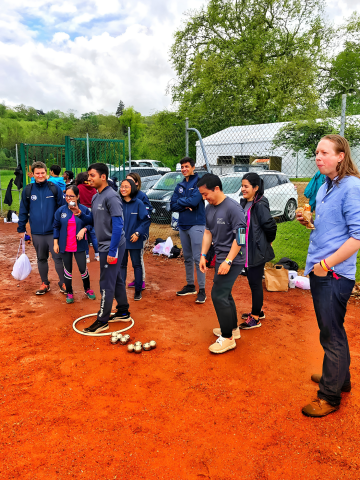
Tough question since there are so many amazing memories. But if I have to choose one, its the time at the MBA Tournament (MBAT) at HEC Paris. It is essentially a huge sports competition between European business schools, and the funny thing was that ESMT was tiny compared with many of the other schools. Some universities arrived with 300 or 400 students and what looked like well-trained sports teams specializing in specific sports. We had around 50 people in our entire cohort.
Our selection process was basically: “Can you play cricket?” “A little.” “Great, you're on the cricket team.” I ended up teaching around nine people how cricket worked so that we could field a team. I played competitive frisbee for the first time in my life. We thought we were doing reasonably well until another school completely tore us apart. I also played pétanque for the first time. It was so much fun. We weren't necessarily the most specialized team, but everybody joined in, everybody supported each other and we had an incredible time. It captured the spirit of our class really well.
And that probably connects to the advice I would give myself – worry a little less and enjoy the MBA a little more. When I arrived, especially since I had left a well-paying job and invested a lot in the MBA (including a student loan), I thought constantly about what comes afterwards: Will I get the right job? Will I recover the investment? Am I networking enough? Am I doing enough? These are of course important. But I also was getting something quite rare: the opportunity to go back to being a student.
I could spend hours talking to interesting people, or take an elective class simply because I was curious about it, or travel with my classmates, or go to social events and pub-hopping. I could meet CEOs one day and play terrible frisbee the next. Once everyone returns to full-time careers, it becomes much harder to recreate that kind of period in your life.
So, I would tell my pre-MBA self: work hard enough, network enough, think about the future but don't spend so much time preparing for what comes next that you forget to enjoy where you are.
Thank you, Animesh!
Animesh Srivastav works at Amazon in Product Content and AI, and as a career and leadership coach and mentor. To read more of his insightful content about finding career clarity, you can follow him on LinkedIn.


Hear more ESMT Berlin stories
