Leading the curve
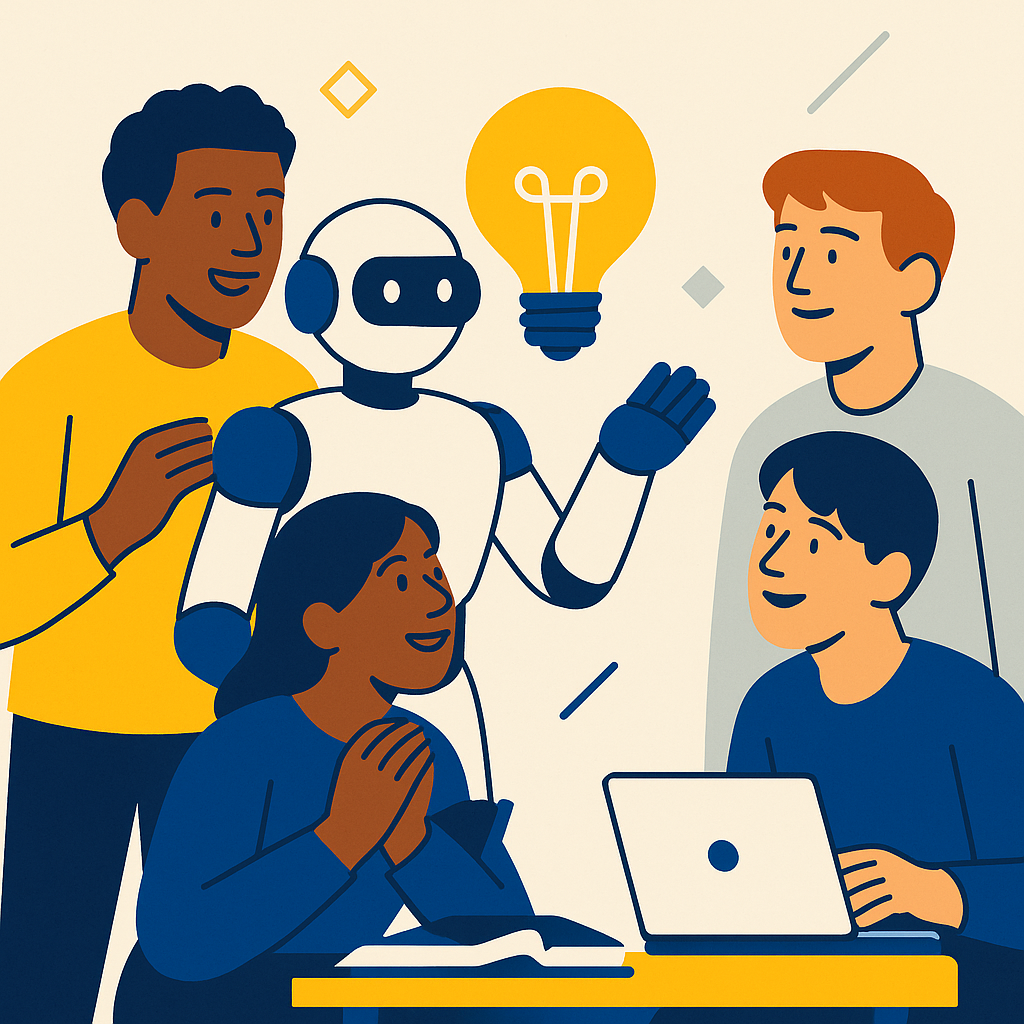
Three years ago, few in higher education imagined business school students conducting high-stakes negotiations with artificial intelligence – and enjoying it. At ESMT today, that scenario plays out daily. Students step into executive roles, making split-second decisions in complex corporate scenarios, while AI counterparts react with the unpredictability of real-world adversaries. These simulations aren't hypothetical exercises – they’re dynamic, responsive, and unlike anything traditional case studies can deliver.
This transformation didn’t happen overnight. The transformation was the result of deliberate choices informed by research in change management, educational technology, and leadership development. It also reflected a core belief: innovation depends on people and culture, not just tools.
Building the foundation before the rush
Long before “generative AI” entered everyday conversation, ESMT leadership made a strategic decision: invest in digital maturity not as a reaction to an immediate problem, but as a way to future-proof the institution. We created the Digital Innovation and Transformation (DIT) unit to integrate emerging technologies into teaching and operations, ensuring they enhance learning and align with our mission.
This dedicated structure provided both institutional authority and cross-departmental reach. By the time AI tools like ChatGPT emerged, we already had the digital foundations: integrated systems, digitized course content, and online delivery capabilities. These weren’t flashy investments; they were the baseline that allowed AI pilots to scale from individual classrooms to institution-wide practice quickly and responsibly.
From the outset, our approach to AI was never purely technical. As educators, we have a responsibility to prepare leaders who can use technology for the greater good. We ask students and colleagues not only to use AI, but to question its impact – on privacy, equity, and society. Our governance framework, developed with the Legal team, ensures responsible use through clear guidelines, transparency, and ongoing review.
Solving real problems to overcome skepticism
Introducing new technology into academia is often met with healthy skepticism. At ESMT, faculty set high standards for innovation, keen to safeguard academic rigor and preserve meaningful student interaction. We approached this challenge not with sweeping promises but with practical solutions to everyday frustrations: grading and feedback that consumed weekends, administrative tasks that reduced time for student engagement, and course content updates requiring hours of manual research.
In hands-on workshops, faculty tackled their own teaching challenges and left with ready-to-use, AI-supported solutions. By delivering immediate, research-backed value, these sessions turned skepticism into active curiosity.
Faculty experimentation led to informal networks that shared results and inspired new applications. We built on this momentum by launching the AI Pioneers program – a voluntary, peer-led community that accelerated adoption across the school. Peer advocacy proved more effective than formal mandates. As faculty applied new tools successfully, adoption spread through trust and shared outcomes.
Transforming the learning experience
Our most visible breakthroughs have been immersive AI-powered scenarios that recreate the complexity of real-world decision-making. In our Global Online MBA program, students navigate the antitrust conflict between Fortnite, Google, and Apple, stepping into roles of key players and receiving personalized feedback on their decisions. One student called it “one of the most efficient, responsive, and intuitive simulations” of their MBA experience.
We currently offer over 25 course-specific AI tools – our “course GPTs” – that provide personalized support anytime. These systems explain concepts, offer examples, and give tailored feedback on assignments. One student described the course GPT as “an all-in-one: the diligent student who lends you notes, the genius student who answers your questions, and your friend who brainstorms with you and reviews your work.” Faculty benefit as well. These tools support idea generation, streamline content development, and free up time for mentoring and direct student engagement.
We ensure AI is woven into the entire learning journey. Our course “Supercharge Your Learning with AI” teaches practical AI literacy through hands-on experimentation. Our Master in Analytics and Artificial Intelligence (MAAI) program combines technical skill-building with business education, preparing graduates to lead AI transformation responsibly. Executive education courses like “AI for Managers” connect theory directly to workplace application, with participants calling it a “great overview of AI technology” where “every theoretical part is manifested by practical work.”
What we learned: principles for institutional transformation
Through trial, reflection, and adaptation, we have developed guiding principles for AI integration – principles any institution can apply:
- Leadership commitment to digital foundations – embedding digital in structure and mandate enables fast, visible action.
- Skill-building before technology spending – confidence comes from competence, not just access.
- Community-driven adoption through peer networks – the AI Pioneers model proves culture change happens person to person.
- Incremental scaling for risk management – starting small and growing based on evidence reduces implementation risks.
- Flexible governance balancing innovation and responsibility – adaptable rules keep pace with technology.
- A culture of experimentation – curiosity drives lasting change.
Our journey hasn’t been without obstacles – technical challenges like ensuring data privacy, and organizational ones like clarifying roles and processes. We address them through ongoing dialogue, feedback loops, and policy refinement guided by our Legal team’s governance framework. This responsive approach keeps our guidelines current with rapidly evolving technology while maintaining accountability.
Growing digital leaders for tomorrow’s challenges
Our AI integration demonstrates a crucial truth about talent development: institutions that proactively build digital capabilities in their people gain sustainable competitive advantage. Our approach addresses a critical challenge facing organizations today – how to develop leaders who can drive digital transformation while maintaining ethical standards and human-centered decision-making.
Our AI education model prepares graduates for AI-driven business environments. They develop technical fluency, critical thinking to assess AI’s impact, ethical judgment to guide its use, and the collaborative skills to work effectively with AI systems.
This model offers a clear path for business leaders: start with foundational infrastructure, solve immediate problems to build momentum, and establish governance that enables innovation while ensuring accountability.
Organizations that make these investments today will lead future innovation. Those that delay risk falling behind – not just in technology, but in the leadership capacity to use it responsibly.
ESMT Update Winter 2025

Nan Guo
