It allowed me to grow rapidly: a student’s Part-time MBA experience
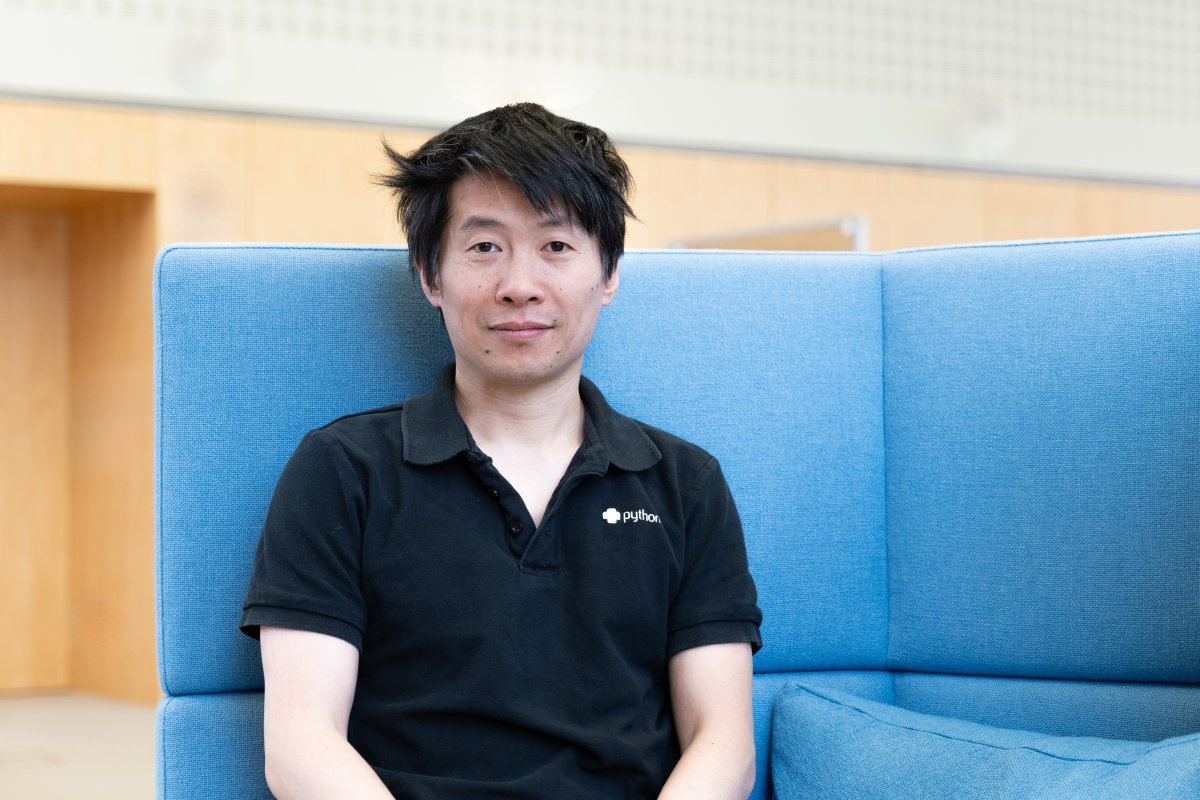
Interview with Qunfei Wu, Part-time MBA Class of 2026
“Sometimes you don't need to wait until you're ready.” When current MBA student and Class Representative Qunfei Wu heard these words, they helped him realize that he didn’t have to wait for the perfect career gap to explore a business school education. Instead, he could continue in his career and grow his management skillset at the same time with an ESMT Berlin Part-time MBA.
Read on to discover how Qunfei leverages his MBA studies in his position as Senior Technical Program Manager in Data and AI at Allianz, and learn his top tip for your own ESMT application.
Hi Qunfei, please introduce yourself.
I am a software architect and product manager with an engineering background and over 18 years of experience in the telecommunications, finance, and insurance industries.
I studied at Tongji University and began my career at Alcatel Shanghai. Currently, I am responsible for data and AI-related product and strategy work in the German insurance industry, dedicated to truly translating technology into business value.
Why did you decide to pursue an MBA?
“ I hope to broaden my horizons and shift from a purely technical role to a more comprehensive business and innovative mindset.”
I hope to broaden my horizons and shift from a purely technical role to a more comprehensive business and innovative mindset. I want to move beyond simply focusing on technology: I want to consider the optimal solutions to complex internal and external corporate problems from multiple dimensions including business, strategy, and management.
An American colleague with an MBA degree also encouraged me to apply, saying, “sometimes you don't need to wait until you're ready.” That conversation solidified my decision – to systematically learn strategy, management, and leadership to prepare for greater responsibilities in the future.
Why did you choose ESMT?
ESMT is one of Germany's top business schools, maintaining close partnerships with numerous renowned companies. My company also recommends its programs for employees.
The curriculum integrates business management, innovation, and entrepreneurship, combining academic depth with practical application. ESMT's strong alumni network and connections to the European business ecosystem were also key reasons for my choice.
What’s the PTMBA program schedule and how much time do you spend studying?
The Part-time MBA program has a tight schedule, requiring an average of about five hours per week in each course. The PTMBA modules are closely interconnected, offering both academic challenges and numerous group discussions. While the pace is fast, it allowed me to grow rapidly in a short period, enhancing my systematic thinking and collaboration skills.
Who is your favorite professor?
My favorite professor is Maximilian Müller in Financial Accounting, a visiting lecturer from the University of Cologne. His teaching is very practical, combining real business cases with financial analysis. He uses a very friendly approach to help us understand accounting as the "universal language of business," which has benefited me greatly.
What is your favorite course?
My favorite course is Business Economics. This course not only taught economic principles but also helped me build a systematic business thinking framework, enabling me to analyze problems from a holistic perspective and see the bigger picture in my work.

Part-time MBA student Qunfei Wu (Class of 2026) shares a picture of his travels during a study break
How has your time as class representative been and what have you gained from the experience?
During previous team-building activities, I left a practical and reliable impression on everyone, so I was considered "well-liked" during the election. I was fortunate enough to be elected.
Serving as a class representative taught me to find common ground among classmates from different backgrounds. It was also a small exercise in leadership. If you don't have the opportunity to guide teams or manage conflicts in a large company, this is an excellent way to put leadership theory into practice.
If you could go through an MBA journey again, what would be different?
“ Many experiences and lessons I spent years figuring out in the workplace were readily understood in MBA classes.”
I would start my MBA studies much earlier. Many experiences and lessons I spent years figuring out in the workplace were readily understood in MBA classes. If I had studied systematically earlier, I believe I would have avoided many detours.
How has the Part-time MBA helped with your current work?
The biggest benefit of the MBA for me has been the shift in my mindset and the expansion of my horizons. It has made me more focused on framework thinking, not just for technical issues but also for management issues—understanding the problem structure first, then developing an action plan.
Now, when facing complex business, organizational, and technical problems, I can analyze the environment and relationships more clearly and am no longer easily swayed by emotions or external changes.
Have your studies taught you anything about competitiveness in a technological context?
Professional skills, interpersonal networks, authority, and power are all pillars of influence, but technology itself is not the only competitive advantage.
I was deeply impressed by Harvard's "network resource exchange" simulation game in the MBA program – when you're on the edge of information, even with valuable resources at your fingertips, success is difficult. This made me realize that in an era of rapid technological change, true competitiveness lies in multi-dimensional personal cultivation.
What is your view on the essence of management?
Given limited personal abilities and organizational resources, the core of management is to use culture, systems, and mechanisms to enable the team to achieve organizational goals while balancing personal growth and enthusiasm. Excellent managers not only enable the team to "get things done," but also to enable the team to "be willing to do things."
Any advice regarding an ESMT Berlin application?
“ Believe in yourself and give it a try. Applying for an MBA isn't about proving how good you are but about giving yourself a chance to learn again and start afresh.”
Believe in yourself and give it a try. Applying for an MBA isn't about proving how good you are but about giving yourself a chance to learn again and start afresh. As long as your goals are clear and your motivation is genuine, it's worth a shot.
Connect with Qunfei on LinkedIn to learn more about his ESMT Berlin experience and follow the next steps in his MBA journey.


Get our latest updates
