Spanning continents and cultures: insights from a Part-time MBA
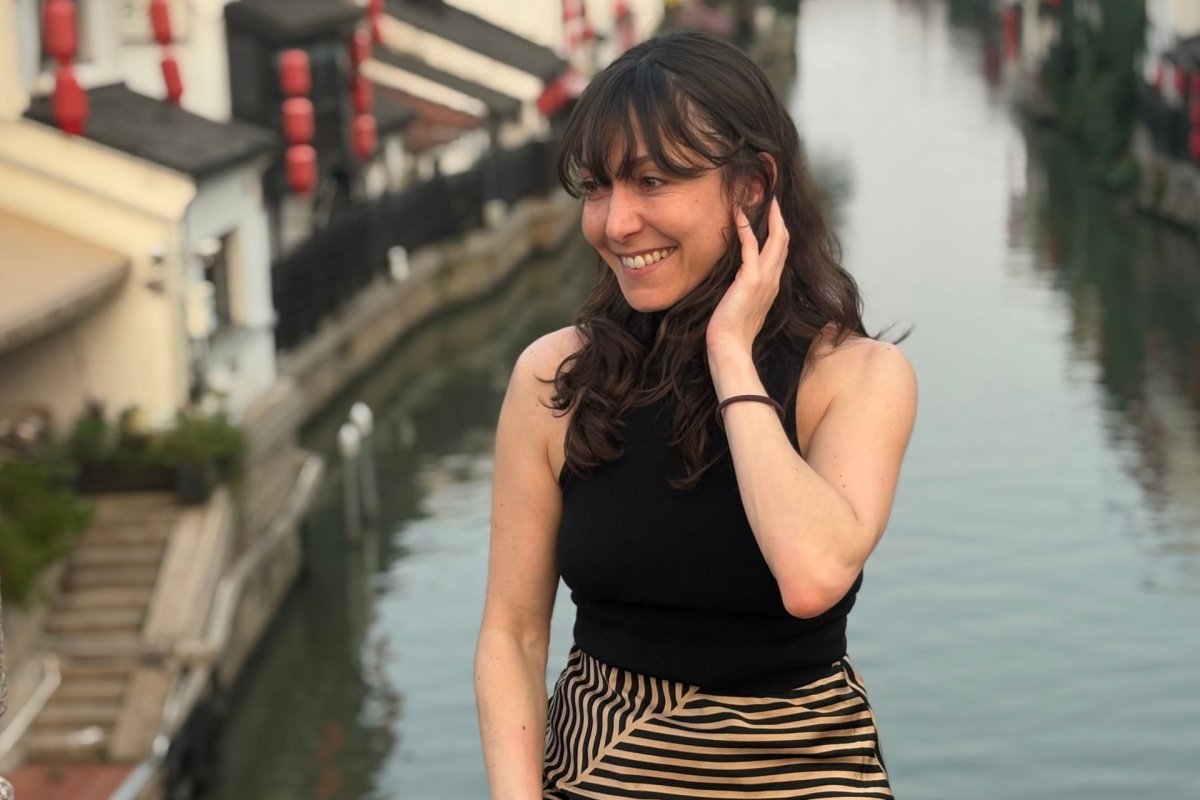
Fueled by curiosity: Flor's story
Having lived in Argentina, Spain, and now Denmark, ESMT student Flor Massei is no stranger to international exposure. Yet the Part-time MBA (PTMBA) at ESMT Berlin has still helped her explore new places, meet new people, and grow her global leadership mindset.
In this blog, Flor (Class of 2026) explains why she picked an MBA program with an in-person component, despite being based in a different country. She also reflects on what it is like to regularly commute from Copenhagen to Berlin, how she balances this with a full-time job at SAP, and why coming to the ESMT campus is such an important part of the Part-time MBA.
Flor also shares her PTMBA highlights; including the International Field Seminar that saw her class learn about business in Shanghai, and the freezing lake plunge that brought her cohort closer together.
Hi Flor, could you please introduce yourself?
I’m Flor – an Argentinian economics graduate currently living in Denmark and working in sales, while completing the final stages of my Part-time MBA (PTMBA) at ESMT Berlin. Driven by curiosity and a constant search for personal and professional growth, my path has spanned continents and cultures.
Beyond my day-to-day role and PTMBA studies, I also serve as a Teaching Assistant at ESMT, blending my passion for commercial strategy, continuous learning, and international collaboration.
You are based in Denmark: what drew you to a Part-time MBA program in Berlin, Germany?
"While online modules fit my busy schedule, nothing replaces being in the same room with classmates – debating ideas, learning from faculty, or sharing a coffee after lunch."
I was looking for a program flexible enough to fit around my full-time job in sales, but I wasn't willing to compromise on genuine connection and academic excellence. ESMT’s PTMBA offered the perfect blend.
While online modules fit my busy schedule, nothing replaces being in the same room with classmates – debating ideas, learning from faculty, or sharing a coffee after lunch. I would always recommend having some degree of in-person learning experience, if that is possible. There is an irreplaceable aspect to being in the same room with your classmates. The relationships I have built in ESMT along the two years of my program have shaped and will continue to shape my personal and professional paths.
I value different perspectives and I think diversity is key to business success. ESMT’s approach to innovation and the focus the university places on having an international cohort from multiple industries and genders, made the school a great fit for me.

As an Argentinian who is now living in Copenhagen and studying in Berlin, you have a very global outlook! What prompted you to explore Europe?
The first time I left my home country was not by choice: In the early 2000s, amidst a severe economic crisis, my parents moved our family to Spain in search of a better future. Although we returned to Argentina two years later, that experience completely shifted my worldview – I realized the world was so much bigger than I had ever imagined.
I went back to Spain on my own at 19, returned to Argentina to complete my degree in economics, and when the opportunity to relocate to Denmark arose, I didn't hesitate. My mother once gave me a fridge magnet that read "take the risk or lose the chance." From Argentina, to Spain, and now Denmark, my journey has been driven by a constant search for growth, fueled by curiosity.
Cultural intelligence and adaptability are leadership tools that can be instrumental to the success of any organization trying to build resiliency, innovating to survive the market’s rapid changes. Curiosity in a leader is paramount because you can’t have all the answers, but you should stay curious, open-minded, and ready to learn from your team.
Do you have any advice for other LATAM students who want to make the move to Europe?
"Whatever happens, the moment you take agency over your own journey and embrace a new challenge, you’ve already won."
Trust yourself. Moving across continents can feel daunting, but there is truly no scenario where such a move can go wrong. Even when things don't go strictly according to plan, you will grow exponentially just by stepping out of your comfort zone. You will gain a deeper knowledge of yourself and a global mindset that nobody can ever take away from you.
Latin American professionals bring new perspectives, adaptability, and drive to international classrooms and teams. Whatever happens, the moment you take agency over your own journey and embrace a new challenge, you’ve already won.
You travel to Berlin for the in-person modules. How do you fit this international commute around your work schedule?
Fortunately for me, my work has been very supportive of my MBA journey, and I have had no trouble taking four days off every quarter. I would suggest that you frame this to your employer as an investment in future organizational leadership. Four days off a quarter is a small commitment to your development.
What are the in-person modules like? Are they a noticeably different experience from the online modules?
I think after COVID we all realized that it is possible to do everything fully remotely but, like I said earlier, there is an irreplaceable aspect to being in the same room as your classmates. When you do self-learning online, you go through the material and some exercises require personal reflection, but when you are in the classroom, you learn from your peers.
The MBA coordinators plan fun networking events for us to get to know each other and the faculty members while we are in Berlin, which really helps create a strong network and a feeling of belonging. This is an important aspect of any MBA – the networks you build. Needless to say, Berlin is exciting and cosmopolitan; in-person residencies are a good opportunity to explore a city with rich history, art, and culture.
What was it like to meet your cohort in person for the first time? Do you have a chance to socialize together during the residencies?
"The first residency in Berlin gave me a very empowering feeling, and I felt everything was possible from then on."
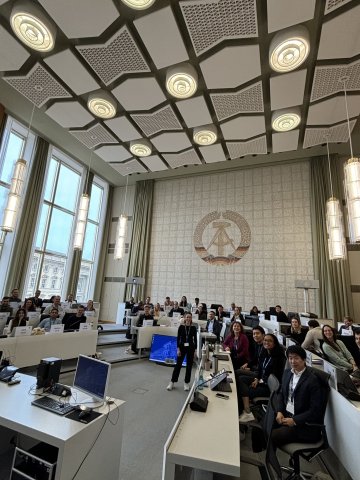
I remember our first in person residency as a transformative experience – we were divided into teams and taken to the forest, to complete highly complex tasks. We were all pushed to show our strengths and weaknesses, and work as a team. I left Berlin having received, for the first time in my life, honest and useful feedback on my leadership capabilities from my team-mates. We bonded deeply, and I left Berlin feeling completely energized.
The first residency in Berlin gave me a very empowering feeling, and I felt everything was possible from then on.


You and your cohort recently travelled to China for the International Field Seminar (IFS). Can you tell us a bit about this experience?
"China offered something for everyone. It challenged our preconceptions by showing us cutting-edge robotics, AI, energy transition advancements, and advanced platform economics firsthand."
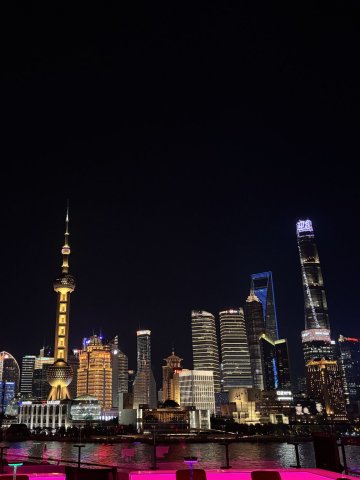
The whole journey towards the IFS was a learning experience. Planning the IFS was a lesson in negotiation itself – finding one destination that appealed to nearly 40 students across different industries and nationalities (and visa requirements!) was no small feat. China offered something for everyone. It challenged our preconceptions by showing us cutting-edge robotics, AI, energy transition advancements, and advanced platform economics firsthand. For many of us it was the first time visiting an Asian country.
China has positioned itself as the “fitness center of the world” (a phrase we would hear repeatedly during our visits), and it is no longer the place for “cheap manufacturing.” Visiting multiple organizations allowed us to get a glance of what it is like for global organizations to conduct business in today’s world. We even got the chance to put our learnings into practice and contribute to the design of a new strategy for one of the companies we visited
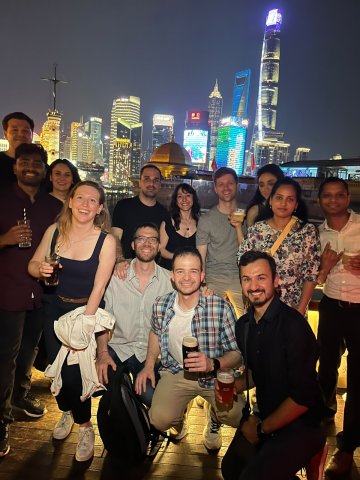
As a group, the IFS also gave us the chance to strengthen our bonds and expand our networks – we hosted an event with ESMT alumni and prospective students, and we met the leadership of many Chinese organizations.




Thank you, Flor!
Flor Massei is a Solution Advisor at SAP (one of ESMT's founding companies). If you wish to read more of her insightful reflections, you can follow her on Linkedin.


Learn more about ESMT life
