Maximizing your Master in Analytics & AI by looking beyond your own borders
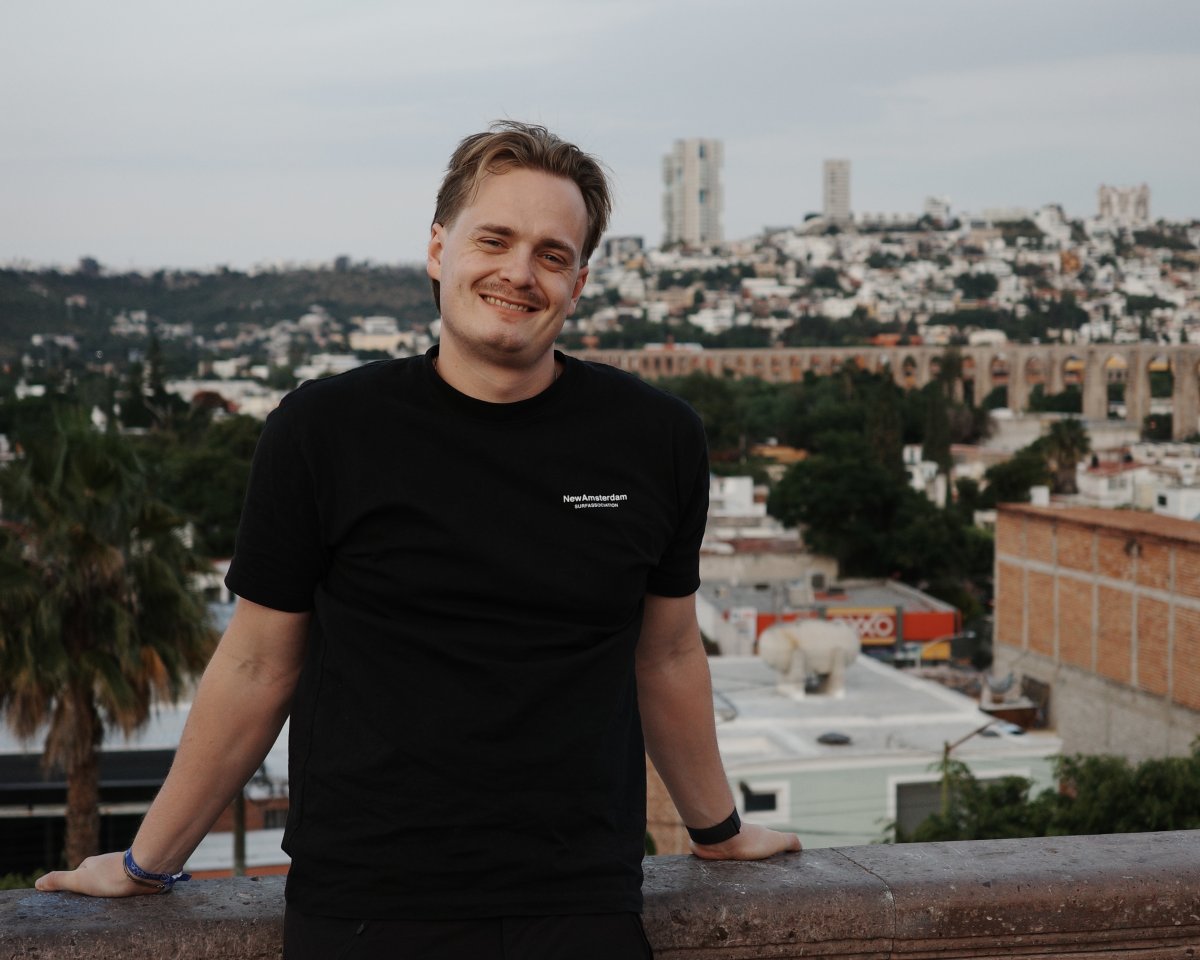
Master in Analytics and Artificial Intelligence (MAAI) student Fynn Barkhausen, Class of 2026, firmly believes "that advancing business and society starts with looking beyond your own borders." It was this drive that led him to ESMT Berlin, a business school with the expansive, international outlook Fynn was seeking.
A transformative two years: Fynn's story
In this blog, Fynn explains what it is like to do a globally minded master's program with real analytics and AI specialization. He also gives a personal look at how program specifics – like the capstone Analytics Consulting Project – give MAAI students a chance to "look under the hood" and test their master's knowledge on real projects with real deadlines.
And he expands on the international side of the MAAI, from the rewards of a highly global cohort, to the semester abroad in Mexico that reinforced his belief in the value of cultural exchange.
Hi Fynn, please introduce yourself
Hi, my name is Fynn. I'm a Master in Analytics & AI candidate in the Class of 2026. Before ESMT, I studied Business Administration and spent a few years in the industry and consulting, mostly around data, IT architecture, and the first wave of GenAI work.
What drew you to the Master in Analytics and Artificial Intelligence (MAAI) program at ESMT?
Across my different professional stops, I was always drawn to projects involving IT and informatics, but I had spent enough time in consulting to see I kept hitting the same wall. I was the person who could analyze a problem and explain to a client what a solution should do for them, but I wasn't technical enough to fully understand the deep work behind the models myself.
My knowledge was generally problem-specific, mostly business intelligence plus some computer science basics I had picked up along the way. The MAAI was the most direct way to close that gap. It was technical enough to be genuinely uncomfortable and sat right where I wanted my work to head.
Your bachelor’s degree was in Business Administration. Why did you choose a master’s degree in analytics and AI instead of one in general management?
Because I already had the management half. A Business Administration degree plus consulting experience meant another general management program would have mostly repeated what I had already learned. What I was missing was the ability to look under the hood.
I didn't want to keep commissioning deep analytics work and relying on other people's judgment for things I should understand myself, especially when I'm the one consulting them. I wanted to be able to do the modelling and programming myself and get a deeper inside into what was possible.
And, as a student with a German background, why did you opt for ESMT – an English-speaking business school?
"I firmly believe that advancing business and society starts with looking beyond your own borders."
A few things added up: the reputation, the small and very international cohort, and a real analytics and AI specialization rather than one or two token electives.
Ultimately, it was one of the school's Open House events that I attended before making my decision that made the difference for me. You could feel that people here genuinely cared about the school's mission of advancing business and society and were eager to contribute to a place built on interdisciplinary, highly diverse discourse. That was contagious.
Studying in English alongside people from all over the world wasn't a compromise for me either. In my life so far, I've been fortunate to have had several international experiences, and I firmly believe that advancing business and society starts with looking beyond your own borders. With that in mind, I wanted a cohort that reflected this concept. And I probably couldn’t have gotten it better, with my master’s cohort now counting about 160 people from 42 distinct countries, studying across three programs.

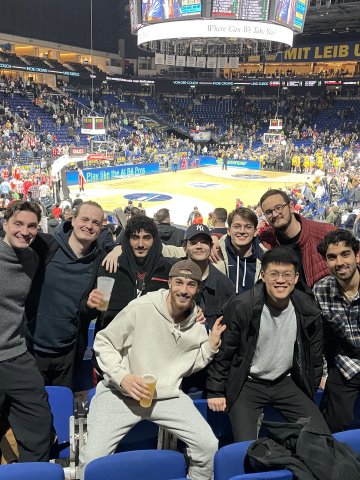

Last year, you went on an exchange to EGADE Business School. Can you tell us about the differences between studying in Berlin vs studying in Mexico?
Yes, I spent last fall semester at EGADE Business School in Monterrey, taking classes from their Master in Business Management. The campus is located in San Pedro, right in the city's business district, and a lot of the teaching came paired with C-level guest speakers, which felt very familiar to all the panel talks that are being offered at ESMT.
The proximity to industry was real in other ways too. For a course in business innovation, we worked on a small project for KIA and even had the opportunity to visit their production site in the city, which was very impressive.
Classes were in English, but the mix of people was different in a way I loved. Alongside other exchange students, I worked with Mexican and Latin American classmates from backgrounds of engineering, psychology, politics, science, you name it, which made the group projects and the window into Latin American business genuinely insightful.
The sharpest day-to-day contrast was getting around. Monterrey runs on cars. I needed an Uber, a Didi, or the school shuttle for almost everything, and even with new metro lines under construction, it's nowhere near the transportation system in Berlin. In return, I made full use of Tec de Monterrey's enormous sports facilities and the city's many sports events, which is where I got more serious about running and picked up padel.
What made the experience unforgettable, though, was the rich culture, the incredible cuisine, and above all the people, who were genuinely warm from day one.
How do you think an international exchange can add value to a master’s degree?
"Spending a few months as a foreigner, figuring out the city and language as you go along, teaches you to adapt quickly. My Spanish improved day by day, and perhaps more importantly, I came back able to compare rather than assume, in both directions."
More than I expected. The obvious part is the network and seeing how business gets taught and practiced on another continent. But the part that stuck with me was more subtle.
Spending a few months as a foreigner, figuring out the city and language as you go along, teaches you to adapt quickly. My Spanish improved day by day, and perhaps more importantly, I came back able to compare rather than assume, in both directions. I stopped taking some of Germany's and Europe's basics for granted, like the public transport systems I mentioned before, but also safety and social aspects.
However, I also saw things that Mexico simply does better: the openness with which people welcome a stranger, the important role that family and friendships play in people’s lives, and how naturally this warmth of connection seems to carry into business relationships. Being able to bring back both halves of that comparison is, in my opinion, where the real value lies.
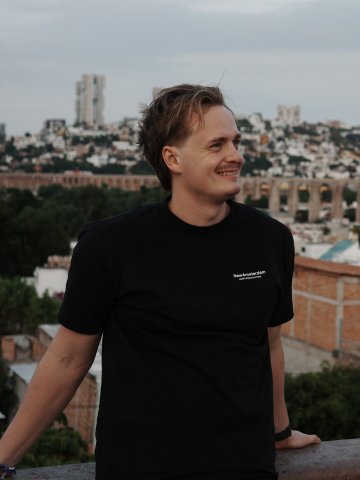




You have recently finished your MAAI consulting project. Can you please tell us a bit about what the MAAI consulting project is?
The Analytics Consulting Project (ACP), is our program's capstone project. A small student team takes on a real analytics problem for an actual company and works it end to end, from scoping through building the solution to a final presentation of the model, findings and recommendations. Ours ran from January to mid-April.
Who was the project for and what was the goal?
We worked with a cyber security service provider on their sales pipeline. The goal went beyond the usual task of building a model that could predict which of the documented sales opportunities are likely to be won.
On top of that, we build a system that could predict at what time these chances would be likely to close, so that the company could estimate how much cash flow to expect and when, and build that into its financial planning. I led the time-to-event prediction side of the work, but we generally supported each other and worked closely across all parts of the project.
What were the processes, deadlines, and presentations like? And what was it like to get client feedback after the final presentation?
" We pulled together extremely well, and the solution and findings landed with the client at the final presentation"
Our team consisted of six people from the MAAI cohort: Wenyan Zhou, Aya Moh Al-Eryani, Elias Ganal, Christoph Beickler and me, plus Gautier Serres, an exchange student from EDHEC Business School. We also worked with our alumni mentor, Srinivasan Venkataraman (MiM, now Master of Global Management, Class of 2020). We ran weekly meetings with the client to show progress, regular sessions with our mentor Srini for advice, and our own weekly check-ins and check-outs to keep everyone aligned on their subtasks and on how the pieces would fit together.
It was a genuinely hard project. The dataset we were given was rich and large, and just analyzing it and structuring the work around it took time. On top of that, the time-to-event prediction meant applying ML methods we'd never touched before, under real deadlines.
What made it work was the group. We pulled together extremely well, and the solution and findings landed with the client at the final presentation. He gave us strong feedback, and we went out for dinner together afterwards, which felt like the right way to close out three months of work.

Outside of the classroom, you are involved in the Running Club. What is that like?
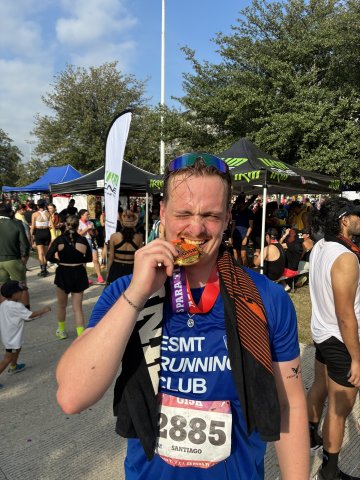
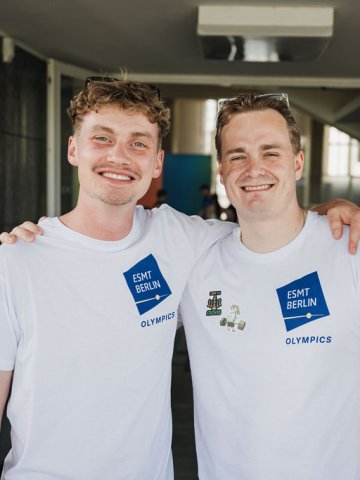
Most Sundays we run together at Tempelhofer Feld, a lap or two at a pace slow enough that you can hold a conversation. Our professor Eric Quintane started the Running Club in early 2025 and it grew from there. Genuinely, it has been one of the easiest ways to get to know people from programs and cohorts I'd otherwise barely have met and the Berliner Wasserbetriebe TEAMstaffel, which we ran again this year with 30 people, has become something of a tradition and the highlight of the club's calendar.



We are nearly at graduation: what have been your other favorite memories from the MAAI overall?
"When the internship phase scattered everyone into different jobs, we started a Stammtisch in Berlin every two weeks so we wouldn't drift apart."
Honestly, there are too many classes and projects to single one out. What I keep coming back to on the academic side is that I looked forward to learning the whole way through and that you could really feel the whole cohort making a big jump over the two-year course of this program.
The friendships are the real answer though. Our class year bonded unusually closely, and two years gives that time to really deepen. When the internship phase scattered everyone into different jobs, we started a Stammtisch (a regular, casual meetup) in Berlin every two weeks so we wouldn't drift apart. A lot of what I took away came from the people themselves, from spending that much time with a group this mixed in background and nationality.
And one small thing I won't forget: Marian from the school‘s café could always lift our day, no matter how stressed or stuck in our own heads we were with uni. Thank you for everything!
Thank you, Fynn!
If you would like to hear more analytics and AI insights from Fynn as he approaches post-graduation life, you can follow him on LinkedIn


Want to hear more about life at ESMT?
