Tokyo drift: navigating the most organized chaos on earth
Japan has always lived at the very top of my list of dream destinations. For years I imagined visiting it someday with a special person, in some perfectly timed moment of life, during the cherry blossoms season. There was always something poetic about that idea, perhaps because my name – Cveta – literally means “the one who blossoms,” like a flower at the exact moment of bloom.
Then, as my 40th birthday started approaching, I had a small but important realization: if you keep waiting for the perfect moment, you risk postponing life indefinitely. And second: perhaps the most extraordinary companion you can choose for a journey is yourself.
So I suggested Japan to my Executive MBA cohort. Out of all the destinations on the table, it quickly gathered the most votes, especially after a “pitch presentation” by our amazing colleague Yuto, the best ambassador (and guide) one could possibly hope for. And just like that, our final international residency turned into a journey to Tokyo.
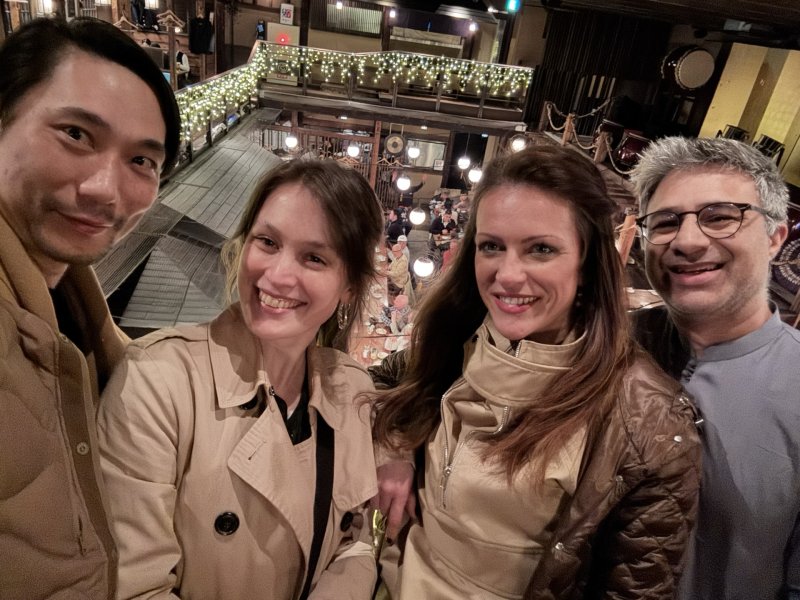
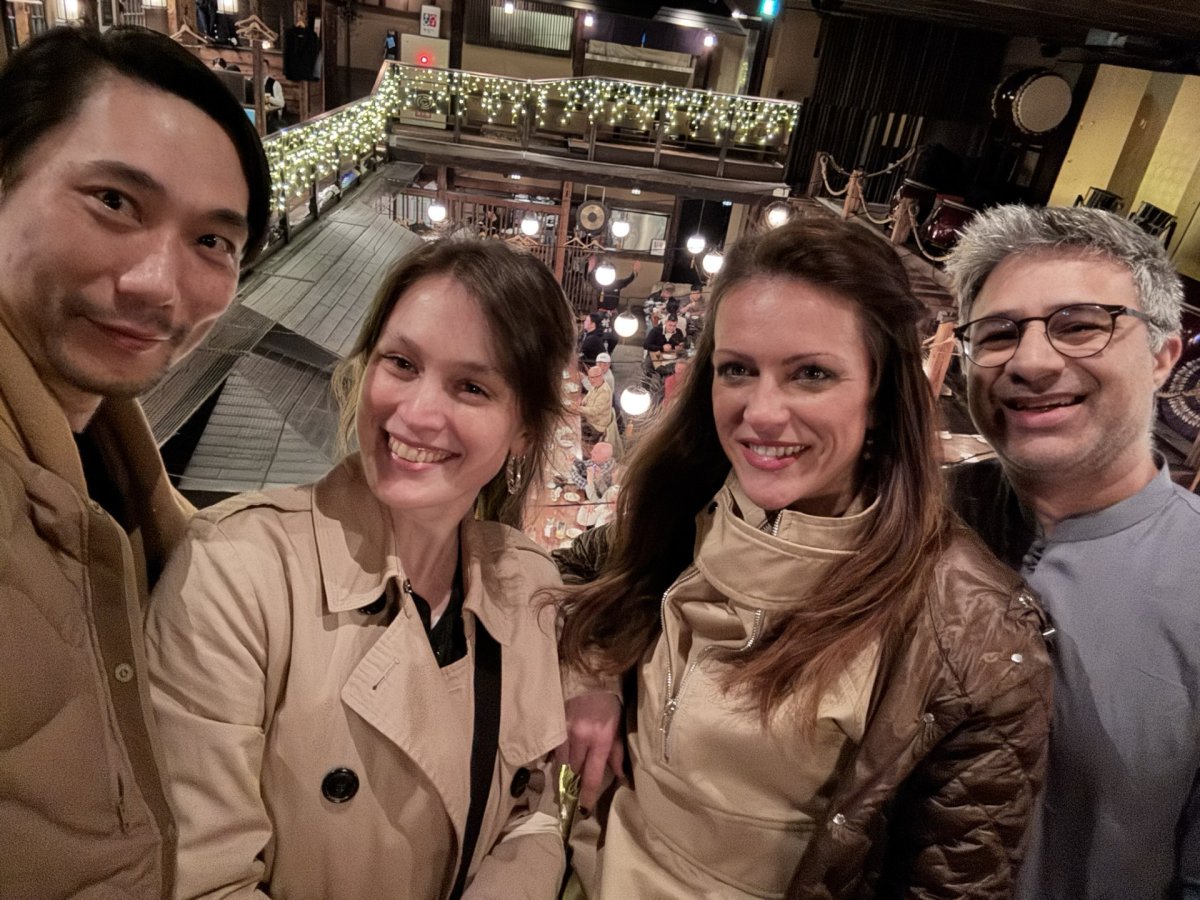
From left to right: Yuto, Masha (ESMT staff), Cveta, Ali
The person behind the perspective
I grew up in Novi Sad, the capital of Serbia’s Autonomous Province of Vojvodina, a city that once flourished as an elegant Austro-Hungarian cultural hub on the Danube. Over the years I have lived in several countries, but for the past decade Italy has been home, specifically Trento, where I first arrived to pursue a double-degree PhD in Computer Science. Academia soon expanded into entrepreneurship, and today I work with two innovative SMEs focused on circular economy and sustainable materials.
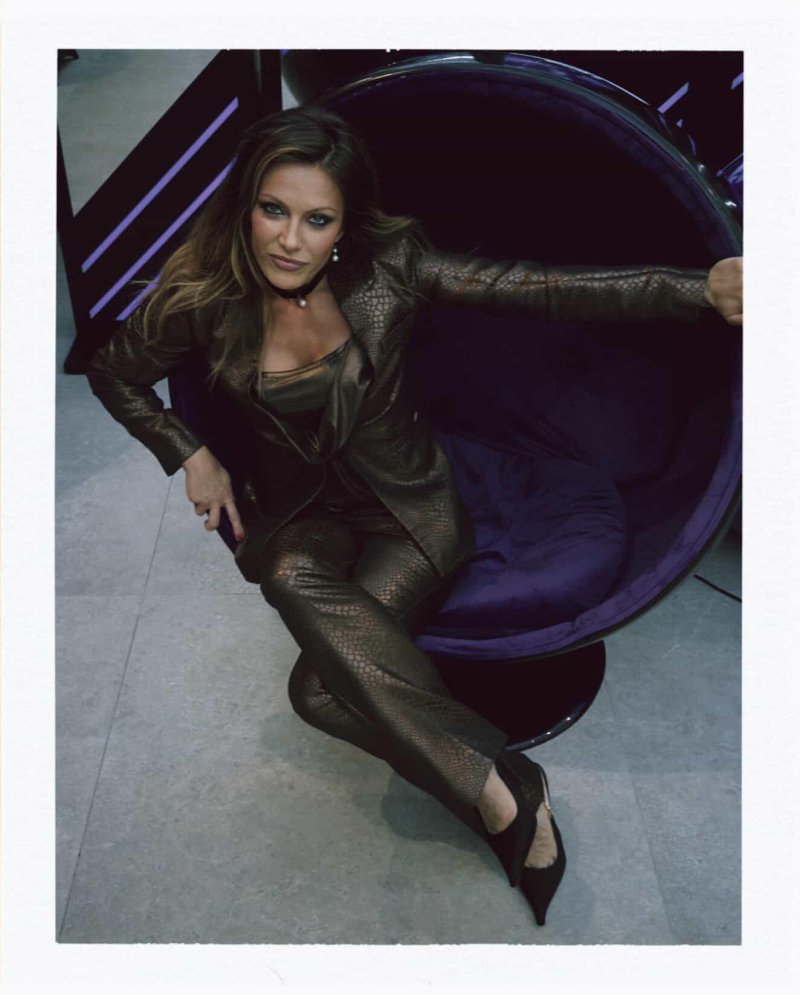
Cveta Majtanovic
My path, however, has rarely followed a straight line. Before that came degrees in psychology and industrial engineering, a few startup experiments between Serbia and Italy, and an unexpected musical detour: at 18, after winning an Idol singing competition, I recorded my first album with Sony & BMG’s Jazzboy Production. Over time, I learned that depth does not come from following a planned path, but from having the courage to follow its detours.
Perhaps that is why Tokyo felt strangely familiar. A city of paradoxes: immense complexity that works flawlessly; hyper-modern yet deeply traditional; millions moving in harmony while personal space remains intact. It reminded me that the best systems do not impose order; they embed it so intelligently that what remains visible is freedom. Perhaps that is why, within hours of arriving, I felt unexpectedly at home.
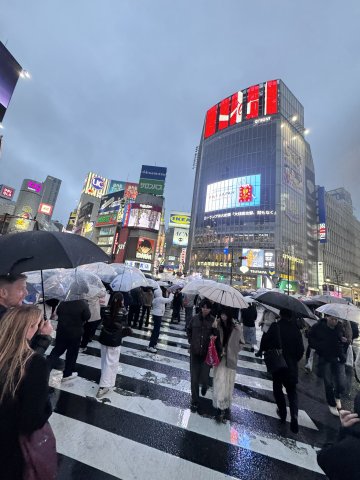


Tokyo, a constellation of universes unfolding one step at a time
Tokyo is not just a city; it is an urban cosmos in motion. A place of such scale, nuance, and emotional texture that calling it a city feels almost insufficient. Walking through its neighborhoods feels less like moving through space and more like changing frequencies: Omotesando speaks in polished architectural minimalism and quiet sophistication, Daikanyama in understated intellect and an almost literary beauty, Harajuku in rebellion and invention, Shibuya in restless contemporary energy, Ginza in the language of luxury. And then there is Asakusa in the early morning, before the tourists arrive: hushed, sacred, nearly dreamlike, as if the city, for a brief hour, remembers who it once was.
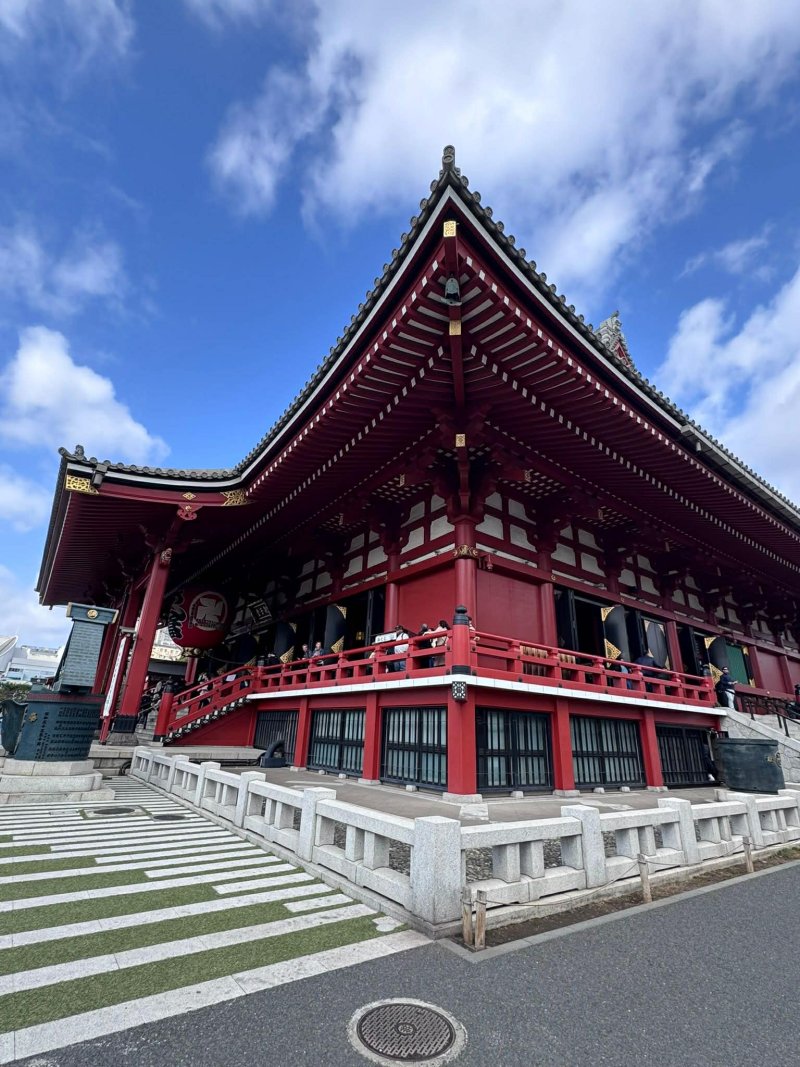
Before Tokyo, there was Edo: a modest waterside settlement that, under the Tokugawa shogunate, grew into the political center of Japan. When the Emperor moved the capital from Kyoto in 1868, Edo became Tokyo, the Eastern Capital. Yet this was never merely a renaming. What emerged over time was something far more extraordinary: a place that holds history not as a backdrop, but as a living layer beneath the present.
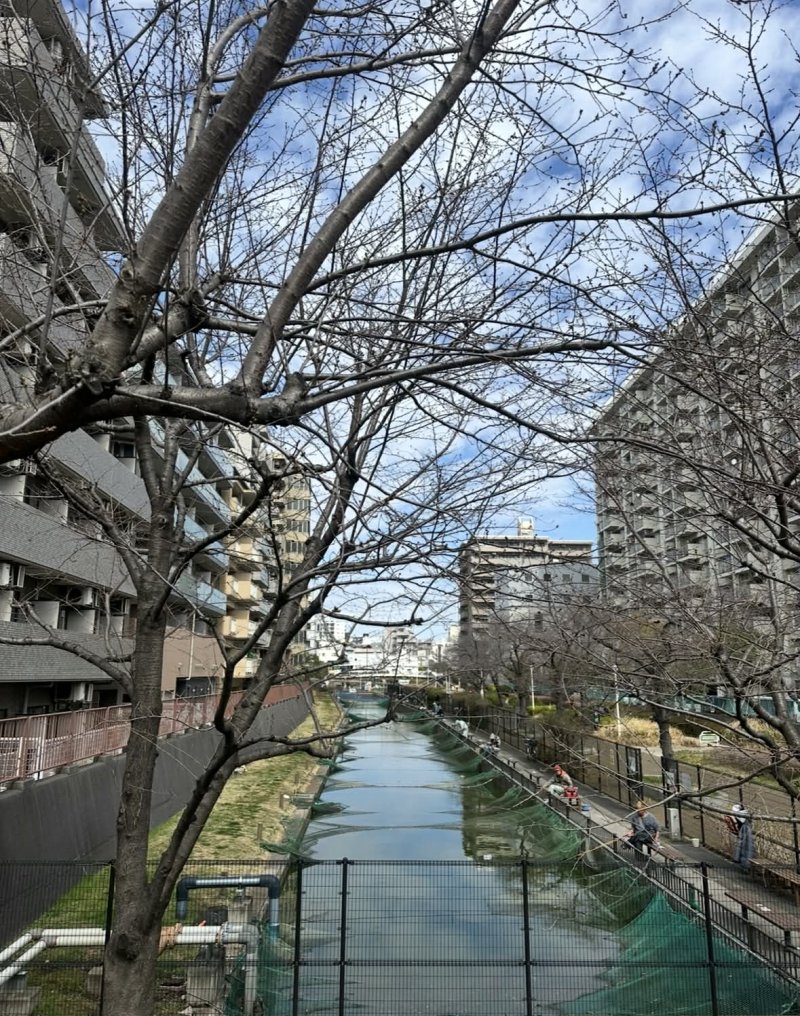
Urban rituals: where water still breathes through the city
Tokyo does not leave its past behind; it carries it forward, folding memory into modernity and tradition into motion. In fact, I came to feel this quite literally while running through the city and noticing people fishing in certain neighborhoods, a quiet but vivid reminder that Tokyo is far more of a water city than it first appears, shaped by canals, shoreline, and bay edges, with its relationship to water still alive in the small rituals of everyday urban life.
Curiosity finds its own geography
Luxury without vulgarity.
Minimalism without monotony.
Order without rigitity.
Crowds without the violation of personal space.
Extreme modernity without the loss of ritual.
A vast metropolis, and yet almost no noise.
It is the kind of environment that quietly selects its audience.
My curiosity has never moved in a straight line, from artificial intelligence and circular economy to extreme sports exploration, with art and music quietly embedded somewhere in the background. What connects these worlds is not adrenaline, but curiosity, about systems, about people, and about the rare minds that see the world slightly differently. That same curiosity is what led me to the Executive MBA at ESMT Berlin, not to collect another diploma, but to expand the circle of people who think independently and boldly.
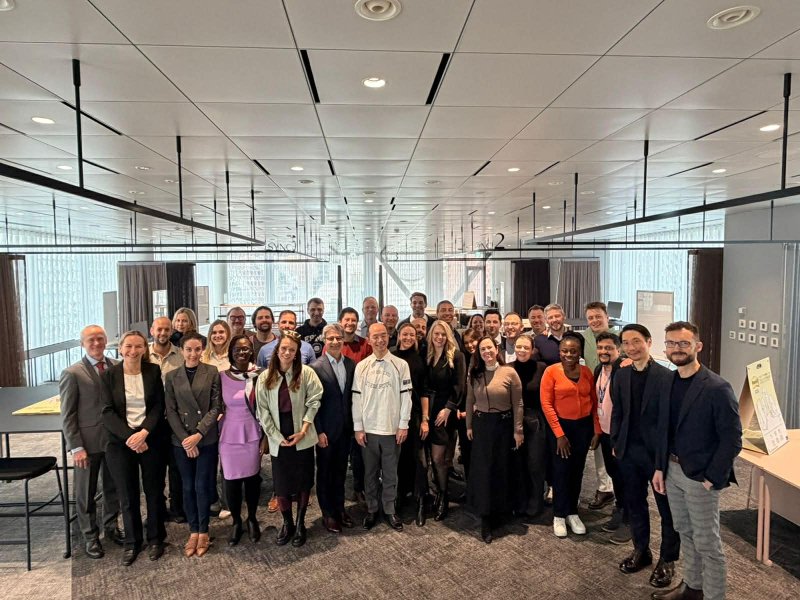
Rare minds are rare for a reason.
But when they meet, something shifts.
A lesson to Europe
The aesthetics of everyday life reshape one’s quality of living. I first understood this years ago, when I moved to Switzerland, and I feel it again now in Trentino-Alto Adige, the region I call home. However dynamic, chaotic, sensation-seeking, and extreme I may be, I equally need to live in places where public space is an expression of culture, not merely infrastructure.
A city that looks like the future yet carries itself like an ancient civilization cannot help but transform you. It becomes impossible not to sharpen your senses to detail, and even less possible to remain indifferent to the realization that urbanism can feel almost tender. And as a European woman, it inevitably pushes me to question, all over again, what we really mean by “order.”
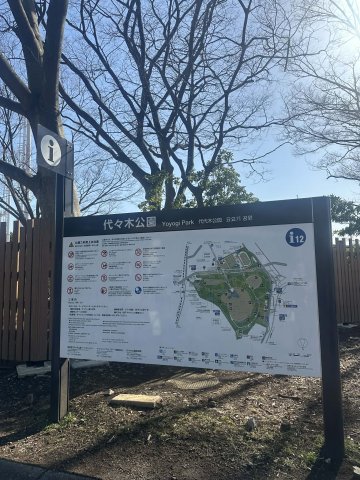


One morning, on my way to Meiji Shrine through Yoyogi Park, accompanied only by the soft rhythm of passing footsteps and the sight of a impeccably clean pavement, untouched by any theatrical sterility, I came upon a traditional Shinto wedding procession. Magnificence in restraint. The scene felt almost impossibly delicate: ceremonial, hushed, composed, as if time itself had briefly slowed to protect it. In a city so often defined by speed and scale, it revealed something far more subtle, that Tokyo’s true power may lie in its ability to preserve moments of beauty from the noise of the world.
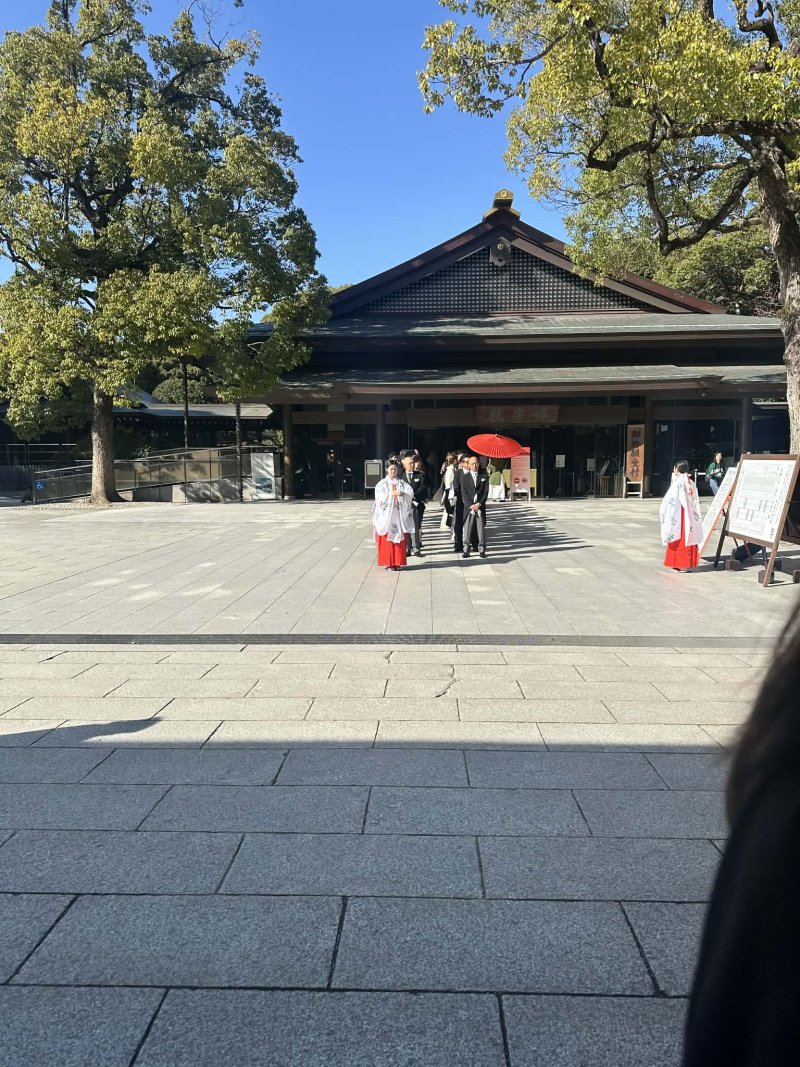
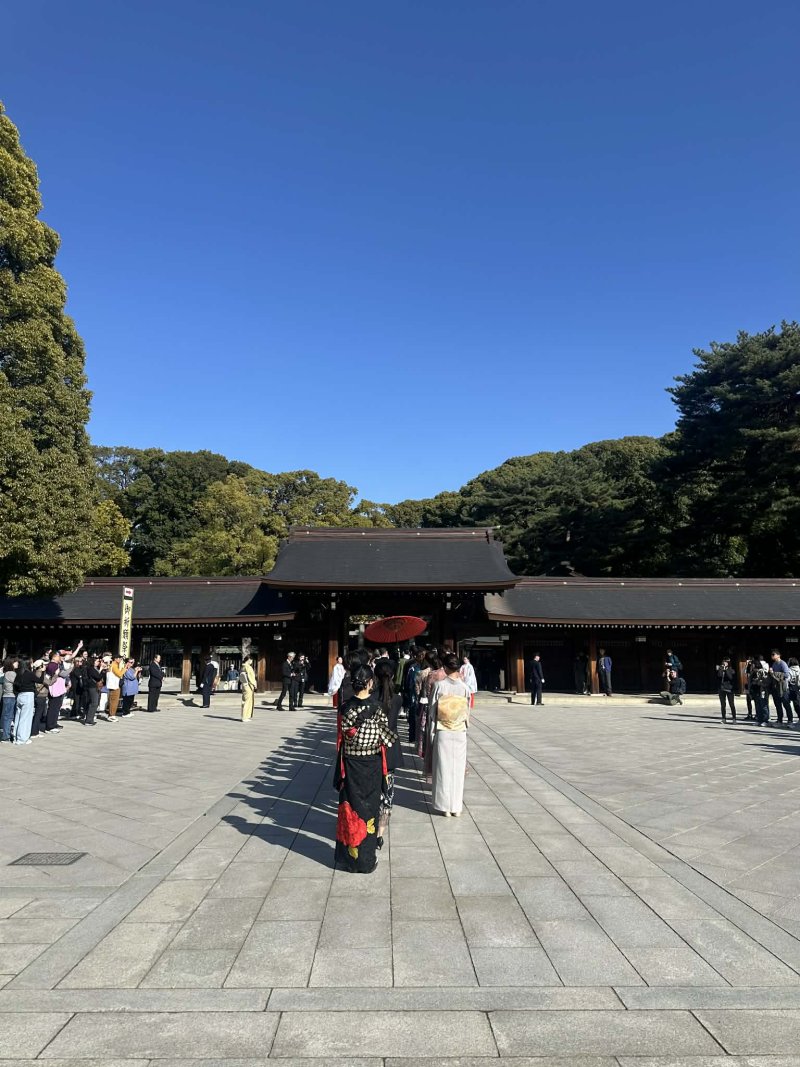
Some cities try to impress you. Tokyo does something far more unsettling: it quietly rewires you. You arrive as a visitor. You leave with a different standard for how the world could work.
From discovering designers who seemed to understand movement and identity better than language itself, to quiet rituals hidden between temples, parks, and everyday streets, to the people and the atmosphere that give the city its unmistakable rhythm, I returned to Europe not just with memories, but with a subtle internal shift.
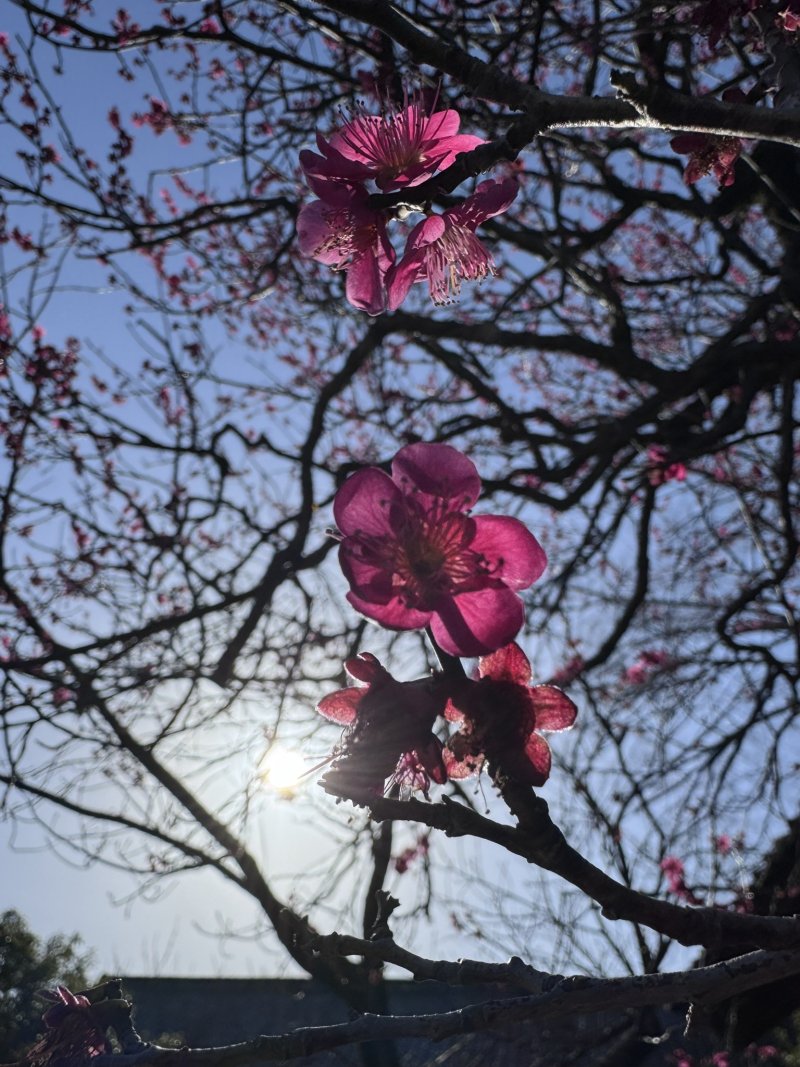
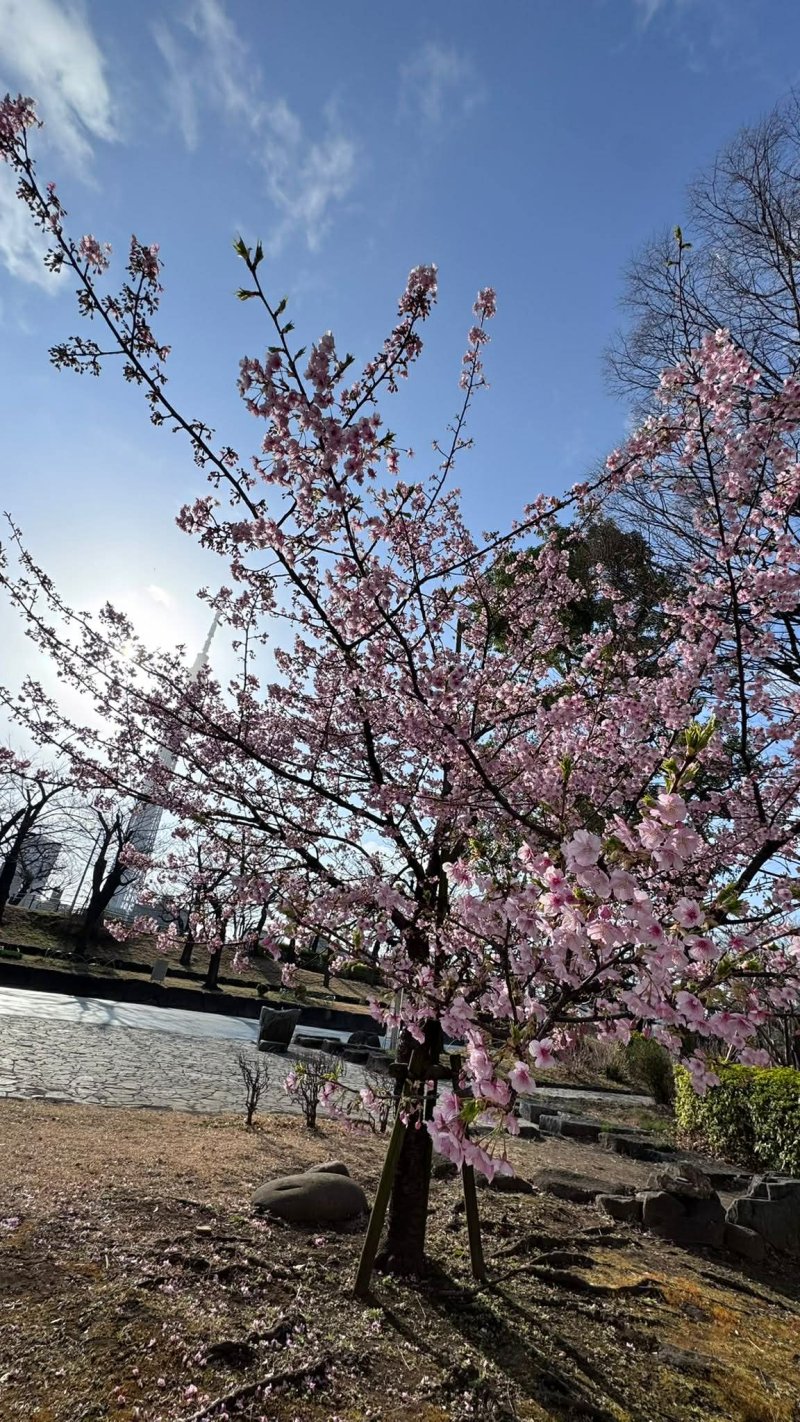
Almost on the threshold of spring, of sakura, the season that had once lived only in imagination, I realized that perhaps the “perfect moment” I had been waiting for was never something to arrive from the outside. It is something you grow into.
And sometimes, without even noticing, you begin to bloom.
Cveta Majtanovic is a Business Innovation & Strategy Executive | CSO · Board Advisor · Venture Builder | AI x Circular Economy x Industrial Systems | ESMT Executive MBA · UC Berkeley Haas | Recognized MB100 Global Leader.


Want to hear more?
