Let it change you: finding your rhythm in the Part-time MBA
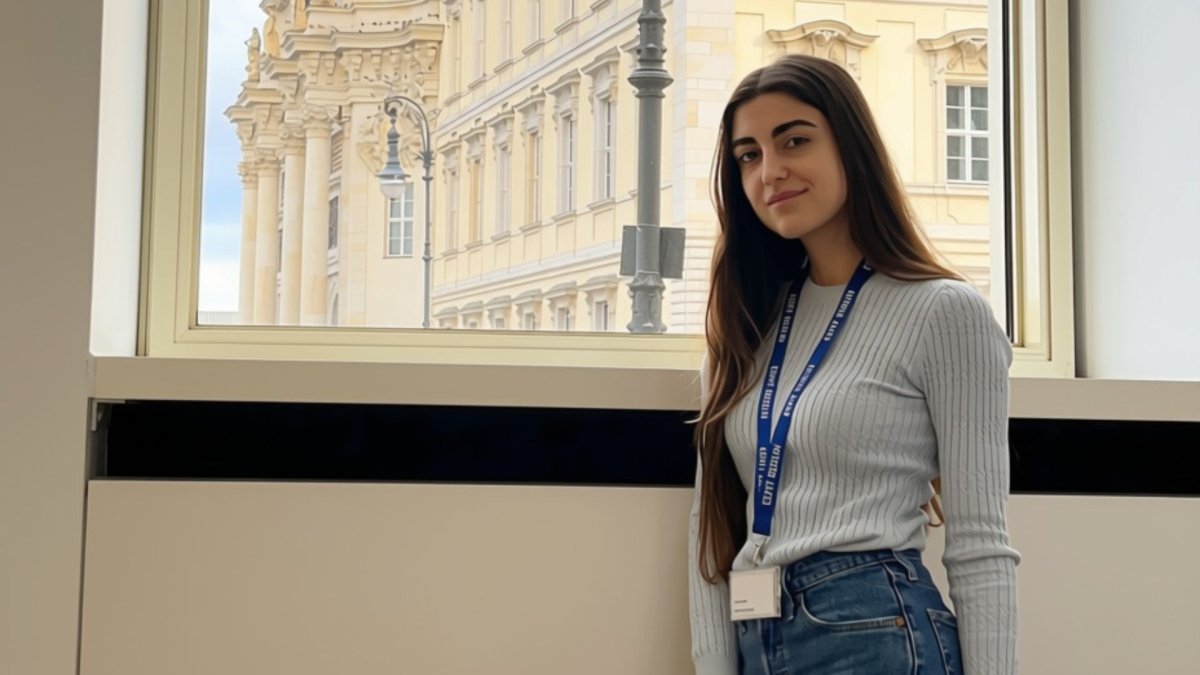
For Sophie Khalil, the ideal MBA program was one that gave her a meaningful chance to connect to "the changes shaping the world today and tomorrow" – without requiring her to take time out from her flourishing career. She found the ideal fit in the Part-time MBA (PTMBA) program at ESMT Berlin.
Allowing yourself to see things differently: Sophie's story
In this blog, Sophie shares some of the unexpected highlights from her time at ESMT, from insights into her GNAM exchange week at Yale SOM, to what it is like to begin your MBA by learning about leadership in the middle of a German forest.
Sophie also reflects on why the PTMBA program is such an effective driver of personal growth. As she explains, it is not just the breadth of topics, nor just the breadth of cohort experience that makes it so transformative. Instead, it is the combination of both factors that allows for major growth, especially for those who keep an open, flexible mindset.
Hi Sophie, could you please introduce yourself?
Hi, I am a mechanical engineer by training, and I work in consulting as an Engagement Manager. My work focuses on developing and implementing strategies. Outside of my professional work, music has been a constant creative outlet that keeps me grounded and inspired.
Why did you decide to get your MBA at ESMT Berlin?
When I decided to pursue an MBA, I wanted the experience to be meaningful; a real opportunity to grow, learn from new methods, work on real-world cases, and exchange perspectives with people from different backgrounds. ESMT Berlin stood out to me because of its approach to learning. The program is triple accredited, but what mattered most to me was that it is very connected to the changes shaping the world today and tomorrow, including technology, innovation, leadership, AI, and sustainability.
Another thing I valued was the breadth of topics. Alongside the core business courses, I had the chance to explore areas such as Global Strategies of Industrial Champions, Strategic Foresight, the Chinese economy, Family Businesses, and Luxury Businesses. Given my professional experience across different sectors and geographies, this helped me better understand the interplay between business types and the kinds of challenges they face.
What drew you to the Part-time MBA format in particular?
"The biggest advantage of the Part-time MBA is that you can apply what you learn almost immediately."
I was already learning and growing professionally, so I did not want to pause that momentum. For me, the MBA was meant to be an addition that would accelerate my growth, not replace the learning. The biggest advantage of the Part-time MBA is that you can apply what you learn almost immediately. The format also made the classroom experience richer because everyone was bringing valuable professional experience into discussions.
What is it like to study partially online? How have you adapted to the learning platform?
" I appreciated that the online discussions were designed to be engaging, even when not everyone was online at the same time. There was still a sense of learning together."
It is like two sides of the same coin. On the one hand, it gives you flexibility. You can plan your time and study when it is convenient. On the other hand, it takes a lot of willpower, especially after a long week, to sit at your desk again during the weekend.
The last time I studied formally, I was still using pen and paper, so the digital learning platform was definitely a new experience for me, but I quickly got used to it. I appreciated that the online discussions were designed to be engaging, even when not everyone was online at the same time. There was still a sense of learning together.
What are the Berlin residencies like? How did it feel to meet your cohort in person for the first time?
"Some of the friendships that started during the program now continue beyond university, even across countries."
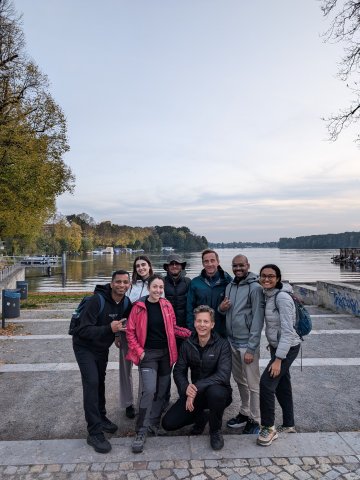
The Berlin residencies are the part I will miss the most. They included classes, group work, case discussions, networking, and simply spending time together. Although we did not see each other in person every week, a strong connection was built very quickly. And this made the residencies special. Some of the friendships that started during the program now continue beyond university, even across countries.
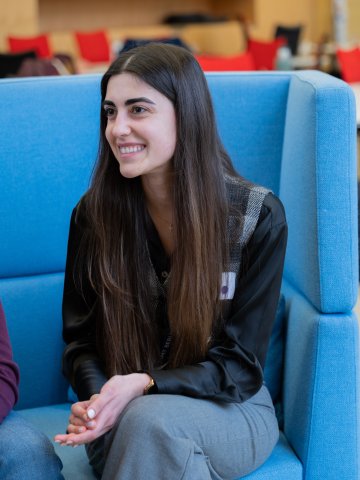


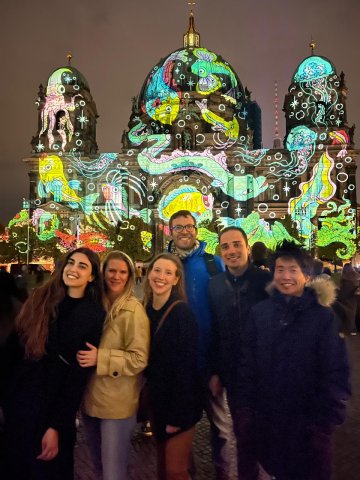

What is it like to study as part of an international cohort, coming from different industries and functions? Are you able to learn from each other?
"The diversity in the cohort enriched the discussions a lot."
It requires an open mind, and that is what makes it valuable. The diversity in the cohort enriched the discussions a lot. People came from different industries, functions, and cultural contexts, so the same case could be seen from many different angles. Some of the best discussions happened when we did not all agree on the protagonist’s approach (in a case study). These conversations highlighted the diversity stemming from priority, goals, culture, and personality differences.
You had the chance for further international exposure with a GNAM Week exchange to Yale. What was the exchange like?
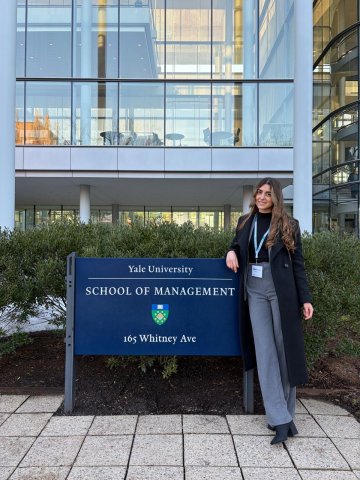
The Global Network for Advanced Management (GNAM) Week at Yale focused on the Behavioral Science of Management. Being able to take part in a program at Yale was a very special opportunity, not only because of the university’s global reputation, but also because of the chance to learn in such an intellectually rich environment with students from other schools.
We explored topics such as consumer experiences, prosocial behavior, the science of charisma, and behavioral finance. What made the week especially interesting was that it connected management to human behavior in a very practical way. It showed how much our decisions, reactions, and perceptions are shaped by expectations, context, and experience.

You have also taken part in other elective opportunities, like the Finance Accelerator. What did that involve and how did you place?
The Finance Accelerator was a fast-paced simulation and competition designed to give practical experience in investment bank trading and asset management, in partnership with Morgan Stanley and UBS. I ranked 4th out of 186 participants in the asset management simulation, which was a result I was genuinely surprised by. I had never worked in asset management or investment bank trading before, nor had I taken specialized financial education in that area. The experience gave me exposure to how these environments work in practice, and it definitely increased my confidence in approaching finance topics.
Are any particular classes or learnings sticking with you?
" The MBA helped me build self-awareness around my leadership style and how I show up as a leader."
One example that stayed with me is Tuckman’s team development model. In consulting, we often work with new teams on each project, so as a manager it is crucial to help the team quickly move toward high performance while recognizing the natural phases of team development. Studying this framework helped me better understand how to lead teams through those phases and support successful project delivery.
More broadly, the MBA helped me build self-awareness around my leadership style and how I show up as a leader.
What is your favorite memory from your time at ESMT?
One of my favorite memories is from the very first week, during the high-performance team-building course in the forest. It may sound like an unusual answer because it happened so early in the program, but it really stayed with me.
We were without technology, split into teams, and given very limited instructions. We did not know what to expect. Then we faced several challenges along the way, mostly connected to teamwork, leadership, and high-performing teams. It pushed us out of our comfort zones very quickly and taught us a lot about ourselves and each other. Looking back, it was a powerful way to start the MBA.

What tips would you give to someone considering applying to the Part-time MBA program? Is there anything you wish you had known before you started?
" Real growth often happens in the moments when you reflect, challenge your own assumptions, and allow yourself to see things differently."
It will take time to find your rhythm, and it’s okay. The MBA is a lot, and life will have unexpected surprises. Some weeks will require more focus and others you will simply be catching your breath. Flexibility becomes very important. But real growth often happens in the moments when you reflect, challenge your own assumptions, and allow yourself to see things differently.
The program is worth it if you are ready to get out of your comfort zone, question what you know, learn from people who think differently, and stay open enough to let the experience change you.
Thank you, Sophie!
Sophie Khalil is an Engagement Manager. You can follow her on LinkedIn for further thoughtful MBA and career insights.


Discover more ESMT stories
