Where science meets business: sustainable entrepreneurship in the MIE
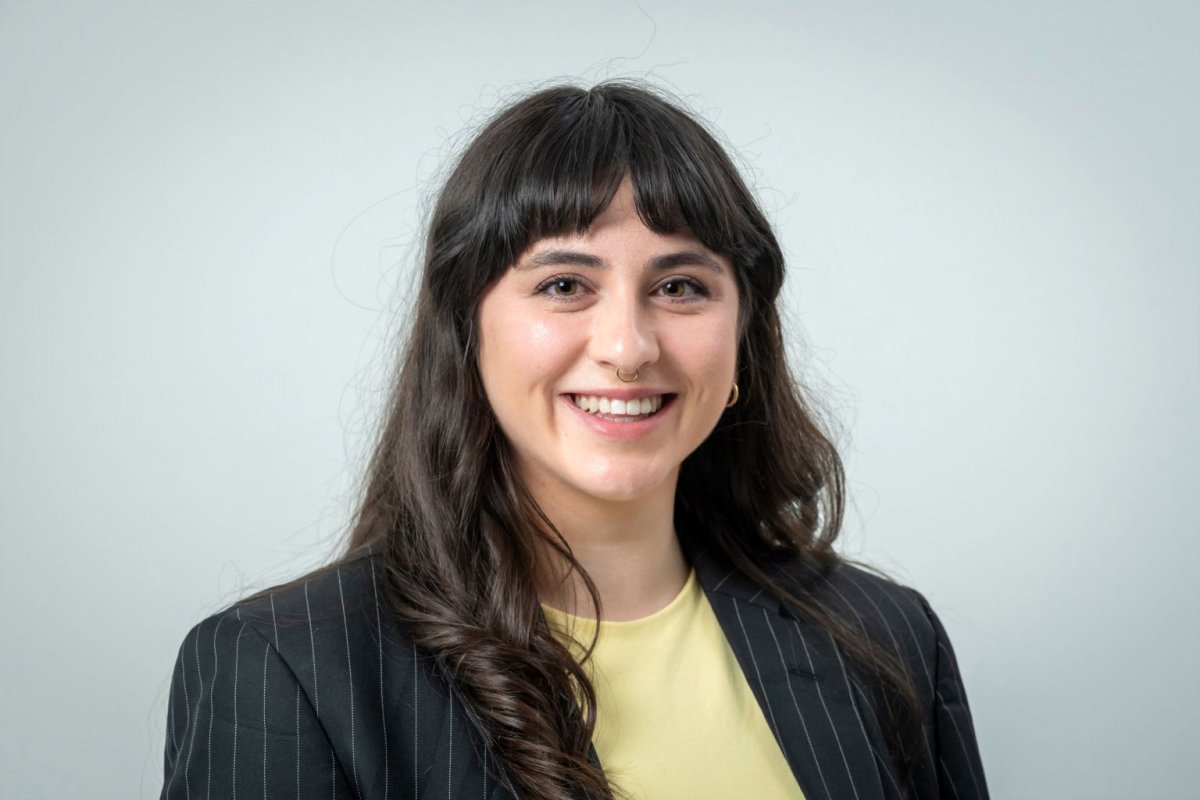
Science. Entrepreneurship. Two opposing fields? Not for Master in Innovation and Entrepreneurship (MIE) student Valentina Vergara Stange, Class of 2027. In fact, she thinks that they "converge more than people realize" – and that this interaction only makes each discipline stronger.
From molecular biotechnology to entrepreneurship and innovation: Valentina's story
In this blog, Valentina gives her insights on what science and business can learn from each other and explains what encouraged her make a double switch: from Chile to Berlin, and from a molecular biotechnology and food tech background to a master's degree in entrepreneurship.
She also shares her highlights from the MIE program so far, including what it is like to be part of the Summer Entrepreneurship Program (now called Incubation I) and the Sustainability Bootcamp (now called Ideation Bootcamp), and how ESMT can help entrepreneurial-minded students learn to "build a business by actually building one, with no real financial consequences if things go sideways."
Additionally, Valentina gives us her tips for making the most of being a master's student in Berlin. She offers her insights on how to make friends and grow your network – and how LATAM students can adjust to those dark German winters.
Hi Valentina, could you please introduce yourself?
Hey! I'm Valentina, a 27-year-old entrepreneur and scientist from Chile. My favorite food is ice cream, my favorite color is red, and my favorite animals are nocturnal butterflies. At my core, I'm someone who's endlessly curious about life: how things work, why they work, and how understanding that can help people. That curiosity is what led me to study molecular biotechnology engineering, and honestly, I loved every bit of it.
Now I'm channeling that same drive into my Master's in Innovation and Entrepreneurship at ESMT Berlin, because it turns out, understanding life at a molecular level and wanting to help others are pretty good reasons to also learn how to build things that actually make it to the world.
Oh, and I genuinely love nature, animals, and plants – just don't expect to find me hiking. I get my daily steps in by dancing at the club with friends.
What made you want to get your Master in Innovation and Entrepreneurship at ESMT?
"I'm going to be the bridge between science and business, bring ideas to life, and help create real impact in the world"
This is a great question, and it ties directly into that "helping others" part I just mentioned. There are so many brilliant ideas in science that could make a real, positive impact on our lives and make the future feel less daunting – but early on, I learned that for science to actually leave the lab, there has to be a sustainable market behind it.
At first, that felt discouraging. But then I reframed it: I'm going to be the bridge between science and business, bring ideas to life, and help create real impact in the world. So here I am – after a few years working in food tech and genomics – learning the tools and skills to help close that gap and getting my hands dirty by becoming an entrepreneur myself.
What prompted your switch to entrepreneurship?
"I think the blend of business and science is both beautiful and essential for the future."
Beyond the bigger purpose that brought me to the MIE at ESMT, the honest answer is that I took every opportunity I could find to explore my career path with a science background. I tried academia, worked for the government evaluating projects for state funding, completed my master's thesis at a great tech startup doing molecular nutrition and microbiology research, and then worked at a more traditional biotech company.
It was during my time at the food tech startup that I decided I wanted to build something like that myself – and that's what pushed me toward an entrepreneurial career. I started asking: what do I need to learn? What skills do I need to develop? That led me to look into master's programs in business in Germany, a country I had always wanted to come back to study in.
Do you think science and business can learn from each other?
I think the blend of business and science is both beautiful and essential for the future. Deep tech ventures are booming; the demand for sustainable innovation across industries is growing every day, and we need to build ourselves toward that change.
There's also a lot each field can learn from the other. Science could learn from business that great ideas don't need to be perfect – business is the vehicle that gets them out into the world, and waiting for perfection means never getting started. And business could learn a lot from science: open-mindedness, creativity in problem-solving, and most importantly, the discipline of the scientific method – forming a hypothesis, testing it, learning from the result, and iterating.
This is actually where both fields converge more than people realize. The lean startup methodology, for example, is essentially the scientific method applied to business development. Build, measure, learn. It's the same logic, just a different lab
Did you move to Berlin for the MIE? What are some of the differences between life in Chile and life in Germany?
Yes, I moved here for my master's degree. Honestly, life in Berlin hasn't felt that different from life back in Santiago de Chile – and I mean that in the best way. It doesn't really matter where you are: if you know yourself, it's easy to find people who resonate with your values, tastes, and ways of building relationships.
Everyone says Germans are a little cold – I couldn't disagree more. My closest friends here are true Berliners, and they have so much in common with my best friends back home.
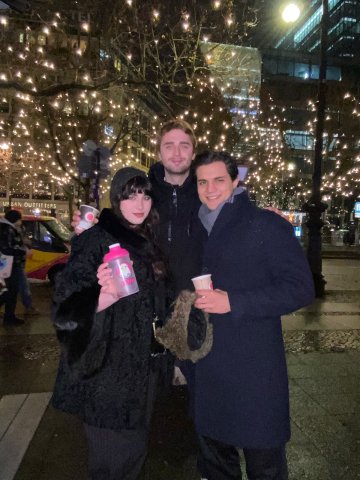
The main differences, for me, are the weather and the sense of safety. Here in Berlin, I can walk home after a night out or take public transport with 90% less fear than in Santiago – something I would genuinely never do back home. As for the weather: yes, winter is cold. Really cold. But it wasn't as bad as I expected. Just grab yourself some great coats at the flea markets if you don't have any and be the biggest diva at ESMT.
Clothes are an easy fix. What actually gets to you is the lack of daylight in winter – that really affects your mood. But you'll be fine if you follow this simple formula: sign up for a sport, build strong friendships from the start, and become a regular at your nearest Kneipe.


Do you have any tips for other LATAM students thinking about making the move to Berlin?
"The Latin community in the city is huge. You lift a rock and find someone from your country; you just have to step outside your home and university and actually engage with the city."
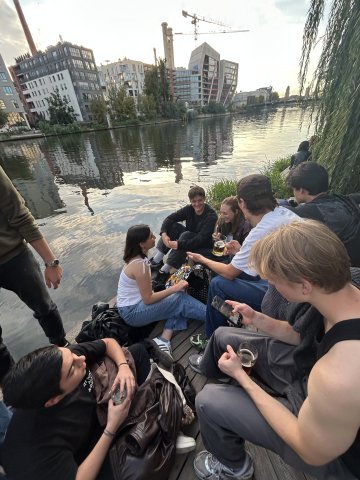
Building on my last answer – which honestly applies here too – just do it. Berlin is unlike anywhere else in Germany, and that's exactly why I chose to come here. The Latin community in the city is huge. You lift a rock and find someone from your country; you just have to step outside your home and university and actually engage with the city. Since you'll be studying with people your own age, making friends comes pretty naturally.
One thing I'd strongly recommend: start learning German, especially if you're thinking about staying after graduation. You can absolutely live your life in Berlin speaking only English, but even a basic level of German goes a long way in everyday life – going to the supermarket, ordering a beer, navigating bureaucracy. It quietly builds your confidence with the language over time too. And professionally, job opportunities are far more abundant for German speakers. You'll still find an internship or a job without it, but it will be harder – there's a lot of demand and not enough English-only supply.
A lot of your classmates also come from international backgrounds. What is it like to be part of such a global cohort? Does the smaller size bring you closer?
" Being part of a global cohort is something truly special. You learn from other cultures, they learn from you, and suddenly you have a place to go in almost every corner of the world."
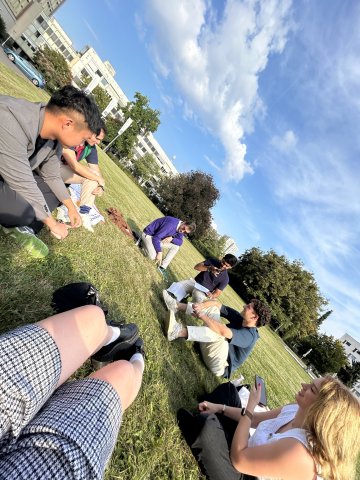
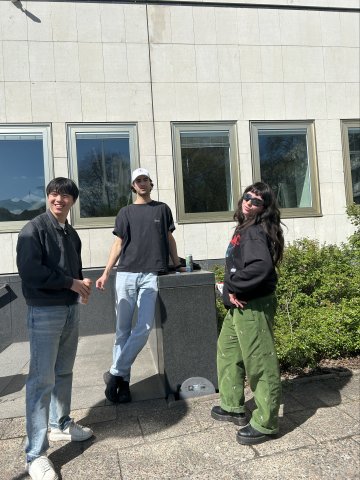
I love my cohort. We've become really close – and not just within the MIE program, but also with students from the Master in Global Management and the Master in Analytics and AI. My tip: spend time in the garden during class breaks. That's where you'll find people outside your master's to talk to, and you'll probably end up becoming friends with them too.
Being part of a global cohort is something truly special. You learn from other cultures, they learn from you, and suddenly you have a place to go in almost every corner of the world. Within the MIE specifically, we're very close. We hang out on weekends, organize dinners together, and once, our classmate Santiago (from Mexico) hosted a taco night – real Mexican tacos, made from scratch, as if we had our own taco truck straight out of Monterrey.
We look out for each other, admire each other, and embrace our differences while celebrating everything that brings us together.


Instead of doing an internship, you are part of an intensive entrepreneurship program. What does that involve? What project are you working on?
MIE students have the option to take part in the Summer Entrepreneurship Program (now called Incubation I) instead of a mandatory internship. It's a chance to get your hands dirty and truly navigate the entrepreneurial path: building a venture from scratch, identifying a problem space, validating it, developing a solution, doing customer discovery, generating traction, and practicing investor pitching.
It's a full-time experience that lets you find out whether this is really the path for you – because entrepreneurship sounds incredibly exciting, but it demands far more than a 9-to-5.
I joined the program with Maxime Knof, my best friend at university. Our project is rooted in the food industry, where I have a few years of work experience and where I identified some real, addressable problems. After countless interviews and conversations with virtually every actor in the industry, we landed on a solution that will help food producers innovate faster – de-risking decisions and ensuring both economic and technological scalability of their products.
You are also involved with entrepreneurial extracurriculars like the ESMT Venture Club. What is that like? Have you been a part of any memorable projects?
ESMT has plenty of extracurricular activities and clubs, and I'd strongly recommend joining at least one. It's a great way to meet more people and explore areas you might be curious about for your future career – consulting, finance, sustainability, deep tech, you name it.
Since I've considered consultancy as a potential career path, I started exploring it through the Consulting Club, where teams compete by advising real startups across Europe. I learned a lot through the experience, but what stood out most was the team dynamics: understanding who should own what, dividing work based on everyone's expertise, while still showing up as a fully unified front when presenting to founders. That approach paid off – we delivered the best outcome out of all the competing teams!
Additionally, you were involved with the Bootcamp. What was that like? Do you think sustainability is an important part of business?
The Sustainability Bootcamp (now called the Ideation Bootcamp) is a bit like a preview of the Summer Entrepreneurship Program (Incubation I) but compressed into one week. We picked from two sustainability topics (or proposed our own), formed a team that became our makeshift co-founding group, identified a problem in that space, and started working toward solutions. Mentors guide you throughout the process and help you build a landing page and mockup. The final deliverable was a business pitch in front of sustainability and business experts.
I think it's a fantastic initiative – sustainability is genuinely an important driver of change, shaping politics, regulations, and the way businesses operate, while also opening up entirely new business opportunities in the process.
What has been your favorite memory from the MIE so far – inside or outside the classroom?
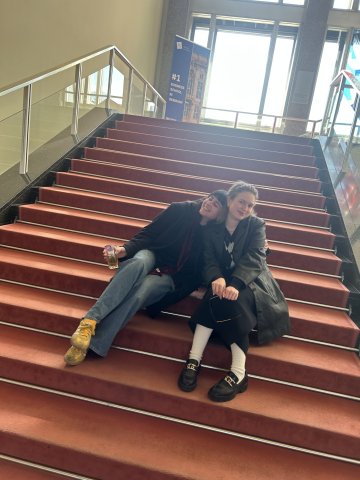
Picking a single favorite memory is tough – I genuinely enjoy every day at university. A friend always asks me why I spend so much time here, and the answer is simple: there are always interesting people to talk to, it's a great space to study and work, and hanging out with friends there just feels natural.
Inside the classroom, there are so many good memories and funny moments that it's hard to single one out. But if I had to name an ESMT highlight, it might be the time we went to Audi 4 for karaoke after an event with second-year students.
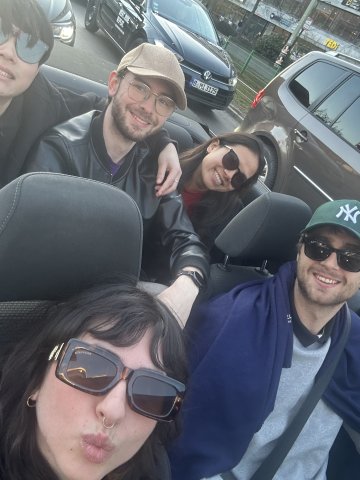
Outside the classroom, the city itself gives you endless material – navigating the logistics of a night out, cooking with friends, celebrating birthdays, taking Lime scooters everywhere (I don't know why I'm so obsessed with them, it is not like they don't exist in Chile). But the best moments are always the unplanned ones, like the time Maxime and I went full on Sherlock Holmes mode to find out what happened at the venue for our end-of-semester party, since the event had been cancelled before it even started.


And what parts of the program are you most looking forward to?
" Where else can you learn how to build a business by actually building one, with no real financial consequences if things go sideways? Try, fail fast, learn."
Honestly, the part I was most looking forward to was the Summer Entrepreneurship Program (Incubation I) – the same as many of my classmates. Where else can you learn how to build a business by actually building one, with no real financial consequences if things go sideways? Try, fail fast, learn.
Right now, I'm really excited to keep developing our venture through the NEXT B2B accelerator program (now called Incubation II).
What advice do you have for anyone considering applying to a master's program at ESMT?
My first piece of advice: reach out to people who are already studying here. Everyone is incredibly open and will be more than happy to answer your questions. Second: apply for a scholarship, even if you don't think you're qualified enough. We tend to underestimate ourselves when, in reality, we're more than capable. I'm speaking from experience – I didn't think I'd get it, but I applied, and that scholarship is the reason I'm here today.
And lastly: build your network. Students, alumni, partner companies – attend the events ESMT has to offer, talk to PhD students, MBA students, professors. Everyone will help you if you're approachable and genuine. Those connections are, honestly, the unfair advantage ESMT gives you over any other university.
Thank you, Valentina!
If you are interested in more of Valentina's insights into the science and entrepreneurship overlap, or if you just want to hear more about student life in Berlin, you can follow her on LinkedIn.


Want to learn more about ESMT student life?
