How a team of ESMT Berlin master's students won the Open AI Hackathon
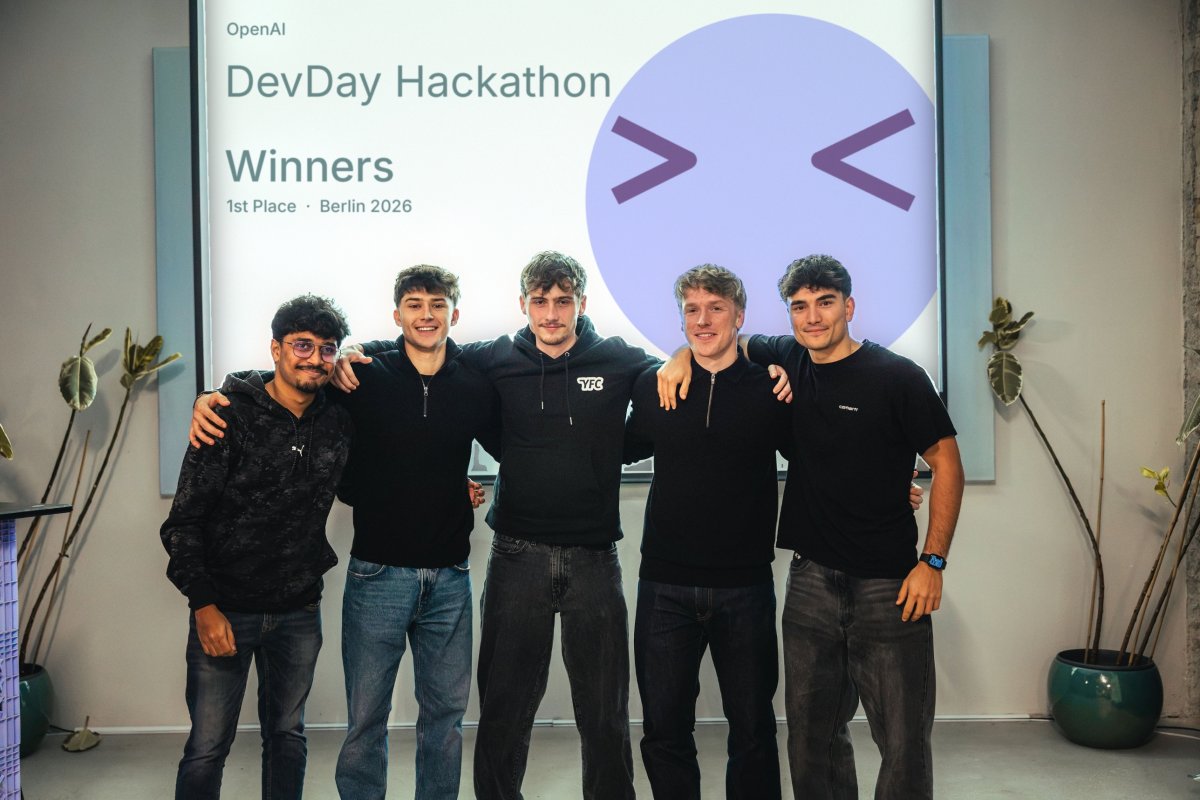
Photo credit: Ohad Grodzenski
An idea to believe in and great team spirit: introducing SeriesBio
The master's Class of 2028 had their first day at ESMT in September 2026. By October, some of these master's students had won Berlin's Open AI Hackathon together.
In this blog, Master in Innovation and Entrepreneurship student Nicolas Witzgall explains his team's project, what it was like to be part of the Open AI Hackathon, and what it felt like to win.
He also shares how competing in the hackathon helped his team build connections across all three of the ESMT master's programs, and how the school – and Berlin – are ideal places to meet " a community full of ambitious students" who can help you grow.
Hello Nicolas, could you please introduce yourself and your team? What are your names and what degree programs are you doing?
Hi, I’m Nicolas Witzgall and I’m doing the Master in Innovation & Entrepreneurship (MIE). My teammates at the hackathon were Emil Foerster, Magizhan C B, and Milan Porzsolt (also from the MIE); Nicolò Terraneo from the Master in Global Management (MGM); and Andrea Paganelli from the Master in Analytics and AI (MAAI). Between us, we cover all three of ESMT’s master’s programs.
What was your and your team's background like before ESMT? Where were you based, and did you move to Berlin to do your master’s?
Before ESMT most of us did business bachelor degrees at different universities, except Magizhan, who did a production engineering degree. Some of us also had founding experience.
I did a dual Bachelor in Business Administration at HWR Berlin and Bayer. At Bayer, I worked in open innovation and in business development and licensing at the Bayer Co.Lab, Bayer’s startup incubator in Berlin. That’s where I learned a lot about early-stage biotech, startups, investment, and incubation. I was already living in Berlin, so I didn’t have to move for my master’s.
Your team recently placed first out of 300 teams at the Open AI Hackathon. Congratulations! Can you tell us about what goes on at this hackathon?
Thank you! The OpenAI DevDay Community Hackathon in Berlin brought together more than 300 people from the city’s OpenAI community. Everyone worked on their ideas in one of three tracks, and at the end a jury picked the winning teams.
Some teams formed spontaneously on the day, but most people came with a team they were already working with. The whole day had a very entrepreneurial and creative spirit, and everyone was there to enjoy building something.
What did it feel like to win? Was there tough competition?
It felt amazing, and we really didn’t expect it. For most of us it was our first hackathon, and we’re probably not the greatest coders. But we picked up a lot of vibe coding on the day, we had an idea we believed in and a great team spirit, and that carried us through the few hours we had. The competition was tough. Some teams built robots, others built AI projects we didn’t even fully understand. That makes us even more honored that the jury chose us.
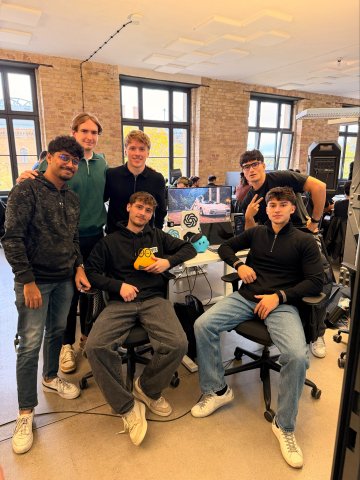


Photo credit: Ohad Grodzenski
What was your team’s project? Did you all work on the same parts of it, or did you all bring different skillsets?
Our project was SeriesBio, a matching platform for early-stage biotech funding. Founders upload a non-confidential pitch deck and get a readiness score that shows which gaps to close before they talk to investors. Investors see startups that fit their thesis, and a match only happens when both sides say yes.
Everyone brought a different skill set, so we split the work. I brought the biotech background and basic idea. Together we refined it and did the ideation. Andrea, Magizhan, and Nicolò built the website, the design, the interface and the infrastructure. Emil and I worked on the back end, the KPI structure and the scoring of the pitch decks, and Emil’s health background helped a lot with the scientific details.
How did you build your team? Were you friends first or did one of you want to do the hackathon and put a team together?
Pretty spontaneously! Emil, Andrea and I signed up together because we wanted to work on a project together, even though we didn’t have an idea yet. At the event we met other ESMT students, started chatting and formed the full team right there.
What were some of your biggest learnings or takeaways from doing the hackathon? Did you get any support during the process?
My biggest takeaway is how much you can build in about five hours when you have a clear idea and a team that’s excited about it. I also learned how valuable it is to explain exactly what you want to build. You have to break the details down into a story that’s interesting and easy to understand. We also had a great conversation with an investor who walked around and talked to the teams. That discussion shaped our vision even further.
Do you have any plans to build on your success or continue to work together on any projects?
We all really enjoyed the experience and can imagine working together again. What happens next with SeriesBio and our team depends on a few factors that aren’t clear yet, so we’ll see how things develop.
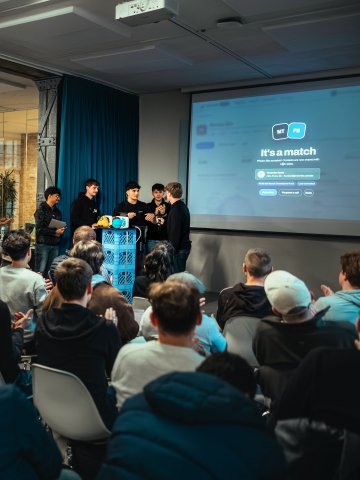


Photo credit: Ohad Grodzenski
Back to ESMT: it is still early in your master’s journey, but which lectures or seminars have stood out to you so far?
It’s still early, but so far I’ve really enjoyed Economics of Innovation and New Technologies in my MIE program. What I also like about ESMT so far is everything outside the regular curriculum. There are so many events, student clubs, and networks where you can grow, build new skills and meet people.
Looking ahead, what parts of your programs are you most looking forward to?
I’m most excited about the Incubation I program. I hope I can build on this idea or a new one there and found my own startup. I’m really happy to be part of a community full of ambitious students who share my interests, and I hope to find great co-founders and a strong idea to build on.
As a team, you represent all three of our master’s programs. Do you have any tips for making friends on campus, inside or outside of your program?
We just get along really well and understand each other. What helped most were the first weeks, especially welcome week. We used every chance to connect with others and stayed open to new people.
After that, join the activities you enjoy. That’s where you meet like-minded people you’ll really get along with. It worked out perfectly for us, and this hackathon is the best example.
How about the wider Berlin community: how can students find out about hackathons and events in Berlin and how to take part?
Luma is the best place to find hackathons and events in Berlin. Our student clubs and ESMT itself also send out a lot of event emails, and we keep an eye on our network and LinkedIn.
Soon we want to start a hackathon club at ESMT Berlin. We’ll share upcoming hackathons there, send motivated teams to events and maybe organize a few ourselves.
Thank you Nicolas!
If you would like more insights into master's life at ESMT, or on the entrepreneurial community in Berlin, you can follow the SeriesBio team on LinkedIn: Nicolas Witgall; Emil Foerster; Magizhan C B; Milan Porzsolt; Nicolò Terraneo; and Andrea Paganelli.


Learn more about students and alumni at ESMT Berlin
