Building a life in Germany with the Master in Innovation & Entrepreneurship
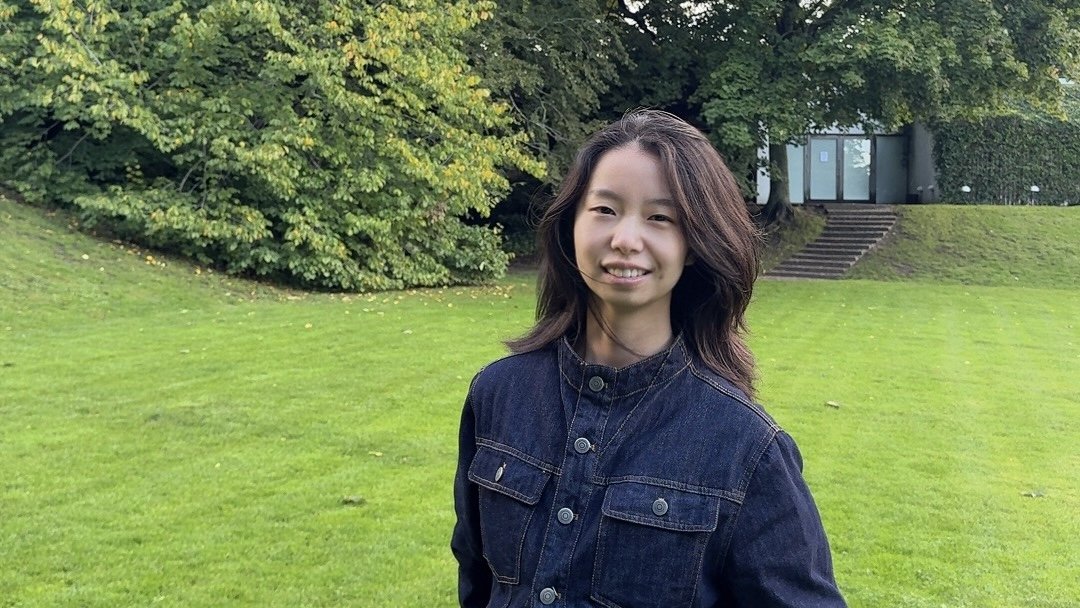
From China to Berlin: Yuxin's story
When Master in Innovation and Entrepreneurship (MIE) student Yuxin Huang moved to Berlin to join ESMT, she knew she was joining a program that would expand the business and e-commerce knowledge she had acquired as an undergrad in China.
What she didn't necessarily expect was how much she would grow outside the program, too.
In this blog, Yuxin outlines her two-year journey as an ESMT master's student. She explains how the program's format encourages both independent and group studies, and how it introduced her to "rich learning opportunities in both theory and practice."
And Yuxin outlines how Berlin itself offers plenty of chances for international students to grow and make a home – from the university sports network that can help you find community, to the opportunities to explore art and culture, to the internships and working student roles that can expand your professional experience.
Hi Yuxin, could you please introduce yourself?
Hi, I’m Yuxin Huang. I’m originally from China and graduated from the Master in Innovation and Entrepreneurship (MIE) in 2026. My bachelor’s degree was in e-commerce, so a lot of my academic and practical experience before ESMT was related to that side.
During my studies at ESMT, I joined TeamViewer’s Global Retention Marketing team, first as an intern and later as a working student. It gave me the chance to apply some of what I was learning at ESMT in an international business environment, while also gaining more hands-on experience in marketing.
Why did you choose to study in Germany? Were there any nice surprises about life in Europe?
"Museums and exhibitions have gradually become a much bigger part of my life here, and that has added a lot to my experience beyond studying and working."
One of the reasons I chose Germany was its overall economic and business environment. Within continental Europe, Germany has a strong economy and an established business ecosystem. Berlin was especially attractive to me because it is very international, and I felt it would be a place where studying, working, and everyday life could fit together quite naturally. German is definitely helpful, but in Berlin I found that it was not always a strict requirement for taking part in student or professional life.
There were also a few things about living in Europe that pleasantly surprised me. One was how easy it is to try new sports. In Berlin, almost any sport you can think of is available somewhere, and it is usually quite easy to find a course, club, or community to get started.
Another was the access to art and culture. I have been able to see works by artists that I had previously only encountered in books or online. Museums and exhibitions have gradually become a much bigger part of my life here, and that has added a lot to my experience beyond studying and working.
What drew you to study at ESMT specifically?
The first thing that attracted me to ESMT was its international environment. Since I had decided to study abroad, I wanted to meet people from many different countries and cultural backgrounds rather than simply move into another relatively familiar environment.
The second reason was the flexibility of the MIE curriculum, especially in the second year. After the first year, you usually have a much clearer idea of what you are interested in, what you are good at, and where you still have gaps. Being able to choose your own courses gives you the chance to focus more on the areas you actually want to develop.
The third reason was the practical orientation of the MIE program. I did not want my master’s experience to be limited to classroom learning. I wanted enough space to gain professional experience and apply what I was learning in real business settings, so that combination was very appealing to me.
Why did you choose the Master in Innovation and Entrepreneurship?
First, my undergraduate major was E-commerce. During my undergraduate studies, the university provided extensive practical opportunities in the field, including how to build and operate an online store from scratch. These experiences gave me a foundational understanding of business operations and sparked my interest in innovation and entrepreneurship.
Second, through my exposure to the business world, I noticed many unmet real-world needs. This motivated me to deepen my knowledge of innovation and entrepreneurship – both theoretically and practically – and to explore how to transform business ideas into viable solutions that address the market gaps I had observed.


Before the MIE, were you passionate about innovation and entrepreneurship? How has it helped you explore them?
" I learned not only to evaluate whether an idea was novel or interesting but also to consider its true commercial viability and how to translate it into an actual product or service."
Rather than saying I had always harbored a dream of starting a business, I would say I was primarily interested in business operations themselves. The MIE program offered rich learning opportunities in both theory and practice.
On the theoretical side, the curriculum covered everything from identifying business opportunities and market validation to business model design, helping us build a systematic understanding of innovation and entrepreneurship.
On the practical side, the program provided numerous opportunities to engage with real-world entrepreneurial environments – such as collaborating with startup teams, attending entrepreneurship summits, and interacting with entrepreneurs from various industries and stages of development.
These experiences enabled me to approach business issues from multiple perspectives; I learned not only to evaluate whether an idea was novel or interesting but also to consider its true commercial viability and how to translate it into an actual product or service.
Could you give a brief overview of the daily schedule for the first and second years?
The pace of study and life differs significantly between the two years of the master's programs.
The first year centers largely on coursework. The university schedules classes in advance, and in addition to attending lectures, we are required to complete a substantial amount of group work, case studies, and project presentations. Towards the end of the first year, we transition into the internship phase.
In the second year, the curriculum follows a self-selected course model, offering greater flexibility in scheduling. You can choose to concentrate your classes within one or two months or spread them out over a period of about three months.
Many students also choose to continue working as "working students" during this phase, so we have to independently manage the balance between academic coursework, team projects, and professional work.
When it comes to the final thesis stage, you have much more autonomy over your schedule. Aside from a few pre-scheduled supervisory meetings, you are largely responsible for planning and managing your own time – handling everything from research progress and data analysis to the actual writing of the thesis.
Overall, as the project progresses, students gain increasing autonomy in managing their time.
What was your cohort like? How did it feel to study in such an international group?
"You learn that there is rarely only one “right” way to approach a task, and you become more open to adjusting your own way of working as well."
My classmates were very friendly, and one thing I really enjoyed about studying in such an international cohort was seeing how differently people approached the same task.
Everyone brings their own habits when it comes to communication, teamwork, problem-solving, or organizing a project. Once you start working together, you notice those differences quite quickly.
I found that very valuable because, over time, a team often develops a way of working that combines different people’s strengths. You learn that there is rarely only one “right” way to approach a task, and you become more open to adjusting your own way of working as well.


What is your favorite place on the ESMT campus?
My favorite place is actually quite a small one, one of the individual booths in the study room area on the third floor.
I like it because it gives you a quiet little space of your own. There is nothing particularly fancy about it, but I always found it very easy to focus there, especially when I needed to work alone for a few hours.
What activity in Berlin would you most recommend, and why?
For students studying in Berlin, I highly recommend participating in the Hochschulsport (university sports programs) offered by the city's various universities. The range of sports available is incredibly diverse – covering everything from tennis and rock climbing to Ultimate Frisbee – and the prices are usually student-friendly. These programs foster very active sports communities. Not only do they allow you to try out different sports, but they are also a fantastic way to meet friends from different countries and universities.
I believe student life shouldn't be limited to just academics and work. Through these activities, you can gradually build a social circle and develop your own interests and lifestyle outside of your studies and job.
Can you tell us about your role at TeamViewer?
"This role allowed me to gain hands-on experience with the global marketing processes of an international tech company"
I worked on TeamViewer’s Global Retention Marketing team, focusing primarily on retention campaigns aimed at our global customer base. I began as an intern, then transitioned into a working student role after the internship.
In short, our work involved using various marketing campaigns to help customers better understand and utilize the product throughout their entire lifecycle – from onboarding to the point where they might be at risk of churning – while also maintaining long-term relationships.
My day-to-day tasks involved using marketing automation software, creating and executing email campaigns, localizing content, and organizing and analyzing marketing data.
For instance, we prepared email content tailored to specific markets and customer segments, collaborated with creative and localization teams, and used tools like HubSpot and Marketo to configure and deploy the emails. I also used Tableau to review and analyze campaign performance. This role allowed me to gain hands-on experience with the global marketing processes of an international tech company and gave me a concrete understanding of CRM and customer lifecycle management.
I am now preparing for the next opportunity after graduation. I'm currently planning to stay in Germany, and gain some more experience here.
Have you noticed any major differences between work culture in China and work culture in Germany?
From my personal experience, one of the biggest differences has been the pace and the approach to execution.
In my previous roles in China, there was often a stronger emphasis on moving quickly from discussion to action. The working style felt very execution-oriented, and people were generally comfortable adjusting things along the way if needed.
In Germany, I found that teams often spend a bit more time planning, checking details, and making sure everyone is aligned before moving forward.
I would not say that one approach is better than the other. They simply create different working rhythms, and learning how to adapt to both has been an interesting part of working in the two countries.
Thank you, Yuxin!
If you would like to hear more from Yuxin, you can follow her on LinkedIn


Want to read more community stories from ESMT?
