What you put in, you get back multiplied: career breadth with the Executive MBA
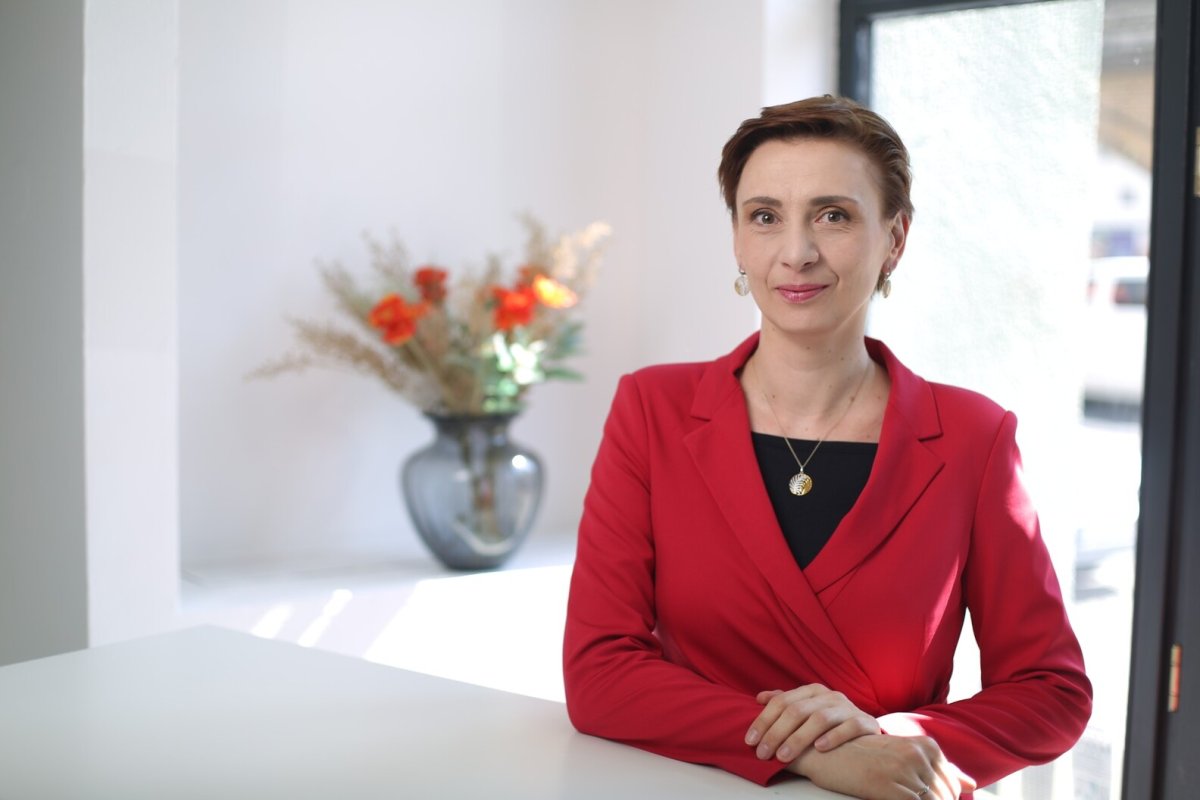
As someone with multiple degrees and an advanced, varied work history, ESMT alum Donata Koren did not need “a dramatic pivot” to further her career. But what she was looking for was an “update” – a way to explore the complexity and connections that could make her an even stronger executive leader.
In this first-hand account, discover how she found that update via an Executive MBA at ESMT Berlin.
Insights from Donata Koren, Executive MBA Class of 2023
The moment I pressed “submit application”
The thought of doing an Executive MBA (EMBA) did not arrive with fireworks. It crept in quietly, then persistently. First as a passing idea, then as a recurring tab left open in my mind. I tried to swat it away with the usual excuses: too busy, wrong timing, maybe later. But it kept coming back until it became impossible to ignore.
I was doing fine at work: delivering, staying on top of things. And yet, somewhere in between, I started to feel I miss something. It felt like I needed an upgrade. Not a reinvention, not a dramatic pivot, just a new pack installed. An update that would make what I already knew work better in the world as it was.
I did not need another certificate
“I wanted to be in a learning environment, surrounded by people who think differently, work differently, and challenge assumptions I did not even realize I had.”
By the time I applied, I already had two Master’s degrees, in law and ethnolinguistics. I was a certified tax advisor and an auditor. I was not short on qualifications. If anything, I was dangerously close to becoming that person who collects certificates the way other people collect fridge magnets.
The point was experience instead. I wanted to be in a learning environment, surrounded by people who think differently, work differently, and challenge assumptions I did not even realize I had.
In my day-to-day work, I live in finance. I love the clarity of it. I love turning messy reality into something measurable. I love asking questions that make people slightly uncomfortable, usually right before they ask me for budget approval.
But finance can also be a bubble. A very competent bubble, with excellent Excel shortcuts, but still a bubble. You start seeing everything through a finance lens, which is useful, but incomplete.
I wanted breadth.
Why curriculum mattered to me
“To grow and become an executive, you need to understand the whole ecosystem and leave your own specialized bubble.”
My career has been a mix of structured environments and high-velocity ones. I spent nine years in Big 4, where perfection is a religion and “it depends” is a greeting. Then I moved in-house to Zalando for five years, which showed me how complex organizations actually work when chaos meets stock exchange rules. After that, I joined a tech startup, where you can almost feel the ice melting right under your feet.
All those changes made me aware that the world moves quickly, and the tools, models, and ways of thinking that worked brilliantly in one context need adjusting in another.
In startups especially, you do not get the luxury of perfect information. You make decisions with incomplete data, conflicting priorities, and a team that still expects you to sound calm and vaguely wise while doing it.
To grow and become an executive, you need to understand the whole ecosystem and leave your own specialized bubble.
So when I looked at EMBA programs, I deliberately avoided anything too narrow. If I was going to invest time and energy, I wanted to learn about other functions and how they make decisions, not simply become a more polished version of the same finance person
Why Berlin, and why ESMT?
Berlin kept coming up in my research, not only because I live here. It is a hub for innovation and start ups, and that matters when you are trying to learn how to lead through change.
I chose ESMT Berlin because the program felt balanced and pragmatic. Rankings and accreditations mattered too, yes, but what mattered more was whether the learning would translate into how I work and lead.
I also wanted to make sure that I can stay connected when I become an alum. ESMT offers many opportunities to connect long after the titles got dusted.
Walking into the room
“It becomes impossible to cling to your own default way of thinking, because there are too many intelligent alternatives in the room.”
I still remember the first module. That moment when you walk into a room and immediately start comparing yourself to everyone else, like your brain is running a performance review you did not ask for.
People introduced themselves and I heard leadership roles, transformations, big projects, international experience, impressive titles. Everyone sounded so competent that I briefly considered pretending I had walked into the wrong classroom.
Then imposter syndrome arrived, uninvited, and sat down next to me.
I am not saying I panicked, but I did have a moment of thinking, “They have great answers. What am I doing here?”
What I did not expect was how quickly that feeling changed once we actually started working together.
Because nobody has great answers all the time. People have perspectives. They have patterns they recognize. They ask better questions. They disagree in ways that move the thinking forward rather than just winning an argument.
And the cohort diversity makes that happen naturally. Different industries, different cultures, different leadership styles, different assumptions about what “good” looks like. It becomes impossible to cling to your own default way of thinking, because there are too many intelligent alternatives in the room.
The hidden curriculum: group work and real life
Before the EMBA, my academic experience was more individual and more theoretical. The EMBA felt closer to real work: group-based, time-pressured, practical, and occasionally messy.
Group work sounds like a polite phrase until you do it alongside a full-time role and an adult life. Coordinating across time zones, aligning on what the assignment is actually asking, negotiating who does what, and making decisions when everyone is tired. It is basically leadership practice disguised as homework.
There were evenings where I went from a tough work call straight into an EMBA team meeting. It was intense, but it was also revealing. You learn a lot about yourself when you are trying to be effective while stretched. How you communicate. How you handle disagreement. Whether you listen to understand or listen to respond. Whether you default to control when things get ambiguous.
That is not theory. That is leadership.
What changed at work
The most meaningful changes were not dramatic. Nobody clapped when I returned from a module.
It showed up in smaller moments.
I noticed I could follow discussions outside finance differently. I could hear the logic behind marketing or product decisions, not just the cost line. I could ask better questions, ones that helped clarify trade-offs rather than simply challenge them. I became more comfortable sitting in ambiguity without rushing to tidy it up too quickly.
Finance often trains you to reduce complexity. The EMBA helped me hold complexity a bit longer, just enough to see the nuance before jumping to conclusions.
The honest bit about the investment
“It [an Executive MBA] does not just add knowledge. It reshapes how you think, how you listen, and how you make decisions. Whatever you put in, you will get it back multiplied.”
An Executive MBA takes time. It takes energy. It costs a lot of money. It takes trade-offs.
There were weekends I had to sacrifice. There were late-night readings, early-morning flights, and calendar gymnastics that made my social life extinct.
But I did it knowing the payoff would be learning, not just a line on LinkedIn.
If you are considering an EMBA, I will not sell you a dream. It will challenge you. It will occasionally irritate you. It will definitely expose you to moments of “aha!” followed by “why am I doing it at all?”.
And that is precisely why it can be valuable.
Because it does not just add knowledge. It reshapes how you think, how you listen, and how you make decisions. Whatever you put in, you will get it back multiplied.
Want to see more like this? Follow Donata on LinkedIn for insights on business, finance, and even marathon running.


Interested in more ESMT stories?
