Full-time MBA alumni careers: building a startup with your classmate
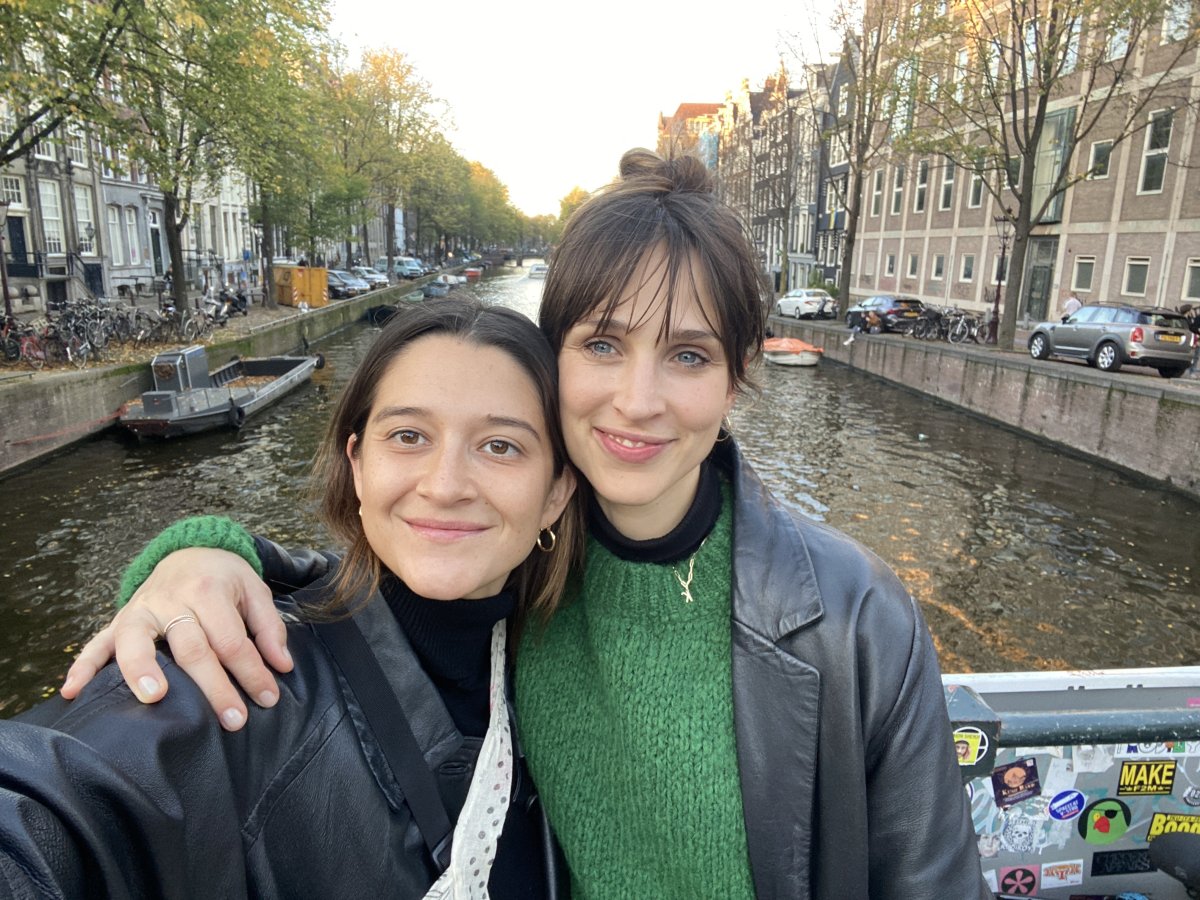
Turning conversations into opportunities: Marie and Theresa's story
Sometimes, a friendly conversation can be the spark that changes your life. Such was the case for Full-time MBA (FTMBA) alumni Marie Kober and Theresa Rodriguez, Class of 2022. Their chat during their shared time at ESMT Berlin led to Marie founding the logistics company senvo and then to Theresa joining and becoming the COO.
In this blog, Marie and Theresa reflect on the entrepreneurial journey that began when they were classmates and share insights on their respective CEO and COO roles. They explain which MBA frameworks they still rely on, even five years after graduation – and how intelligent deployment of AI is crucial to staying nimble in the logistics space.
And they share what it is like to do all this in Berlin, with a fellow ESMT alum – and good friend – by your side.
Hi Marie and Theresa, could you please introduce yourselves? Where are you from and how did you meet?
Marie: My background is in logistics with DHL Express. I always knew I wanted to start a company, but I didn’t have the business education to go with that ambition. That’s why I went to ESMT.
Theresa and I met there and became really good friends. Quite early on, I thought: I want to work with this woman at some point. I didn’t know exactly when or how, but I knew.
We stayed close after the FTMBA, and once we secured funding in 2024, I could finally ask her to join senvo.
Theresa: I’m originally from Long Island, New York, and spent most of my adult life between LA and New York before moving to Berlin to start my FTMBA at ESMT. I have around 10 years of experience working in operations across real estate development, mobility, and tech.
Marie and I met in the first weeks of the Full-time MBA, first as little Zoom squares because it was the middle of the pandemic, but officially in person outside Banh Mi Stable in Mitte.
You are both executives at senvo: can you tell us a bit about what senvo does?
Marie: We work with large e-commerce companies and shippers. When you send millions of parcels through different carriers and countries, answering fairly basic questions becomes surprisingly difficult. Did we pay the right amount? Which parcels never arrived? Is this carrier actually performing as promised?
The answers are scattered across invoices, contracts, tracking feeds, and internal systems. And none of those sources necessarily agree.
senvo brings that information together and checks it, so teams can recover money, catch delivery problems earlier, and understand what’s happening across their logistics. We also make that data available through AI tools, so people can ask questions in plain language.
A logistics expert should be able to investigate a problem without first having to navigate five carrier systems and countless spreadsheets.
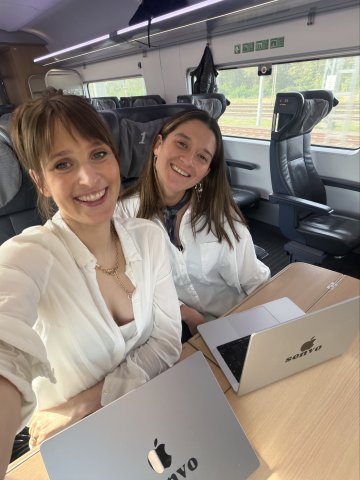

Marie, you are the senvo CEO and Co-Founder. Can you please tell us about senvo’s founding story? Did it begin while you were still at ESMT?
Marie:
"ESMT gave me the space and support to take the idea seriously, challenge it and start finding out whether anyone actually needed what I wanted to build."
Yes, very much so. I joined Vali Berlin (now DEEP) while at ESMT, and they helped me turn a few business ideas into something I could actually test with potential customers.
At the beginning, I had two or three ideas, as aspiring founders tend to. I remember sitting by the water in Treptower Park with Theresa, talking through them and asking which one she thought I should pursue.
She picked senvo. So she shares some of the responsibility for all of this.
ESMT gave me the space and support to take the idea seriously, challenge it and start finding out whether anyone actually needed what I wanted to build.
How has senvo evolved and grown since that first idea phase?
Marie: The first big step after ESMT was building the team. Initially, we were very focused on engineering. We were building software, so we needed people who could turn the idea into a working product.
But once you have something customers can use, the company changes. Suddenly, it’s about onboarding, customer relationships, delivering what you promised, and making sure everything works in the customer’s day-to-day operations.
That’s why I wanted Theresa on board.
The product has grown too. Checking invoices gives you a very concrete starting point: are you paying what you agreed to pay? But once you connect that financial information with tracking and internal data, you can answer much bigger questions about how the entire logistics operation is performing.
Theresa, were you aware of Marie’s journey while doing your FTMBA? Did you follow along after graduation, too?
Theresa:
"I loved following her journey and hearing about all the challenges and excitement of starting a business: finding a co-founder, fundraising, the first hires."
Yes, from the very start. Marie actually pitched me two business ideas, one in fashion and one in logistics. I told her the fashion one sounded more interesting, but that there was more opportunity in logistics. Luckily, she listened to the second part.
I loved following her journey and hearing about all the challenges and excitement of starting a business: finding a co-founder, fundraising, the first hires. After graduation I moved to South Africa for the Responsible Leaders Fellowship (RLF), but we still had our calls and kept in touch, so I got to hear about everything happening at senvo.
You are now the senvo COO: what brought you on board with the company?
Theresa: After Marie fundraised in 2024, I was finishing a bit of a sabbatical and starting to network and look for a new opportunity. I went by the senvo office one day and Marie was walking me through what was next, in particular the next hire. She described someone operations focused, a Swiss Army knife, eager to figure things out without much clarity or management. I immediately started name-dropping people I knew.
Marie looked at me with the most serious face and said, “I’m describing you.”
I’d always wanted to help build a company from the ground up, and I’d known senvo since the initial idea. I couldn’t imagine a better time to join.
For both of you: speaking generally, what does a typical day look like for you at senvo? What do you wish people knew about your roles?
Marie: Our office is in the heart of Berlin. We usually start with coffee and a quick team check-in: what is everyone working on, where are we stuck, and who needs help?
After that, my day can go in quite a few directions. Customer conversations, product decisions, hiring, partnerships, or sitting down with someone to work through a problem. I try to protect some time to think properly, although that doesn’t always work out.
AI has changed how we work internally. We’ve put a lot of effort into using it throughout the company, and our output has increased enormously. That helps us build faster and respond to customers quickly.
What I wish people knew is how much of the CEO role is about focus. There are always twenty things we could do. My job is to help us decide which ones deserve our attention.
Theresa: Most of my day is spent with customers: onboarding calls, audit reviews, sales demos, and the occasional tricky carrier claim. In between, I’m working with the team to turn what we hear into what we build next, ideally after a lunch walk to Rewe.
What I wish people knew is that at a startup, the COO title covers a lot of ground, and no task is too big or too small. People think operations is spreadsheets and processes, but really it’s people. The best part of my job is the conversations, whether with a customer or someone on our team, that turn a messy problem into something that works.
How have innovations in AI and technology shaped senvo’s approach to logistics?
Marie: Logistics is full of knowledge, but getting to it can be painfully difficult. Some of it sits with the carrier, some in your own systems, some in a contract, and quite a lot in the head of the person who has worked there for fifteen years.
AI gives us a much better way to make that knowledge accessible. A logistics expert can ask a question, investigate an issue, or build a dashboard without needing someone to write a new report every time.
But you need reliable data underneath it. If the invoice is wrong or the tracking information is incomplete, AI can give you a very convincing explanation of something that never happened.
That’s why our work on the underlying data matters so much. We bring it together, check it and make it usable. Then AI becomes useful in the day-to-day work of a logistics team.
Despite your industry facing rapid technical changes, are you still able to leverage any of the frameworks or mindsets you learned at ESMT?
Marie: Absolutely. VUCA (volatility, uncertainty, complexity, and ambiguity) is probably the one I’ve thought about most during the AI shift.
AI changed our entire industry. At first, it wasn’t obvious which direction to turn. What would customers expect? What would become easy to build? There was also enormous excitement around companies building everything internally, which raised very real questions for software businesses like ours.
We had to stay nimble. We reassessed how we developed the product, how we worked internally, and how much a small team could deliver. We pushed ourselves to maximize our output and learn this new way of building.
That has proved hugely beneficial. We’re now at the leading edge of applying these tools in our business, and that gives us a real advantage.
VUCA helped me make sense of what we were experiencing. We couldn’t wait for certainty before making decisions. We needed to act, learn quickly, and keep adjusting as the picture became clearer.
Theresa: Definitely. Organizational behavior is a big one. Our team and our customers come from different countries, backgrounds, and education, and being in such a diverse cohort taught me how differently people communicate. Change management and RACI come up a lot as we build processes in a small team.
Lately, we’ve been talking a lot about network effects. When we spot an unusual surcharge for one customer, it becomes something we check for every customer. Every conversation and data source teaches us something new, and in an anonymized way, those learnings help everyone make better decisions. At this point, our whole team are logistics experts.


Berlin is a global startup/scaleup hub. What is it like to be a part of this, and what do you think makes European tech hubs special? Marie:
"I love having other founders close by, especially people building B2B software companies... In Berlin, you can message someone, get on your bike, and have that conversation over coffee five minutes later. That’s a huge advantage."
I love having other founders close by, especially people building B2B software companies. There are things you can discuss with another founder that would otherwise take twenty minutes of explanation before you even get to the question.
In Berlin, you can message someone, get on your bike, and have that conversation over coffee five minutes later. That’s a huge advantage.
For our business, the international mix is valuable too. We work across carriers, countries and markets, and the people around us bring very different experiences of all of those things. You don’t have to look far to find someone who sees a problem from a completely different angle.
Theresa:
"There’s so much knowledge here, and people are open to meeting up and sharing what they’re experiencing, building, and learning"
It’s an amazing ecosystem to be part of. I’ve been going to Women of SaaS Berlin events and building a network of women in tech and fellow operators across the startup scene. There’s so much knowledge here, and people are open to meeting up and sharing what they’re experiencing, building, and learning. Every day you can find an interesting event such as run clubs, builder nights or rooftop happy hours.
If a current MBA student is seeking a career in AI-native logistics or operations, what can they do during their degree to have the best shot at success?
Marie: Apply to senvo. I’m only partly joking.
Use the MBA to get close to an actual business problem. Speak to the people doing the work. Ask what takes too long, what keeps going wrong, and what they’re still doing manually because nobody has found a better way.
And start building. The tools available now let you test ideas much faster than before. You can learn an enormous amount by trying to solve one small problem for a real person.
Being able to use AI is useful. Understanding the operation well enough to know whether what you’ve built actually helps is where you become valuable.
Theresa: Be relentless. Reach out to the people doing the jobs you want, in the industries you find fascinating. The MBA card opens a lot of doors, so use it while you have it. Ask lots of questions and say yes to things that scare you a little. Curiosity is what turns conversations into opportunities.
What is it like to work with a fellow Full-time MBA alum?
Marie:
"Building a company involves enough uncertainty already. Knowing the person next to you makes a big difference."
Amazing. Although I’m obviously biased when it comes to Theresa.
We knew each other as friends before we became colleagues, and the FTMBA gave us a chance to see how the other person works. You learn quite a lot about someone through group projects, deadlines, and the occasional stressful moment.
That gives us a strong foundation of trust. We can be direct with each other, disagree, and work things through. Building a company involves enough uncertainty already. Knowing the person next to you makes a big difference.
Theresa:
"Watching her go from MBA classmate to fearless founder has been amazing."
During our MBA lectures, I was always inspired by Marie’s perspective and the questions she asked. She was even recognized in our cohort for asking the best questions in class.
Before working together, I thought we were very similar. What I’ve learned is that we’re actually very complementary. Marie decides where we focus, and I figure out how we get there. Watching her go from MBA classmate to fearless founder has been amazing.
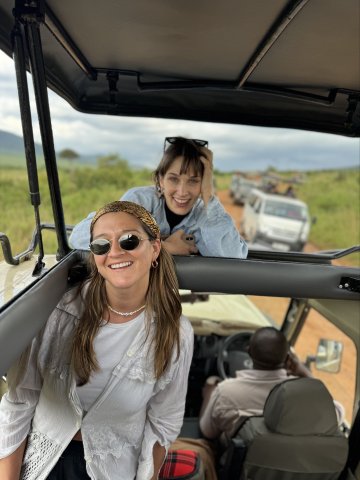

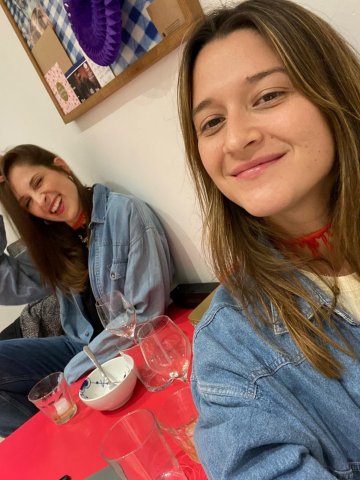

How about the rest of your cohort: do you still keep in touch? What is it like to be part of the wider alumni community?
Marie: Yes, we do. It’s easiest with the people who are still in Berlin, but we’ve also kept friendships across borders. Shout-out to Amsterdam, Milan, and Sweden!
Everyone has gone in different directions, which makes catching up interesting. You knew each other during this very intense shared experience, and then you get to see what everyone does with it.
For me, the alumni community is very personal. These are people I can call, ask for advice, or simply have a good evening with. And, in Theresa’s case, someone I now get to build a company with.
Theresa: Yes, we do. Our cohort was already pretty unique because we started the MBA in January 2021, in Berlin, during a pandemic. Anyone who knows Berlin in January knows that’s already a bleak time. We were each other’s only familiar faces in a new city, so our bond was strong from the beginning.
People have since moved, gotten married, and had kids, and it’s still so nice to see everyone come together to celebrate. Believe it or not, next year is our five-year graduation anniversary. I hope someone’s planning something.
Thinking back, what were your favorite memories from your time at ESMT, and what advice would you give your pre-MBA selves?
Marie:
"Make time for each other too. Those relationships can stay with you for the rest of your life. I’m now building a company with someone I met there, so I’m very glad we did."
That afternoon by the water with Theresa is definitely one. At the time, we were just two friends talking through some ideas. Looking back, it was quite an important conversation.
More generally, it’s the people and the time we spent together that I remember most.
My advice would be to invest in those friendships. The education is an important part of why you’re there, and everyone is busy studying, working on projects and thinking about what comes next. It’s easy to feel you should always be doing one more thing.
But make time for each other too. Those relationships can stay with you for the rest of your life. I’m now building a company with someone I met at ESMT, so I’m very glad we did.
Theresa:
"Take it in, focus on learning, and give yourself time to figure out what’s next, because life doesn’t have to be linear"
My favorite memories are the simple ones: late nights on group projects, beers along the Spree and, for me personally, RLF in South Africa.
My advice to my pre-MBA self: be present and enjoy it. Take it in, focus on learning, and give yourself time to figure out what’s next, because life doesn’t have to be linear. Experiment, talk to your professors and use everything ESMT offers. By the time you graduate, you’ll know who you want to be.
Thank you, Marie and Theresa!
Marie Kober is the CEO & Co-Founder of senvo and Theresa Rodriguez is the COO. You can follow them on LinkedIn to see more of their insights on building a company, on being ESMT alumni, and on being part of the Berlin startup ecosystem. Follow Marie here and follow Theresa here.
senvo is a Berlin-based AI platform that helps e-commerce brands, shippers and 3PLs take control of their logistics data. By bringing together carrier invoices, contracts, tracking and internal data, senvo audits every shipment, recovers overcharges, manages lost and damage claims, and gives teams clear answers about carrier performance. Founded by ESMT alumna Marie Kober, senvo was named Startup of the Year 2026 at the Leaders in Logistics Summit. Learn more at senvo.ai.


