Learning to scale AI across the organization with the AI Executive Certificate
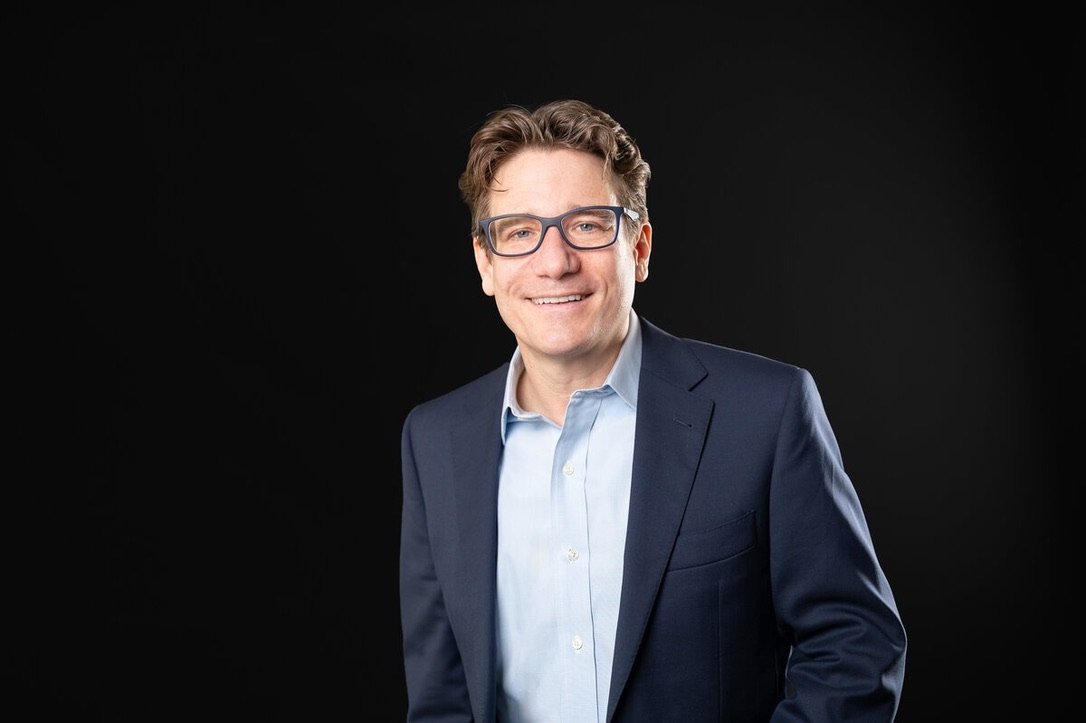
Why people are integral to organizational AI success: Marcus' story
For Marcus Waldmann, successful AI transformation is ultimately about people. This was the thesis statement he put to the test during his time as an Executive Education participant at ESMT Berlin.
In this blog, Marcus explains how earning the AI Executive Certificate has shown him that people are indeed integral to the success of AI at an organizational level. He also outlines his key takeaways from the two programs he took part in to earn the certificate – AI for Managers and AI Governance and Compliance – and how they are already having an impact on his role as an AI leader and strategic thinker.
And Marcus shares how Executive Education at ESMT goes beyond theory to help you strengthen your practical AI knowledge, your confidence in applying it, and the network of people you can bounce ideas off when making these transformations at scale.
Hi Marcus, please introduce yourself
My name is Marcus Waldmann. I'm an engineer by background and have spent the last 25 years working in management consulting and technology roles across Europe and Australia. Today, I lead the IT Strategy and Innovation practice at FUJIFILM Europe, where my focus is on helping the organization create business value through AI, digital transformation, and strategic technology initiatives.
Outside of work, I enjoy travelling, staying active and spending time with friends and loved ones. I’m also naturally curious and enjoy discovering new places, meeting people from different backgrounds and continuing to learn, whether that’s professionally or simply something that catches my interest.
Could you please tell us a little about what your job is like?
My role sits right in-between business, technology and innovation. I work closely with business leaders to identify where AI and digital technologies can create meaningful value and help set the strategic direction for those initiatives.
Beyond identifying opportunities, a large part of my role is ensuring the right foundations are in place. That includes governance, operating models, prioritization, and capability building so that AI can be adopted responsibly and scaled across the organization. It also combines systemic and strategic thinking with very practical execution, which is one of the aspects I enjoy most.
What are some of the biggest challenges you face as a leader in IT Strategy and Innovation?
"Organizations need to move quickly enough to remain competitive while ensuring that security, compliance, and ethical considerations are embedded from the beginning."
In my experience, technology is rarely the biggest barrier. The greater challenge is to be able to adapt, align leadership, establish appropriate governance, build AI capabilities, and foster confidence among colleagues to embrace new ways of working.
Another interesting challenge is balancing innovation with responsible use. Organizations need to move quickly enough to remain competitive while ensuring that security, compliance, and ethical considerations are embedded from the beginning. Finding that balance is one of the most important leadership responsibilities today.
Why did you choose to explore executive education with ESMT?
I wanted a program that combined academic rigor with practical business insights. There are many AI courses available today, but I wasn't looking to become a technical AI specialist. I wanted to better understand how leaders can successfully introduce AI into organizations and create measurable business value.
ESMT stood out because of its strong reputation, its focus on executive education, and the quality of both the faculty and participants. I was looking for an environment where I could learn not only from the experts but also with experienced professionals facing similar challenges.
That combination made the learning experience much richer than simply studying the subject independently.
You completed the Executive Certificate in Artificial Intelligence. What did that involve?
For the AI Executive Certificate, I chose two complementary programs that explored AI from different angles: AI for Managers and AI Governance and Compliance.
Why did you opt for the certificate instead of just a single program?
I saw the AI Executive Certificate as an opportunity to develop a broader perspective. A single program can provide valuable insights, but AI is transforming organizations in many different ways. I wanted to understand not only the technology and its potential, but also the governance, leadership, and organizational aspects that determine whether AI initiatives succeed in practice.
Completing the certificate allowed me to connect these different perspectives and build a more complete understanding that I can apply in my work context.
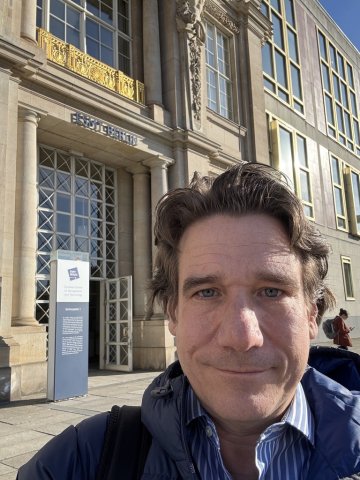

This is a significant investment in time and budget. What made it worth it for you?
“For me, that combination of learning, networking, and practical application made the investment worthwhile...and it was great fun at the same time.”
I've always believed that investing in my own development delivers a great long-term return.
Of course, the knowledge itself was valuable, but one of the biggest benefits was learning alongside other professionals from different industries and countries. Those conversations challenged my own thinking and introduced me to different perspectives and ideas. For me, that combination of learning, networking, and practical application made the investment worthwhile ... and it was great fun at the same time.
Are there any situations that you are handling differently after the Executive Certificate in Artificial Intelligence?
“The certificate reinforced something I had already observed over a period of time: successful AI transformation is ultimately about people.”
One example of where my thinking has evolved is how I approach AI initiatives. Today, I spend even more time understanding the underlying business problem before discussing technology. I also set a greater focus on organizational readiness: whether the necessary governance, leadership support, and capabilities are in place to successfully scale AI.
The certificate reinforced something I had already observed over a period of time: successful AI transformation is ultimately about people. Technology is only one part of the equation. Lasting success depends on leadership, culture, governance, and helping people build the confidence to work with AI effectively.
How can managers best begin to harness the power of AI – either personally, or at an organizational level?
For managers, my advice would be to start using AI themselves. Whether it's preparing presentations, analyzing information, brainstorming ideas and alike, personal experience builds both confidence and understanding. It helps to recognize where AI adds value and where it doesn't.
At an organizational level, it's important to start with business challenges rather than technology. Focus on solving real problems, run small experiments, measure outcomes and then scale what works. At the same time, invest in AI literacy, building capability and governance across the organization, because people ultimately determine whether AI adoption succeeds.
Do you have any tips for someone thinking about participating in an Executive Education program at ESMT?
“The network you develop and the different perspectives you gain are, in my experience, just as valuable as the formal content of the program.”
My advice is to come with curiosity and a willingness to fully engage. The more you contribute to discussions, the more you'll get out of the program.
I'd also encourage participants to think about how they can apply the learning in their own organization while they're still studying. Connecting new ideas to real business challenges makes the experience much more impactful.
Finally, take the opportunity to build relationships with your fellow participants. The network you develop and the different perspectives you gain are, in my experience, just as valuable as the formal content of the program.
Thank you, Marcus!
Marcus Waldmann is the Head of IT Strategy & Innovation at FUJIFILM Europe. If you would like to hear more of Marcus’ insightful thoughts on Executive Education at ESMT, AI in an organizational context, or business leadership, you can follow him on LinkedIn.


Learn more about ESMT
